
I can’t begin to tell you how many people who entered my counseling office over numerous years attributed all of their life issues to another person or persons. It can always be someone else’s fault. Why? We are very good at finding others to blame.
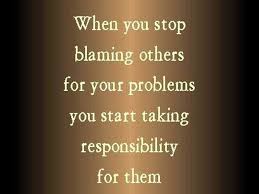
We can blame:
- Our parents
- Our spouse
- Our ex-spouse
- Our boss
- Our coworkers
The list could go on and on. But here is a word of counsel that you can take to the bank:
As long as we feel we can blame another for our problems, we will never know wholeness for that area of our lives.
Said another way:
When you stop blaming others, you will then begin your journey to wellness.
When we constantly and consistently blame others for our life problems, we will breed entitlement in our life. Entitlement is an immature “others owe me” mentality. And, they owe me because of what they did to me. Entitlement will breed victimhood.
Victims do not have to change because…well, they’re victims. Victims remain victims because our culture embraces victimhood as an excuse to live with a life controlling problem. Victims will have a distorted view of reality because they suffered and need others to understand that things happened “to” them. Victimhood will breed unforgiveness.
Unforgiveness will support us in maintaining a depressed and unthankful heart. It keeps us in the unhealthy state of “That person does not deserve my forgiveness of them.” Unforgiving people are unhappy, unthankful and unhealthy persons.
Maybe your parent was abusive and it started a vicious cycle of hurt and pain. In that case, you are an innocent victim of your parent’s abuse. You may have the option of spending your life blaming your parent(s) and I guess you’d have every right to do so, but staying in blame and not pursuing personal healing only hurts you, not them.
Jesus was a victim of unjust persecution, as were many in the scriptures.
Jesus knew that ultimately there was a purpose in His suffering and nothing would deter Him from His goal of salvation for all. Even when suffering, Jesus did not adopt a victim mentality.
Blaming others and walking in longterm victimhood will never allow us to see our own failures, our personal shortcomings. We’ll see the splinter in others’ eyes, but not the log in our own. It will rob us of the initiative to change.

Blaming others and becoming a victim destroys the relationships around us. You cannot dialogue with or challenge someone who is always innocent and right. They simply will not take responsibility for their wrongdoings and wrong words. By the way, this is also why “identity politics” fails so miserably. It constantly creates victims (good people) and oppressors (bad people). There is no healing in this victim-filled mentality.
To heal means you must stop blaming others for your ills and to stop expecting others to fix you or make life right for you.
We need to own our reactions to our hurts and what we tell ourselves about them. To rise above blaming others is to take on the attitude of Christ and His sufferings. Listen to what Peter wrote about suffering.
Do not repay evil with evil, or insult with insult, but with blessing, because to this you were called…But even if you should suffer for what is right, you are blessed. Do not fear what they fear; do not be frightened…[that] those who speak maliciously against your good behavior in Christ may be ashamed of their slander. (I Peter 3: 9,14,16)
So then, those who suffer according to God’s will should commit themselves to their faithful Creator and continue to do good. (I Peter 4:19)
God knows what you suffered at the hands of another. He suffered with you. When we turn our victim status over to Him and receive His healing, we will become victors.
 Steve Prokopchak