Encouragement, Healing, History, Issues of the Day, Just for fun

Tide, It Gets the Dirt Out…But Not All of It

I recently read an article about the very first laundry detergent. It was Procter and Gamble’s desire to create a product that would not leave soap scum in the clothes being washed. Soap prior to the 1930’s left behind dirt, fats and oils in the clothing. These residues would not dissolve in water. 

It would take P&G scientists and chemists ten years to develop a formula that could actually “grab” the dirt and leave clothes clean without soap residue left in the fabric. This revolutionary product was named Tide

Tide is now an international name. In 2018 Americans bought $1.7 billion worth of the laundry product now offered in multiple forms. It is simply the most trusted laundry detergent brand. 

There is a hymn we used to sing back in the day and I for one loved it. The first verse was:

What can wash away my sin?
Nothing but the blood of Jesus;
What can make me whole again?
Nothing but the blood of Jesus.

Tide might get the dirt out of your clothing but it won’t touch your soul. There is only one product that can do that: the blood shed by Jesus on the cross. Easter 2024 has come and gone, but the celebration of a soul cleansing, a heart washing and a mind renewing begins at the cross.

Standard
Challenge, Children, History, Issues of the Day, Parents

Family Relationships vs. Activity

Growing up in the 1960’s seemed like such a slower pace than we endure these days. As kids, we had long summer days at the creek, riding our bikes for miles on lonely country roads or creating forts in the woods behind our house. 

Sometimes we’d get the neighborhood kids together and play football, baseball or go sledding down numerous hills we could claim within walking distance from home.

Entertainment was a handheld AM transistor radio playing the latest tunes or a few black and white TV programs in the evening. We went to bed early after convincing Mom we had a bath two nights ago and didn’t need one that night. 

We caught fireflies in the summer and made campfires in the winter or anxiously waited for the creek to freeze so we could ice skate or play hockey. Ice hockey was preferred using the perfect dogged leg stick and a smashed tin can as a puck. 

We constantly used our imagination. Was there boredom? Yes, but that gave time for whittling a new slingshot, repairing a bike or accomplishing our chores. Oh yeah, chores. We had jobs to do and that often came before school work. 

There were expectations in those days. Families ate together, sat on the front porch together watching the cars go by and swatted flies. The adults read the newspaper and the kids read the funnies. Families talked about life, cousins or uncles in the military, house rules, right and wrong. There was talking, listening, and once in a while, laughter. Even the TV shows of the day were a picture of the same. 

The pace of life today is not the same. Families are going from activity to activity. Kids are having to wolf down Happy Meals or “value meals” over and over in order to make it to the next practice on time. We’re all too often missing the conversations around the dinner table and time together on the deck just talking and laughing. This fast paced life is valuing activity over relationship and it’s hurting family life. 

Will our children look back at their childhood and see mostly activity or remember relationship building as a family value? 

We live in a diffferent world today, but work hard at giving your children something to remember: RELATIONSHIP.

Standard
Challenge, Encouragement, History, Leadership, Training

Who Are the Eight?

When a Hebrew person wanted to declare or express an intimate response to someone they would often repeat their name twice. It was an endearment or expression of closeness.

Most of us remember Jesus saying to his friend Martha, “Martha, Martha, you are worried and upset over many things, but only one thing is needed.” (Luke 10:41) Mary was worshipful while Martha was busy. One was over-occupied while one was overcome with His presence. Martha was frustrated while Mary was being refreshed.

Why? Many things are needful and necessary, but it was a Person who was loving and being loved that Martha was missing out on. 

Abraham takes his son up the mountain for a sacrifice. He builds an altar, places the wood on it, ties up his son, Isaac, and lays him on the altar. He raised his knife and from heaven he hears, “Abraham! Abraham!” (Genesis 22:9-12) God stops him dead in his tracks and Abraham’s obedience is proven. 

Further in the book of Genesis, we have another example of God getting someone’s attention. Jacob is spoken to by God in the night. “Jacob! Jacob!” Jacob replies, “Here I am.” (Genesis 46:2) God reassured him to not be afraid to go to Egypt because He said, “…I will make you into a great nation there.”

Moses sees a burning bush. He moves closer to take another look at why it wasn’t being consumed. He then hears “from within the bush, Moses! Moses!” (Exodus 3:4) God calls Moses to bring His people out of Egypt and the slavery they find themselves in. 

On to I Samuel chapter three. There is a young boy asleep in the tabernacle of God who awakes hearing a voice. It was a voice he didn’t recognize. Eli the priest realized it was the voice of God calling Samuel and he told him to go back and lie down on his bed. Eli instructed him that when he hears the voice again say, “Speak, for your servant is listening.” Verse ten records God’s final call to Samuel, “The Lord came and stood there, calling as at the other times, ‘Samuel! Samuel!’”

It was the Last Supper and the disciples were disputing who among them was considered the greatest. Jesus singles out Peter to tell him that he will deny his Savior. Jesus looks straight at him and says, “Simon, Simon, Satan has asked to sift you as wheat. But I have prayed for you, Simon, that your faith may not fail.” (Luke 22:31-32)

God was after a really zealous character, one who was unashamedly persecuting “the Way,” the believers in Christ. Saul is on the road to the town of Damascus when all of a sudden there is a light from heaven that flashes like gunpowder when lit. Saul falls to the ground and hears these words, “Saul, Saul, why do you persecute me?” (Acts 9:4) Saul becomes Paul, a selected apostle to carry the Name to the Gentiles. 

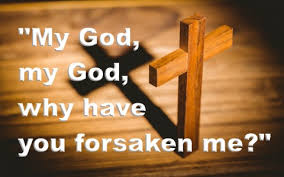
And finally, there is one of the most excruciating times a name was called out twice. Jesus, on the cross bruised, beaten, His flesh torn open and bleeding profusely experiences His darkest hour. In a lamentable, desperate and abandoned state He cries out, “My God. My God, why have you forsaken me?” (Matthew 27:46) 

As I look back over these names and specific situations, it is interesting to point out that in some of the situations the person hearing their name twice did not know the One who was calling them, but it certainly seems that God knew them. 

If you hear the Lord call your name twice, LISTEN UP!

Standard
Challenge, Encouragement, Healing, History, Issues of the Day, Prayer

Thanksgiving, A Time of Hope, Remembrance and Healing

How great is it to have a National Day of Thanksgiving in the USA and many other nations, approximately eleven other nations celebrate a day of giving thanks.

It is thought the first Thanksgiving was celebrated with the Plymouth colonists in 1621. The Native American Wampanoag people shared an autumn feast with the colonists. For the next two centuries, thanksgiving days were celebrated individually by differing colonies in multiple states. Pilgrims were known for days of fasting and prayer along with days of feasting and giving thanks to God.

In the midst of the Civil War, Abraham Lincoln proclaimed a national Thanksgiving Day to be held in November, but that day wasn’t easy to come by. 

The woman who wrote the nursery rhyme “Mary Had a Little Lamb,” Sarah Josepha Hale, campaigned endlessly with governors, senators and presidents for 36 years. Lincoln headed her request in 1863 with the proclamation for all Americans to ask God to “commend to his tender care all those who have become widows, orphans, mourners or sufferers in the lamentable civil strife” and to “heal the wounds of the nation.”

Wow, a day of thanksgiving to heal the wounds of a nation. We live in nations filled with the wounded. We see multiple wars on the earth today wounding so many more. To stop and give God thanks in an effort to bring healing to the many “wounded” around us, well, that’s just amazing and seems only right.

Giving thanks is something God’s word admonishes us to do repeatedly. To have a thankful heart helps us to not dwell on what we feel is wrong, inhibits complaining, releases others from personal judgments, and simply is a healthy way to live our lives spiritually, mentally and physically. So, to help you, here are a few thanksgiving verses:

Psalm 106:1 – Praise the Lord! Give thanks to the Lord for he is good! His faithful love endures forever.

Psalm 69:30 – Then I will praise God’s name with singing, and I will honor him with thanksgiving.

Psalm 92:1-2 – It is good to give thanks to the Lord, to sing praises to the Most High. It is good to proclaim your unfailing love in the morning, your faithfulness in the evening.

Colossians 3:17 – And whatever you do or say, do it as a representative of the Lord Jesus, giving thanks through him to God the Father. 

Colossians 4:2 – Devote yourselves to prayer with an alert mind and a thankful heart.

                    Have a happy and blessed Thanksgiving!!

Standard
Challenge, Encouragement, History, Marriage, Men, Parents, Postmarital, Women

When Leaders Marriages Go Awry and Steps to Maintaining Health

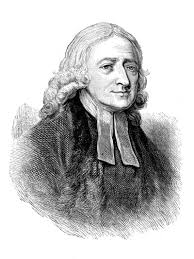
It is a well-known fact that John Wesley married late when he married Molly. John was 47 and Molly Vazeille, a widow with four children, was 41. Their courtship was 16 days long.

Wesley preached sermons the day before and the day after his marriage. Within a week, on a Sunday morning, Wesley referred to his marriage as a “cross” that he had to reluctantly bear. 

Wesley believed his ministry came first and that Molly would simply have to adjust what she desired for his call to ministry. 

Repeatedly, Molly complained that John was insensitive, always traveling, never home and not paying her any attention. John then tried to take Molly with him. Molly didn’t care for traveling hundreds of miles on horseback in the rain or having threats made on their very lives. 

John attempted to repair things, but in the end gave up as ministry remained first in his life. They never divorced, but remained separated. Molly disrespected her husband for his treatment of her both publicly and in the home. 

Lessons to be learned

As a leader, your marriage comes before your ministry. Scripture is repeatedly clear about this. When qualifications are mentioned for church leaders, it is one’s character and one’s family relationships that are highly considered. (See Titus 1:6-9.)

When a leader fails at leadership in his or her home, it will not be long until their public ministry fails also. 

What to do

  1. Be accountable in your marriage relationship with an overseer.
  2. Seek first His kingdom and care first for your marriage and family.
  3. Pursue counsel when needed so your marriage stays on course for the test of time.
  4. Repent quickly of wrongdoing in your marriage.
  5. Forgive deeply.
  6. Attend marriage seminars for challenge and growth.
  7. Read marriage books.
  8. Talk to your spouse and ask them how you can better serve and love them.
  9. Talk to your children about how you can better love your spouse, their parent.
  10. Pray together as a couple. Prayer is the most intimate act within marriage.
  11. Have fun together and take time to laugh regularly.
  12. Vacate everything and everyone a few times a year and spend a weekend dedicated to caring for your marriage.
  13. Daily walk out Colossians 1:28 and Galatians 4:19 and “Build Christ in one another.”
  14. Hold no secrets from each other. 
  15. Seek resolve with every disagreement.
Standard
Challenge, Encouragement, History, In the news

A Bible Sells for Thirty-Eight Million Dollars!

In a recent auction, the oldest Bible known to exist, 1,100 years old, handwritten on parchment paper, was sold at auction for 38 million dollars. The Sotheby’s auction specialist said about this Bible that it, “reflects the profound power, influence, and significance of the Hebrew Bible, which is an indispensable pillar of humanity.”

This Bible known as the Codex Sassoon, is believed to have been hand written and leather bound sometime between 880 and 960. It received its name in 1929 when it was purchased by David Solomon Sassoon, a son of an Iraqi Jewish business magnate. Since being sold, it will find itself on display at the ANU Museum of the Jewish People in Tel Aviv, Israel.

It was William Tyndale, an ordained minister from England, who first translated the Bible from the original languages into English. Almost three-fourths of the King James Version of the Bible is the work of Tyndale. It was printed in 1525 and it had to be smuggled into England. It became extremely popular even though church officials attempted to burn every copy they could get their hands on. 

William Tyndale’s reward for his amazing work was to be labeled a heretic, strangled and then burned at the stake. While in prison, awaiting his fate, he asked for two things: a candle and a Hebrew dictionary so he could continue his work. 

If you possess an English Bible today, you can thank William Tyndale who gave his life for the word of God to be given to the world. In the US the sale of Bibles has doubled since 1950 with 20 million Bibles sold per year. There are over 100 million Bibles printed every year. Every day 54,945 Bibles are sold. There are 66 wonderful books in the Bible, 39 in the Old Testament and 27 in the New Testament. Within those books are 31,173 life-giving verses.

According to Guinness World Records, the Bible is the best-selling book of all time with five billion copies sold. The next highest record of a book sale is a measly 500 million copies. The BIble is a book that out sells every book. Why? 

For the word of God is living and active, sharper than any two-edge sword, piercing to the division of soul and of spirit, of joints and marrow, and discerning the thoughts and intentions of the heart. (Hebrews 4:12 ESV)

Standard
Challenge, Encouragement, History, Issues of the Day, Just for fun

30 Everyday Sayings That You Didn’t Know Originated from the Bible

  1. “Writing on the wall” – Daniel chapter five describes the prophet Daniel interpreting the writing on the wall that appeared to be written by “fingers of a human hand.”
  2. “Let there be light” – “And God said, “Let there be light.”’ (Genesis 1:3)
  3. “By the sweat of your brow” – Genesis 3:19: “By the sweat of your brow you will eat your food…”
  4. “Of biblical proportions” – This is a reference to the plagues of Egypt described in Exodus 7 and 11.
  5. “An eye for an eye, a tooth for a tooth” – “But if there is a serious injury, you are to take life for a life, eye for eye, tooth for tooth…” (Exodus 21:23-25)
  6. “Man does not live by bread alone” – (See Deuteronomy 8:3.)
  7. “Put words in one’s mouth” – II Samuel 14:3 “And Joab put the words in her mouth.”
  8. “Put your house in order” – In II Kings 20 Isaiah told Hezekiah who was ill that he should, “Put your house in order, because you are going to die…”
  9. “Nothing but skin and bones” – In Job’s distress he complained, “I am nothing but skin and bones…” (Job 19:20)
  10. “By the skin of your teeth” – Again, in the same verse as number 9, Job says, “I have escaped only by the skin of my teeth.”
  11. “Broken heart” – The Psalmist wrote, “The Lord is nigh unto them that are of a broken heart…” (Psalm 34:18)
  12. “Bite the dust” – Psalm 72:9 reveals “…and his enemies will lick the dust.”
  13. “Wits’ end” – “They reeled and staggered like drunkards; they were at their wits end.” (Psalm 107:27)
  14. “Pride comes before a fall” – “Pride goes before destruction, a haughty spirit before a fall.” (Proverbs 16:18)
  15. “There’s nothing new under the sun” – Ecclesiastes records that there is “…nothing new under the sun.” (Ecclesiastes 1:9)
  16. “For everything there is a season” – “For everything there is a season and a time…” (Ecclesiastes 3:1)
  17. “Eat, drink, and be merry” – Luke 12 states, “You have plenty of grain laid up for many years. Take life easy: eat, drink and be merry.” (See also Ecclesiastes 8:15.)
  18. “A little birdie told me” – “For a little bird might deliver your message and tell them what you said.” (Ecclesiastes 10:20)
  19. “Drop in the bucket” – “Surely the nations are like a drop in a bucket…” (Isaiah 40:15)
  20. “Rise and Shine” – The prophet Isaiah wrote, “Arise, shine, for your light has come…” (60:1)
  21. “Wolves in sheep’s clothing” – Jesus said, “Watch out for false prophets. They come to you in sheep’s clothing, but inwardly they are ferocious wolves.” (Matthew 7:15)
  22. “It’s like the blind leading the blind” – Jesus warned us that if the blind lead the blind both will fall into a pit. (Matthew 15:13,14)
  23. “Wash your hands of the matter” – It was Pilot who washed his hands of Jesus and claimed innocence of His blood. (Matthew 27:24)
  24. “The truth will set you free” – We know Jesus to be The Truth, but John wrote, “Then you will know the truth, and the truth will set you free.” (8:32)
  25. “It’s better to give than receive” – Acts 20:35 records that Jesus told us that “…it is more blessed to give than to receive.”
  26. “The powers that be” – “…the powers that be are ordained of God.” (Romans 13:11)
  27. “Letter of the law” – “…not of the letter but of the Spirit; for the letter kills, but the Spirit gives life.” (II Corinthians 3:6)
  28. “Fight the good fight” – The Apostle Paul wrote to Timothy saying, “Fight the good fight for the true faith.” (I Timothy 6:12)
  29. “Armageddon” – This word means catastrophic event in many movies but it’s actually from the book of Revelation 16:16, “Then they gathered the kings together to the place that in Hebrew is called Armageddon.” 
  30. “Reap what you sow” – The Apostle Paul wrote, “Do not be deceived: God cannot be mocked. A man reaps what he sows.” (Galatians 6:7)

And how about a few quotes in which the Bible is credited, but are actually not biblical.

  1. “God works in mysterious ways” – While it may be true, these words are not found in the Bible, but rather in a poem.
  2. “Money is the root of all evil” – Correctly the Bible actually says, “For the love of money is the root of all kinds of evil” and not money in and of itself.
  3. “God helps those who help themselves” – God helps those who cannot help themselves as well. We are all encouraged to cry out to God for help!
  4. “God won’t give you more than you can handle” – Try to tell this to the person suffering from cancer or those who are in prison for their faith. The scripture actually states, “…God is faithful; he will not let you be tempted beyond what you can bear…” (I Corinthians 10:13)
  5. “Love the sinner, hate the sin” – These have become some of the most destructive nonbiblical words of our time. Jesus told us to love our enemies and to stop judging your brother when you have an even larger plank in your eye. (Matthew 5:43-48; 7:3,4)

When you hear someone reference one of the 30 everyday sayings above, be sure to let them know of their origin in the Scriptures. Then, also make sure, when quoting the Bible, you are actually quoting the Bible.

Standard
History, Issues of the Day, Marriage, Men, Premarital, Women

Those Many Wedding Traditions and Why We Do Them

Weddings can be similar around the world, but why is it traditional to have wedding bands, to throw rice at the newly married couple or for the bride to wear something old and something new? These are a few of the wedding traditions we accept, but most likely have no idea of their origination. 

Here are eight of the most popular traditions with an explanation of why they exist.

  1. The couple stays apart the night before and the day of the wedding until the ceremony.

Marrying for love is a relatively new concept. Many marriages of yesteryear were prearranged by the families. Not seeing each other prior to stating their wedding vows was a precaution for one of the two getting “cold feet.”

2. Something old and something new.

In the mid-19th century, the objects shared from others were to bring the bride good luck and also served as a hope for early pregnancy. 

3. White wedding dresses.

It was Queen Victoria who wore a white gown at her wedding in 1840 when most gowns at that time were red. Soon white became the color for brides because white was considered virginal and pure and an emblem of innocence. 

4. Groomsmen and bridesmaids in a wedding party.

It has become a way to honor your friends and family members. But in Roman culture, these persons became the couple’s witnesses, bodyguards, and preventing intruders from intervening in the wedding ceremony

5. “Speak up now or forever hold your peace.”

Have you ever wondered where this phrase originated from? It was a standard question at one time in order to prevent bigamy. Some churches even required the forthcoming wedding plans to be announced three times to be sure that neither bride or groom to be were already married.

6. Sharing wedding rings.

Historically, most couples did not exchange rings so this practice is fairly new. It was more of a custom for the woman to have an engagement ring so that all would know she is “under contract” or betrothed. Jewelers began to popularize men’s rings and by the 1940’s it became socially acceptable that men would wear a wedding band.

7. Tossing rice or birdseed at the newlywed couple. 

The Romans thought it best to toss wheat at the couple as a sign of fertility. In Europe it was thought that rice was that sign. Other cultures use oats, peas and other grains. But contrary to popular belief, throwing rice which is eventually picked up by the birds will not injure the bird. 

And one more…wedding cake.

8. Saving the top layer of your wedding cake.

It wasn’t about celebrating on your first anniversary; it was more about the birth of your first child. Happy couples who were able to be successful at starting a family were to celebrate by using the remaining wedding cake for their first child’s christening. 

There you have it: eight traditions that can be found at most modern weddings and the why of those traditions. So the next time you’re at a wedding, you can share your knowledge around the reception table with people you don’t know!

Standard
Challenge, Encouragement, History, Issues of the Day

Why America Celebrates the Fourth of July

It was a battle for liberty and individual freedom. There was a conviction that government was from God and there was a deep desire for freedom from the largest earthly power of its time, Great Britain. 

The new settlers believed that the Law of Nature and the law of revelation were greater than any human law. The theologian William Blackstone wrote about the establishment of the Law of Nature as, “The doctrines thus delivered we call revealed of divine law, and they are to be found only in the Holy Scriptures…no human law (or government) should be suffered to contradict these.” 

The Colonists agreed and saw that the new laws and restrictions being forced on them by Britain as a hinderance to God’s plan for America. The fight against Great Britain was their belief that America was God’s divine plan and a seven-year war was in belief of an independent America.

Noah Webster said, “The religion which has introduced civil liberty is the religion of Christ and His apostles, which enjoins humility, piety, and benevolence; which acknowledges in every person a brother or a sister, and a citizen with equal rights. This is genuine Christianity, and to this we owe our free Constitutions of Government.”

The 56 signers of the Declaration of Independence suffered greatly. Five signers were captured by the British and tortured before their death. Twelves signers had their homes burned. Several lost sons in the revolutionary war. Nine of them fought and died from wounds in the war. They were lawyers, farmers and merchants dedicated to an independent America.

These men had a new life in a new land with security and wealth, but they valued their liberty. Together and with one voice they pledged, “For the support of this declaration, with a firm reliance on the protection of the Divine Providence, we mutually pledge to each other our lives, our fortunes, and our sacred honor.”

Thank you, God, for a republic. I pray we can keep it.

Standard
History, Issues of the Day, Prayer

Atheism and the Most Hated Woman

It was 1963 and the U.S. Supreme court would vote in an 8 – 1 ruling that it was unconstitutional for public schools to require Bible reading. At the time, there were many states which mandated daily Bible reading and prayer. The infamous Murray vs. Curlett case involved what would become a high-profile woman by the name of Madalyn Murray O’Hair. 

O’Hare’s claim was that her son, William, was “bullied” because he did not want to participate in the daily Bible reading in his school. Having won the case elevated O’Hare to be profiled in Life magazine and then begin TV interviews. She was vocal to criticize any public reading of the scripture like the Apollo 8 astronauts on Christmas Eve in 1968. 

O’Hare stood for sexual freedom for adults and children. She was the head of the American Atheists. As the leader she said she welcomed being the “most hated woman in America.” But that’s far from the end of the story.

O’Hare’s son, William, became a Christian believer. His mother said she would have him committed to an insane asylum for doing so. William told his story in his book, My Life Without God. In that book he described how his mother hated her father and wanted to poison him to death. How she had multiple affairs. How she inflated the member numbers of the American Atheists and many other unscrupulous dealings. 

In 1995 O’Hare disappeared. Her body was later discovered in Texas having been caught up in a financial scam and in an attempt to flee the IRS. It wasn’t a happy ending of a life dedicated to winning converts to atheism and changing U.S. laws to align with her beliefs. 

We will always bear the consequences of the seeds we sow as believers or as nonbelievers. Do not be deceived: God cannot be mocked. A man reaps what he sows. The one who sows to please his sinful nature from that nature will reap destruction… (Galatians 6:7,8)

I am reminded on a daily basis of what I say, what I teach, what I write is subject to scrutiny from others, but mostly I am concerned and accountable to God for what I sow, desiring to reap from good seed.

Standard