Those words spoken by Jesus and recorded in John six give me pause. Many of Jesus’ disciples were walking away, no longer desiring to be associated with Him. Jesus then looks at the twelve disciples and asks them this poignant question.
Can you visualize yourself standing with Jesus, watching some of your friends, maybe relatives and neighbors who were walking closely with you just pick up their things, turn their backs and walk away? Now He’s looking straight at you waiting for an answer. He was, in fact, giving you a pass to walk away with them, no questions asked as you shift from foot to foot, nervously, waiting for others to respond.
Finally, Peter speaks up, “Master, to whom would we go? You have the words of real life, eternal life. We’ve already committed ourselves.”
Is that your final answer? Are you staying with Him? It’s going to be difficult. It won’t get any easier.
For those who are “deconstructing” their faith, examining their roots and finding it difficult to remain with Christ, He is waiting for your answer. Do you want to leave too? Will you walk away from the One who loves you, saved you and gave His life for you?
There is no perfect church, pastor or godly parent. There is no perfect Christian leader, mentor or counselor. Not one of us has a perfect foundation. We will be disappointed by others who have spoken faith into our lives. But there is One that will never disappoint, never leave you and never sin against you: Jesus.
It’s easy to criticize and deconstruct; it’s far more difficult to jump in and be a part of the solution–the construction crew.
If walking away from faith is walking away from Him, then you’re going to have to dive deeply into self-trust, self-sufficiency and self-belief.
But here’s the thing about that. Even you will disappoint you. There is no perfect you. I would encourage you to stop holding others up to perfection who were imperfect in your life. Give them the same grace you give yourself.
The enemy of your soul is handing you deconstruction. Jesus is handing you life, words of real life, words of eternal life.
Pay close attention, friend, to what your father tells you; never forget what you learned at your mother’s knee. Wear their counsel like a winning crown, like rings on your fingers.
It’s an age-old question: can men tune into and really listen to their wives? We know there is a generally accepted answer to that question: no. But is that true? Do men listen differently than women? Do men practice looking like they’re not listening when they really are? Are men created with a filter that women simply do not have? Read on.
Men do listen to their wives, but there are some qualifications around the parameters of that answer.
Some of those parameters might include, but are not limited to: are they interested in the conversation; have they been drawn into the conversation or forced; do they feel valued in the conversation; is there a solution that he can add; is there a purpose for this conversation that directly affects him; how long will this conversation take; and can the conversation actually arrive at a point?
Quite honestly, I have found that men like to listen to other men more than to woman (again generally speaking). That may mean men will actually listen to the advice of a man than that of a woman. That does not mean he doesn’t value a woman’s input. But what that actually means is men’s brains seem wired to accommodate other men and their opinion before a female counterpart. Now, before you take that statement and run with it in a hundred different directions, let’s consider a man’s approach to another man.
Men generally will leave feelings out of the conversation. Men generally will speak in facts as they understand them and men generally will not converse just to converse. Men do not tend to have a need for all of the little details and men tend to use fewer words. As well, men tend to keep advice giving to a point of request only. In other words, men enjoy or embrace the communication style of other men rather than woman. It’s not an attack on a woman as much as it’s a preference of style.
With all of that said, men need women and their relational style of communicating. Men need to hear the feeling side of conversation and men need to allow woman the opportunity to share the details they feel effect the conversation. Men need to listen to women because women have this uncanny ability to pull truth from feelings and not just facts. Men need to learn to converse with just listening and not always listening to fix. Men need face-to-face conversations with the women in their life for a balance in receiving the feminine side of their Creator.
Yes, husbands can listen to their wives as wives keep these parameters in mind. So, ladies, stop trying to remake your husband into one of your girlfriends. He is not them; he’s different and he enjoys that difference. Perhaps let him know up front that you are looking for his advice or let him know you are not; you just want him to listen. He can do that, but he needs you to let him know what you’re looking for early in the conversation.
Men and women converse differently and we need what each one brings to the conversation. We need to learn to value each style and honor one another by practicing our listening skills.
Here are some secrets to conversing with your husband:
Make an attempt to use fewer words.
Use a tone of voice that is inviting and engaging rather than commanding or directing.
Practice letting him know what you need or are looking for from the conversation before it starts.
Be sure there is sufficient time allotted for the conversation. If not, schedule it for another time.
Try to relate a few facts.
Study his language style and do your best to incorporate his style of communication. For example, quite often a builder uses building terms or a salesman uses sales terms. Learn those terms and incorporate them in your communication.
Share your feelings, but let him know that’s what you are doing. For example, you can say, “Just sharing a feeling here, but I think it’s significant to the point being made.”
Try to communicate the point of your conversation earlier in the discussion. For example, you could say, “There is a decision we need to make, but first it’s important to look at what is going to affect this decision.”
You can really draw him in with this conversation starter, “I need your input on ___________.” Then you could go on to discuss the issues.
It was repeatedly stated that the Mortenson girl would end up dead way too early.
She never knew her real father and she was placed in foster care at age six while her mother entered a mental institution. She was shifted from one home to another.
She was molested in one of her homes, abused and mistreated in others. Her full name was Norma Jeane Mortenson and her only goal in life was (in her words), “I want to be loved for myself.”
Her first marriage was at age sixteen. Her second marriage was to a name we all recognize – Joe DiMaggio. Then another marriage and then her Hollywood name of Marilyn Monroe was given to her at age twenty-seven while working as a model. She became a national pastime, a star, certainly in the minds of many, one to emulate.
But inside Norma Jeane felt dirty, unworthy of love following molestation, foster home after foster home, marriage after marriage. She engaged in romances with some of the most famous men of her time.
At age thirty-six, desperate for love, she reached out to talk to a friend, looking for affirmation and understanding, someone to care. But what she got was hung up on. She then swallowed a large number of pills and was found in her bed the following day dead, the phone hanging there beside her. How many more desperate calls did she make?
Loneliness is all around us. There is the widow down the street. There is the senior care home in the next town. There is a co-worker who just went through a divorce.
So many people are looking for love. Tell them about the Someone who stepped down from heaven to be their Savior and their friend. Who needs a word of affirmation or of encouragement from you today?
Call to me and I will answer you and tell you great and unsearchable things you do not know. (Jeremiah 33:3)
Mothers–we all had one and most of us cherish our good memories. We know that for nine months she carried us in her womb anticipating our arrival. We know we were loved, accepted and approved of by her. We know she wasn’t perfect, but she was the perfect mom for us. We are better persons because of our moms.
Many had mothers who prayed earnestly and endlessly for their sons and daughters. They never stopped being a biological or a spiritual mom to us. They knew when to speak and when to remain silent. They knew how to make sacrifices for us to have a better life than they had. Moms know things that no one else knows or understands about each one of us and, gratefully, most moms can keep a secret.
So, on this Mother’s Day weekend, let’s celebrate our mothers and think about the reasons why our moms are so important in our lives.
If it wasn’t for your mother, you would not exist.
Our moms often knew how to say the right words at the right time.
Moms seem to understand our feelings.
Only a mother can affectionately kiss and hold an angry child.
Our mothers made huge sacrifices for their children.
Forgiveness and acceptance without judgement are at the forefront of mothering.
Moms sense trouble sooner than most and then swoop in to protect.
Mothers remind us of the good and downplay so much of the bad in life.
Moms taught us the value of cleanliness, doing our homework and sending a thank-you note.
Mothers have a unique way of making us feel special.
Mothers know just the right gift to give.
What would you add to this list about your mom?
Her teachings are filled with wisdom and kindness. She watches over the ways of her household. Her sons and daughters arise in one accord to extol her virtues, and her husband arises to speak of her in glowing terms. So go ahead and give her the credit that is due, for she has become a radiant woman. (Proverbs 31:26, 27, 28, 31 TPT)
“Mothers hold their children’s hands for a short while, but their hearts forever.” Unknown author
Auston and Ashton Samuelson lived in California in a city where there was a high concentration of homeless persons. God gripped their hearts in a distinctive way. They felt convicted to do something and began to work with their local Union Rescue Mission.
The thought first came to Austin when he voiced to Ashton, “What if there was a restaurant that donated a meal for every meal purchased?” They concluded that someone should do just that.
Two years later, the Samuelsons began Tacos 4 Life, a restaurant that provides a meal to families in need for every taco purchased. Tacos 4 Life are now located in Arkansas, Texas and North Carolina with multiple locations. They have supplied more than 13.8 million meals for needy children and families.
This is just one story of one couple finding their co-mission in marriage, something they were both passionate about, felt called to by God and then walked it out in a practical way. If you are married, what is your marriage mission? Every married couple needs to know why they are married. It’s a simple question, but sometimes a missing ingredient in marriage.
Your marriage mission is the glue of why you are called together. Maybe it’s a business or a small group that you lead together. Maybe it’s serving at your local shelter or maybe it’s praying for your neighbors and inviting them to your home for hospitality. There can be multiple missions found within your marriage call. Those missions speak to purpose and answer the “why” of your commitment together.
You can start by writing down everything that you do, everything that you prioritize in your lives. Then include what would you like to do, what you dream about doing together. Write that down. Take those things and begin to create a marriage mission statement/paragraph for yourselves. You’ll be glad you did.
One couple we know placed their marriage mission statement on the mantle of their fireplace for all to see. It’s a daily reminder of why they are married–for them, for their children and for anyone who enters their home..
There is a black lady wearing a red colored hourglass on her back. She’s experiencing her wedding night and her husband has displayed a bit of machoism while she dances for him. She longs for a family. So, when the lovemaking is complete between the two and she is convinced that she’s pregnant, she plunges a dagger of poison into her groom, only to then consume her husband’s body.
Gross you say? Yes, but very real in the life of a female black widow spider. You now know why she’s called the black widow. That’s also a name we ascribe to women who kill their husbands.
Were you aware that women are guilty of 41 percent of spousal homicides? That figure is far higher for women than men. The reasons are primarily related to some form of abuse.
Female Black Widow
Further, the highest statistics of murder among teenage boys is when they end the life of their mother’s abuser, typically a live-in boyfriend. Abuse has devastating effects on the family, the community and the society. The cost of abuse with medical bills, trials, incarceration and family poverty will extend into the tens of thousands of dollars per family unit.
But abuse costs far more than dollars. It causes emotional and spiritual damage. It damages marriages and the children with scars that can last a lifetime. Abuse can be blatant causing a black eye or broken ribs or it can be subtle, breaking the emotional fortitude and will of another. Abuse can occur when one withholds financial provision from another or when one constantly puts their spouse down with derogatory comments.
Like the dance of the black widow spider, abuse waits to strike at the most vulnerable times. It can be a family’s best kept secret slowly drawing the life out of each and every member. It can cause family members to give up, become depressed or hopeless that life will ever change for them.
Quite often, the sin of abuse follows to the third and fourth generation (Dueteronomy 5:9). It becomes a generational sin. The very thing a child hates his father for is the very thing he becomes and the cycle of abuse continues. Why?
Here’s an answer: perhaps not the only one, but an accurate, vital one. Ephesians five reveals this answer when it states, “Husbands, love your wives just as Christ loved the church…to present her…as radiant. In this same way husbands ought to love their wives as their own bodies. He who loves his wife loves himself.”
He who loves his wife, loves himself. How could one possibly abuse the one they are called to love as Christ loved? One answer: self-hate. Abusers hate themselves and out of that self-hate they hurt and abuse others. There is a way to end this cycle and that answer is found in the book of Galatians.
“Christ redeemed us from the curse of the law by becoming a curse for us, for it is written: Cursed is everyone who is hung on a tree.” (Galatians 3:13) Jesus took the curse of abuse on the cross and died to break its power and ability to follow in the family line.
If you have never prayed this verse over yourself and broken off the curses from past generations, do so today. There is nothing more vital than the cleansing of the blood of Jesus.
Sex is a gift given to marriage by God. We dream about it before marriage and fight off every urge during engagement. We can barely keep our hands off of each other. Saying “I do” should not disrupt this godly desire.
However, so many marriages are sexually starved today. And because sexuality is about intimacy, that also means, in many cases, intimacy is missing.
Intimacy is about friendship, communication, laughter, emotional closeness and fun together. It’s about holding hands, saying “I love you” and still kissing one another goodnight. But when sexual intimacy leaves a marriage, so do many of the intimacies mentioned above.
Why? There are any number of reasons. Just to mention a few: business; anger; withholding love; not sharing deeply; criticism; control and others. One area that I have often heard in the counseling office is that the partner with the lower sex drive actually controls what happens or does not happen in the bedroom.
Every day couples make decisions about finances, the children, their jobs, ministry, the bills, the house but they’re not discussing their sexual lives. It’s either controlled by one or somehow has become off limits and you know not to bring it up. Your sex lives as a married couple are not to be controlled by one of you–that’s unhealthy to any marriage. In fact, unilateral decisions of any kind can affect your marriage negatively.
When one partner has to lie in bed night after night dealing with rejection, the silent treatment or a nightly headache, that partner is also wondering what is wrong with them. They are wondering why their life mate is not attracted to them. The human soul needs to connect relationally and within marriage that same soul needs the sexual intimacy factor so there is not a repeated disconnect.
Too often in this area of marriage one partner is only thinking of themselves, their desires and their feelings. They’re thinking, “I’m not in the mood” or “Do I really want to take the time it takes?” or “I’d rather just go to sleep.” Have you stopped to think about your partner, their thoughts and their desires?
If one of you is being vulnerable enough to discuss these issues in marriage, it is time to listen. Do not become defensive or push them away. Be there for one another. Listen without defensiveness. Have it on your heart to serve one another.
And here’s a secret. Even when it is inconvenient or you’re not in the mood, initiating lovemaking can take you there. And when you experience a wonderful time together you’ll be closer, talk more and experience more intimacy in every area of your relationship.
This act of love given to us by our heavenly Father is a recipe for a closer, healthier, deeper appreciation that builds a greater desire to meet the needs of the one you are one with.
I remember child rearing like it was yesterday. It’s a lot of constant work. The job of a parent is truly one of 24 hours a day with very little reprieve. So, my heart goes out to you as a parent, especially those of you with young children.
For some reason, obedience does not come naturally to children. It is something we’re working on until the time our kids leave our home.
It was a comment made to me the other day that provokes this blog. Here’s the comment: “Have you noticed that parents today believe they can reason their children into obedience?” They went on to remark, “When I was a kid, there were no reasons given, just one strong voice command along with a very furrowed eyebrow and I knew exactly what it meant!” I got to thinking…
We can barely reason adults into trying another way or considering a different outcome. What makes us think we can reason with a three or four-year-old? Most children don’t even have reasoning ability at younger ages.
Will our children’s teachers sit down and reason with them, all the while the child resists and tells them “No?” Will their employers reason with them in order to move them to do their job? I just don’t see that happening.
I heard a child expert say once, “Children need to learn to obey quietly, quickly and without argument.” He then gave this example. “Suppose you were wrestling with your four-year-old and they ran away from you directly toward a busy street. Will they immediately obey you or wait for your reasoning response?”
I do not envy any parent out there. I can recall the challenge my own children were. But, could we be sorry one day if we do not train our children to obey quietly, quickly and without argument?
A secret? It will take swift, appropriate, meaningful, not anger-filled, non-demeaning and sometimes painful consequences to create an environment of obedience.
7 For what children are not disciplined by their father? 8 If you are not disciplined—and everyone undergoes discipline—then you are not legitimate, not true sons and daughters at all. 9 Moreover, we have all had human fathers who disciplined us and we respected them for it. How much more should we submit to the Father of spirits and live! 10 They disciplined us for a little while as they thought best; but God disciplines us for our good, in order that we may share in his holiness. 11 No discipline seems pleasant at the time, but painful. Later on, however, it produces a harvest of righteousness and peace for those who have been trained by it. (Hebrews 12:7-11)
Maggie is a fornicator. And yet, she has never been acquainted with sin. Some tell me she is not really responsible for her actions. After all, I am told, “It’s only natural.” It is a funny thing, though. She does not even claim to be a victim—a victim of her parents, her younger years, her friends, her boyfriend, her family, her environment, or any of the cards that have been dealt to her in this life. I have never heard her blame anyone for what happened. In fact, I have never heard her blame anyone for anything that has come her way in the last 56 years.
Maggie was our 8-year-old yellow Labrador retriever (that’s 56 people years)! While my friends have encouraged me that Maggie was just being a dog, I am not convinced. Since six weeks of age, she has resided with our family. She has been trained to not stray into the neighboring yards. No matter how many children are playing and having a riotous time down the street, she knows it is “off limits” for her. Maggie was given boundaries to follow. She chose not to follow those boundaries. The lure of playful attention was too much for her—she chose to cross the line.
When I set a limit for one of my children, it was because I loved him or her and had their best interests in mind. Does God set limits for us because He desires to control us or because He loves us? His love for us is not in question; our love for Him is what is in question. Do you love Him enough to obey Him or, when the limit is “uncomfortable” for you, do you desire to rewrite the already written Word of God? This is the most crucial issue when dealing with obedience.
In today’s world, the scripture, “I am the Lord, I change not” is viewed more like, “I am an understanding, benevolent, vacillating God who may or may not be upset with you and your sin.” Has God lowered His standards because His creation cannot maintain a standard of holiness?
One goal of a healthy, mature Christian is to obey God readily on the outside while our hearts are resting in a trust of God’s concern for our welfare on the inside. Our love for God, as well as knowing God’s love for us, draws us to obedience. That is our motivational factor. However, there are some negative forces motivating us to obey God.
Unhealthy fear: Fear is a great motivator, for sure. But our God chooses to motivate out of love. I do not walk in an unhealthy fear of my heavenly Father because I know His unconditional love. Fear of punishment is an inappropriate reason for obeying God.
The difference between a healthy fear and an unhealthy fear is clear. A healthy fear recognizes God’s love for us and is life-giving. “The fear of the Lord leads to life; then one rests content, untouched by trouble” (Proverbs 19:23). An unhealthy fear is connected to punishment. While we may deserve God’s wrath and punishment for our sin, He placed it upon our crucified Savior. (See Romans 5:6-11.)
Legalistic rules and regulation: We choose to obey God out of having a healthy relationship with God and not because He maintains a little black book. In the midst of the regulations of the Old Testament, it was Samuel who told King Saul, “Obedience is better than sacrifice” (1 Samuel 15:22). Sacrifice came out of regulation; obedience comes out of love. Obedience is doing all God wants me to do, while sacrifice is doing what I want to do for God in my way. Paul stated it so succinctly when he wrote about the law and obedience in Romans 2:13, “For it is not those who hear the law who are righteous in God’s sight, but it is those who obey the law who will be declared righteous.”
To earn favor from God: We don’t fool God. After all, He knows our hearts. He knows what we’re really thinking. He is not a politician running for office. He doesn’t care if you vote for Him or not. He is Grace. You do not need to somehow get into His “good grace.” You may fool some people with whom you relate, but you’ll never fake out God. You cannot earn God’s favor. You already have God’s favor, if you are a believer. We cannot earn something that has already been given to us!
There was an unnamed woman in Luke eleven who blurted out some words about Jesus when He was teaching one day. She said of Him, “Blessed is the mother who gave you birth and nursed you” (verse 27). Was this a reason to follow and obey the Savior? Jesus’ response was interesting: “Blessed rather are those who hear the word of God and obey it” (verse 28).
Obedience is connected to love. How do I know my children truly love me? It is by their obedience to me. How does God know we truly love Him? It is by our obedience to Him.
This is love for God: to obey his commands (1 John 5:3). And this is love that we walk in obedience to his commands (2 John 6). If you love me [Jesus said], you will obey what I command (John 14:15). Whoever has my commands and obeys them, he is the one who loves me (John 14:21).
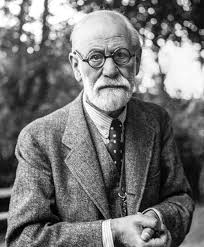
Sigmund Freud is said to have detested people, but longed to be seen as some sort of savior to mankind. He was born into a Jewish family, but ceased to believe in God very early in his life. He went as far as to say that religion was a “neurosis,” a “poison,” an “illusion.” He pushed a new religion he called “the religion of science” and said that an intelligent “scientific” person would toss religious faith.
Based on no evidence he stated that children were sexual beings from birth. He worked hard to separate sex from love and promoted sex as nothing but the union of the reproductive organs.
While he did a great deal of harm to faith, he could never destroy it. The real poison was his toxic beliefs spread to his generation and infecting generations to follow. Today, most know him as a cocaine addicted person obsessed with his own sexuality.
The Pew Research Center published their findings about “religious people” around the world and their happiness. Some of those findings are written about in a January 2019 article by Joey Marshall. Pew’s research discovered several important findings:
Actively religious people are more likely to describe themselves as “very happy” compared to the less-religious.
The actively religious are less likely to smoke and drink, creating a higher level of health.
Religious people are more than likely to join other organizations like charities and clubs, even if the organizations are non-religious.
Religious persons are more likely to vote, caring about their civic duty.
Pew’s analysis over all was that, “People who are active in religious congregations tend to be happier and more civically engaged than either religiously unaffiliated adults or inactive members of religious groups…” Sigmund missed it by a mile on that account.
For as I walked around and looked carefully at your objects of worship, I even found an altar with this inscription:to an unknown god. So you are ignorant of the very thing you worship—and this is what I am going to proclaim to you.
The God who made the world and everything in it is the Lord of heaven and earth and does not live in temples built by human hands. And he is not served by human hands, as if he needed anything. Rather, he himself gives everyone life and breath and everything else. From one man he made all the nations, that they should inhabit the whole earth; and he marked out their appointed times in history and the boundaries of their lands.
God did this so that they would seek him and perhaps reach out for him and find him, though he is not far from any one of us. ‘For in him we live and move and have our being.’As some of your own poets have said, ‘We are his offspring.’ (Acts 17:23-28)













 Steve Prokopchak