
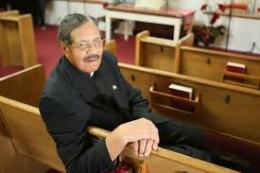
 There is a job description that reads somewhat endlessly: Counselor; encourager; prayer warrior; evangelist; healer; teacher; preacher; visitor of the sick and shut-in; visitor of the incarcerated; visitor of the lonely; tending the sheep; Sunday School teacher; camp counselor; wedding performer; funeral arranger/speaker; mediator; janitor; maintenance worker; trash hauler; fiscal operations manager; overseer; meeting coordinator; leader of leaders; etc., etc., To top it off, the person in this position is on call 24 hours a day, 7 days a week.
These are some of the expectations of your pastoral leader, even as many of those persons also work other jobs for needed income in support of their family. Our expectations are high of this position and we hold them to a level of accountability and integrity, along with scrutiny, we do not often hold ourselves to. We can’t believe they’re mowing their lawn on a weekday afternoon, while every “normal” person is working. We can’t imagine they need another Sunday off or away, because…”didn’t we hire them to work Sundays?”
Rarely do we concern ourselves with their pay and benefits support. Few, if any, ask their pastoral leaders how they are doing financially. Few, if any, ask when they last managed a day off or if they have a vacation scheduled. We mostly desire to know they area available to us when we need them.
These things said this is a scriptural position in which the Bible gives us some clear guidelines of support. Here are some of those instructions:
I Timothy 5: 17-18 reveals to us that we are to give “double honor” to those who preach and teach and to not “muzzle the ox” as “The worker deserves his wages.” How many of us have asked our pastoral leaders to our home for hospitality and/or asked of them how they are doing personally? Even further, have we asked them how they are doing financially or if they are struggling with debt?
I Corinthians chapter nine gives us some interesting guidelines as well. To paraphrase some of the things the Apostle Paul writes, he asks if it is right for a soldier to be a soldier at his own expense? He illustrates that if this leader has sown spiritual seed in our life, shouldn’t he/she be able to reap a material blessing from us? He clearly writes that those who preach the gospel are entitled to support and that support should be at least at the median income level of the congregation…if not higher. Why higher? The scripture above declared, “double honor.”
Let us honor God, by honoring our leaders who love us, pray for us and care for us.


 Our family often had the nations around our table as our children grew up. We loved the cultural examples each one brought to us. I remember in particular a couple from Zimbabwe who we invited from a local college for Thanksgiving. In the middle of the meal the wife told us, “You throw away the best parts of the turkey.” We all had a great laugh because we do not eat the head, liver or the feet of a turkey. But we desired our children to know and understand that every life is valuable to God and His design for them. God’s kingdom is a kingdom of nations and nations represent people.
 Proverbs 12 tells us, “The words of the reckless pierce like swords, but the tongue of the wise brings healing.” What does your tongue bring to those around you, your co-workers and your acquaintances? I am personally challenged by my thoughts (not often spoken, but still thought) that do not think the best of others or those thoughts which do not give those different from me the benefit of the doubt. To have the privilege of traveling the world and to experience different cultures is enlightening, while at the same time difficult to not think comparatively, i.e., my culture vs. their culture.
 Recently while in the nation of New Zealand, a friend pointed to a fellow teacher and said, “See that older gentleman?” I assured him that I did. He went on to explain, “I am younger than him and I am retired from teaching.” I asked why he chooses not to retire figuring the conversation was leading that way. My friend replied, “He tells me he wants to continue teaching because it is far better than going home and living with his critical wife.”




 Where did your beliefs come from? Have you ever thought about that question or do you just assume your beliefs are mostly correct? It’s a simple question that takes a fair amount of reflection.
 Should we wait until our leaders are experiencing physical, emotional and spiritual exhaustion in their lives before we develop a sabbatical policy for our local church or ministry? In a New York Times article titled, “Taking a Break from the Lord’s Work” (Aug. 1, 2010), Paul Vitello wrote, “Members of the clergy now suffer from obesity, hypertension and depression at rates higher than most Americans. In the last decade, their use of antidepressants has risen, while their life expectancy has fallen.”
 I’ve dedicated and spent most of my adult life in some form of counseling profession, e.g., foster parent, group home leader, social worker, marriage and family counselor and overseer. My foundational basis of counsel has always been the word of God. The truths found in this book have radically changed my life from the inside out, so why wouldn’t these same truths change the lives of others? And it is on that basis that a number of years ago I put together a book that lists those scriptures and connects them to specific areas of need.
 Is Judge Roy Moore guilty? Yes, he is. But then, so are you and I because we have all sinned and come short of the glory of God. I do not know about any current accusations against him, but I pray he tells the truth for his sake and for the sake of the women who are accusing him.
 Sin. That is not an often-used word today. Very few desire to be reminded of their sin or have their sin pointed out to them. Have we become soft on sin to the point of straying from the use of the word? Certainly it’s a biblical word – one found in the Old Testament and the New Testament, including the gospels. (Numbers 32: 23; I Kings 8: 46; Romans 3: 23; John 8: 34)
 Steve Prokopchak