Wholeness is a lifelong pursuit. Here are a few steps to help:
- If God were mean-spirited, angry and going to “get me,” I’d already be “got.” Instead, He placed all of His anger on His Son, on the cross and not on me.
- My heavenly Father planned me from eternity (Ephesians 1: 4) and He so much wanted me born that the family I was born into was/is inconsequential. The truth is, He so much desired a relationship with me, that according to Acts 17: 24-28 this is the time, the season and the place of all eternity that I would be on the earth.
- I was presented the gospel and I asked for forgiveness of my sin and received the unconditional love of my Savior, Jesus, and became born again.
- I stopped blaming my earthly parent; he/she was not perfect. The revelation from God is, “You were never a perfect son.” To this day, I am not a perfect father/mother or son/daughter. I had to let my earthly parent off the hook from perfection and realize he/she carried with him/her lots of generational pain and hurts themselves.
- The more of the love of God I received for myself, the more of the love of God I received for my earthly parents and family. I am a child of the King and a vital part of His kingdom and through me He changes culture, even family culture. I am an adopted son in which I now cry, “Abba! Father!” (Romans 8:15)
- I was no longer in need of the approval of my earthly father or mother when I knew I had the approval of my heavenly Father. Romans 15:7 says, “Accept one another, then, just as Christ accepted you…”
- When my heavenly Father told His Son on the earth He was His beloved Son in whom He was well pleased, He also said that to me. My identity and my esteem were no longer in who I thought I should be, but in who I already was in Christ. I was destined for adoption as a son, according to His will and His purpose. (Ephesians 1: 5-6)
- Life is not about me, my stuff, my need for healing or my brokenness. If it were solely about me, I would still be broken and walk in the curses of the generations before me. Christ became a curse for me, so that the curses from my father’s father to my father, to me, and to my children are broken through His death on the cross. “Christ redeemed us from the curse of the law by becoming a curse for us…” (Galatians 3:13)
- There is no longer a need for retribution or justification. What happened to me became a reason to pursue wholeness, maturity, security and sanctification in my God and His truth. I needed to get back at no one. Jesus took this need for human justification by being the only Just One that could actually justify. (Romans 3: 21-31) I am justified by faith.
- Today through health and healing, I set the boundaries. I speak the truth in love with respect and a spirit of honor.

Prayer For Healing
Dear Heavenly Father, out of my personal brokenness I have allowed things into my life known and unknown that do not honor You. I confess to You my need for ongoing healing and restoration. I give freedom to You or Your representative to help me step down into and expose my own sewers. I give permission for You, the One who was broken for me to reveal, to bring to light rebellion, deception, independence, insecurity, comparison, compulsions, guardedness, self-justification, pride, critical judgment of myself and others and any and all ungodly beliefs. I repent for any and all of these and trust You to do the work of healing that only You can do so thoroughly.
I now come to renounce the beliefs, the thoughts, the emotions and the reactions that the evil one has perpetrated in my life from these beliefs. This is not who I am in You. For by Your grace I am a son/daughter, forgiven, regenerated, redeemed, restored and filled with the Holy Spirit of God no longer to be afflicted or harassed in these areas again. In Jesus’ name, Amen.
 Where did your beliefs come from? Have you ever thought about that question or do you just assume your beliefs are mostly correct? It’s a simple question that takes a fair amount of reflection.
 Should we wait until our leaders are experiencing physical, emotional and spiritual exhaustion in their lives before we develop a sabbatical policy for our local church or ministry? In a New York Times article titled, “Taking a Break from the Lord’s Work” (Aug. 1, 2010), Paul Vitello wrote, “Members of the clergy now suffer from obesity, hypertension and depression at rates higher than most Americans. In the last decade, their use of antidepressants has risen, while their life expectancy has fallen.”
 I’ve dedicated and spent most of my adult life in some form of counseling profession, e.g., foster parent, group home leader, social worker, marriage and family counselor and overseer. My foundational basis of counsel has always been the word of God. The truths found in this book have radically changed my life from the inside out, so why wouldn’t these same truths change the lives of others? And it is on that basis that a number of years ago I put together a book that lists those scriptures and connects them to specific areas of need.
 Is Judge Roy Moore guilty? Yes, he is. But then, so are you and I because we have all sinned and come short of the glory of God. I do not know about any current accusations against him, but I pray he tells the truth for his sake and for the sake of the women who are accusing him.
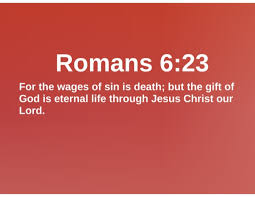
 Sin. That is not an often-used word today. Very few desire to be reminded of their sin or have their sin pointed out to them. Have we become soft on sin to the point of straying from the use of the word? Certainly it’s a biblical word – one found in the Old Testament and the New Testament, including the gospels. (Numbers 32: 23; I Kings 8: 46; Romans 3: 23; John 8: 34)
 There are plenty of differences in relational styles. Some of us are more verbal and others more auditory and the like. Some are slow responders and others are really quick on their feet. Relational styles even differ on how they like to receive information or requests, e.g., phone calls, text messages, email, Facebook messaging, etc. But when we are leading a group of people and those persons cannot obtain a timely response from us through any of the various means of communication mentioned, then we are requiring those same persons to chase us.
 Comfort zones…we all have them. Perhaps yours is never flying on a plane or having a certain amount of money in savings. For each of us it is different because comfort is best described as what makes us feel the most secure. When discomfort is present, most likely insecurity is present. A situation that challenges our security will at the same time affect our physiological and emotional responses – our personal feelings of comfort.
 Funny thing is though, Jesus continually desires to stretch us, move us beyond our comfort zones. And if we’re immovable, we will resist His efforts in our life. What’s your comfort zone and how is your Heavenly Father attempting to move you beyond it? When you fully trust Him, you can move safely beyond your fears.
 A CEO was once asked what made him so successful. He replied, “Good decisions.” “How, then, do you make good decisions?” was the follow-up question. His reply was given in one word, “Experience.” “And how do you get experience?” was the final question. The CEO provided a two-word response, “Bad decisions.”
 I read once that bad decisions are often the result of insufficient knowledge. How about you, what are you learning from your bad decisions?
 I heard on the news that a man was finally arrested and charged with setting the fires in CA that were so destructive. He is being labeled as an arsonist. I had this thought during prayer this morning that we need “Holy Ghost arsonists.” Obviously arson is a negative term and an act that has malicious intent connected to it. But since our Father redeems all things, could He give us those who are and will be fire starters: Holy Ghost fire starters? I began praying for such persons to emerge all over the world. And as the old song goes, “…it only takes a spark.”