Challenge, Encouragement, Healing, Marriage, Men, Parents, Women

Conflicts in Marriage; We All Have Them

My wife and I often joke that we had a conflict once in our marriage of 47 years so we wrote a book about it. Not exactly true. We’ve had many conflicts, but conflicts do not have to be harsh or out of control. After all, we face conflicts daily in life and we tend to handle them better with complete strangers than we do with our spouse or our children.

Why is that? We have nothing invested in the stranger, but we have everything invested in our marriage and family. 

Conflicts often originate from blocked goals; we are wanting something and not getting it. We may even want something good, but the goal or the need is blocked by something, by someone. What we do at this point is totally up to us. We can bust our way through with anger or we can go silent and walk out. We can pretend we’re not having a conflict and not deal with it or we can become abusive in our response all in an effort to get what we want and when we want it. 

Here are seven suggestions that can help us when it comes to marriage conflicts:

  1. Even in conflict we need to maintain a right attitude toward one another. Conflict is not always detrimental in marriage, but it does test our faith, our patience and our personal level of grace. According to the scriptures, it also develops character (See Romans 5:3-5 and James 1:2-4.). Remember that in marriage our conflict is deeper because our love is deeper.
  2. The natural response to conflict is more conflict, a desire to win or a desire to just bail. But when we push through, pray through and persevere through, the trial and the outcome will be perseverance doing its work (See James 1:4.). Don’t quit and give up; believe for a resolve because the more we learn to persevere through the conflict, the more victories we will experience. 
  3. Keep in mind that whatever we sow, we reap. If we sow anger, we’ll reap anger. If we sow the negative we will be sure to reap the negative. The seed of criticism and name calling cannot produce the fruit of peace or righteousness.
  4. Do not hold onto negative words, bitterness, criticism, or anger because these things will bite you in the end. Peter told us to be considerate in our marriages and to treat one another with respect (I Peter 3:1-9). Jesus never treats us in disrespect, anger or abuse. 
  5. In each and every conflict, be aware of selfish ambition because many of our conflicts arise from a felt need or desire regardless of how another feels. In Philippians 2 Paul reminds us to, “Do nothing out of selfish ambition or vain conceit, but in humility consider others [my spouse] better than yourselves. Each of you should look not only to our own interests, but also to the interests of others [my spouse].”
  6. “Above all, love each other deeply, because love covers over a multitude of sins.” (I Peter 4:8) Love often means overlooking an offense, forgetting, not pointing out failures, not reminding one another of past mistakes, forgiving and keeping no record of wrongs.
  7. Lastly, as conflicts are resolved, God uses those areas in our lives to help others. I know that might sound far off right now, but it’s true. We will have authority to speak into that which we have had to grow through and have successfully won the battles with.

The number one reason marriages do not make it today is the inability of two adults to respectfully and honorably resolve conflict with each other. Put into practice the points above and you’ll be on your way to resolving conflict. Conflict is not wrong in a relationship, but unresolved conflict certainly is.

Standard
Challenge, Children, Identity, Insecurity, Issues of the Day, Parents, Pornography, Singles

God, You Love Me and My Sexuality

Every one of us are far more than our sexual desires dreams and feelings. These areas of life do not define us. I have heard plenty of horror stories after twenty plus years of personal counseling. Let me share one of those with you.

I can recall Lisa’s story that resulted in severe anorexia. While her story and her pain were true, she was acting out self-destructive behavior, starving herself to death. If I would have merely affirmed every feeling that Lisa had, it would have been cruel. Further, if I would have commented that her self-perception of being obese was right in an effort to validate her feelings, I would have been both unprofessional and dishonest. 

When our sexuality becomes who we are or how we express our identity, we will be disappointed. It is an expectation that sexuality cannot deliver because our sexuality is only part of our whole being. 

To pursue an identity in our sexuality for the purpose of obtaining self-esteem will also ultimately disappoint. Having the attention of someone sexually may empower for a movement, but that moment will end quickly. It is as well detrimental to look for our identity in the sexual realm because it’s the popular thing to do. Often high school and college age students are pursuing sexuality in this way in an effort to feel popular. 

Every day we choose to either obey God in our sexuality or to not obey Him. It can be a temptation as great as being unfaithful to our wedding vows or a temptation to view pornography. We each have a choice to make. Either God’s grace is sufficient or we determine it not to be. Deciding to pursue our sexuality God’s way and within His boundaries might mean a cross to bear for some, but it will lead us into an eternity of God’s pleasure because of our obedience vs our pursuit of a temporary pleasure.

(For a more thorough look into this topic see the book Identity, The Distinctiveness of You here.)

Standard
Encouragement, History, Parents, Women

In Celebration of Mothers and Women

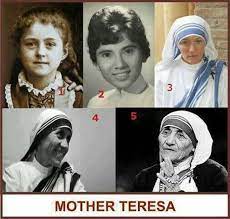
Agnes grew up in eastern Europe. When her mother failed to find her a proper husband, Agnes decided that God must be calling her to be a missionary. 

At age eighteen she headed for Dublin from Albania. And then she traveled to Asia where she encountered some of the worst poverty she had ever been exposed to. Overwhelmed by the needs of the poor, she asked other women to join her in her quest to bring life to a dark nation, India. 

Eventually she changed her name to Teresa and became one of the most well-regarded women of the twentieth century. She would win a Nobel Prize, grow her order to over 4,500 sisters in 153 countries. She would as well originate a chain of hospitals, hospices, AIDS centers, orphanages, unwed mothers’ homes and schools. 

Her work and her order grew exponentially. When asked why it was growing she replied, “I give them Jesus; there’s nothing more!”

Upon winning her Nobel Prize, she was asked how she would promote world peace. She replied, “Go home and love your family.” Mother Teresa would describe herself as, “By blood, I am an Albanian; by citizenship, an Indian; by faith, a Catholic; by calling, I belong to the world and by heart, I belong entirely to Jesus.”

This one woman changed the world and her influence continues to do so. Mothers change the world, family by family. Bless you, mothers, as you change the world!!

Standard
Challenge, Children, Encouragement, Issues of the Day, Marriage, Parents

Courageous Parenting

Godly parenting takes courage–plain and simple. If you were to ask someone what is the most courageous thing they have ever done you would most likely receive various answers, but if you ask me that question I would say godly parenting.

Courageous deeds are often associated with heroes; however, if your heart’s desire is to raise godly children in an ungodly and worldly environment, then you are heroic.

When we establish boundaries about certain TV shows, certain music or certain books, we are taking courageous steps.

When we establish biblically guided rules for our children about what’s right and what’s wrong, then we are taking courageous steps.

When we establish rules concerning standards and the opposite sex relationships of our children, we are being courageous. 

When we teach sexual identity and sexual purity that is in stark contrast to what our culture is speaking, we are being courageous.

When we do not conform to the values of other parents, sticking with our specific family values, we are being courageous.

When we as parents are not viewing pornography and then holding our young children accountable to do the same, we are being courageous parents.

When we teach our children what is acceptable dress, acceptable dating relationships, acceptable Internet use, and give them curfews, we are being courageous parents.

The list could go on, but I challenge you today to be a courageous parent because if you want to see a generation of young people who can withstand peer pressure, who can say no to the wrong they will face, and who can say yes to God, it all begins with courageous parenting.

When we take the easy route or the lazy route to parenting, the battle for our children will be lost. 

They will be my people, and I will be their God. I will give them singleness of heart and action, so that they will always fear me for their own good and the good of their children after them. (Jeremiah 32:39)

Standard
Children, Encouragement, History, Issues of the Day, Parents, Prayer

The Ache of a Godly Parent

I discovered a long time ago when I worked as a social worker and later as a family and marriage counselor that some good children come from not-so-good homes and some not-so-good children can come from good homes. There simply are no guarantees. 

While we do our best to raise our children to love and to serve God, as they age, it becomes their decision. We hope and pray the seeds sown take root. 

Monica had a son named Augustine. He spent his teenage and youthful adult years seeking sinful desires and rejecting his mother’s Christian faith. Monica asked her bishop to speak with her son and his reply was, “It is impossible that the son of so many tears should perish.” He refused to speak to the young man. 

But one day in his Roman garden, God spoke to Augustine and said, “Take and read.” Suddenly God’s word was opened up to him and he began to see the promises of Christ and his own sinfulness. He shared his radical conversion with his mother and nine days later, with ecstatic joy in her heart, she died. 

Today we all know of Saint Augustine, one of the most influential believers mentioned in church history.

Maybe you can identify with this mother as you sow tears of sorrow and deep prayers of faith. Trust God to speak to your son or daughter in the garden of their life. He will speak. He is speaking.

Standard
Challenge, Children, Encouragement, Issues of the Day, Parents

Controlling the Temperature of Our Homes

We set thermostats to control the temperature in our homes, but as parents we are to maintain a type of temperature control as well. Parents are called to be thermostats, setting the temperature within the environment of their home. What does that mean?

Parents determine if the environment of their home will be fun, full of laughter, peace-filled, quiet, warm or loud, out of control, and lacking grace. They determine if their home will be a refuge or a place to avoid. Parents determine the family interaction, the authenticity of the home and how much time is spent on electronic devises. 

I recently heard a speaker state that our homes are not generating memories because families are staying in the here and now with social media at its center rather than family communication through games, devotions, storytelling and extended family interactions. Parents must control TV-watching, video game-playing, and how often family members isolate themselves in their rooms. 

The pace of the world today is frantic, but you can control that pace within your home and family. Kids do not need to play every sport or participate in every school activity. Your children need to become bored enough at times so they discover their own form of play, imagination, interaction, reading and innovation. Send your kids outside to find a stick, play at the creek, hunt worms, build things, do a work project, play freeze tag or play flashlight tag at night. 

Making memories with your children will be dinner conversations for the rest of their lives around your table and someday around their table. 

Standard
Challenge, Children, Marriage, Men, Parents, Women

Having Small Children and Finding Intimacy as a Couple

Oh those little ones with insatiable needs. Let’s face it; you are tired when you finally get them down and find your bed for yourself. Your last thought is intimacy with your spouse. It’s a given.

God gave us sexual intimacy to have children; don’t let that same gift steal romance from within your marriage relationship. 

Mothers have to battle the temptation to allow their small children to steal their loyalty away from their husband. Those long days of responsibility in caring for children or working fulltime outside the home can cause a slow drifting away from the needs of her spouse. In fact, most moms will prioritize the needs of their children over the needs of their spouse–right or wrong. After all, her children can be helpless and her husband is an adult.

Here is the problem. Women can be totally fulfilled in being a mother, nurturing her children. It’s satisfying and it can create a sense of fulfillment experiencing the overpowering gratification of mothering. Moms are made for these moments.

But there is something missing from this formula. While God created you to care for and love your children, He also created you to care for and love your husband in all ways. He can’t be left with feeling like he is competing with the kids. He must know he is a priority to you. A priority as in someday the children will leave home. In fact, they are given to you to leave. Your husband is not given to you to leave, but to stay. He is your life mate, life lover, life partner and life friend.

So, return to nurturing each other once again. Yes, the children will always have needs, but so will your spouse. Nurturing one another is not any less important than caring for your children. 

What are some ways that you as a couple can keep romance alive, even while the children are small and have neverending needs?

Standard
Challenge, Children, Issues of the Day, Parents, Training

What Are Your Goals in Parenting?

Do your children have the best, most stylish clothing? Are your children playing a sport twelve months out of the year? Are they attending the best schools? Are they applying to the best universities or working at well-paying, highly respectable jobs? 

I think we lose our vision for having children sometimes as they compare themselves among their peers and as parents do the same. Too many parents are living their lives vicariously through their children today. Too many parents think that things and stuff or more activity is what their children need. Too often parents feel that giving their children what they didn’t have somehow justifies always saying yes. 

But listen to what Deuteronomy 6:2 says, “That you, your children and their children after them may fear the Lord your God as long as you live by keeping all his decrees and commands…” Where is the best place for our children to learn this? In our homes, around our dinner table, or when putting them to bed at night. Your home is to reflect something so much bigger, so much more important than the things mentioned above. Children who receive and then who walk in a godly legacy will be the best hope for the world around them. 

Parenting is a sacred calling, a full-time job, a place honored and created by God. It’s a place to advance God’s kingdom. There is a biblical precedent to walk in this calling to the very best of our ability. It is not how much money a family has; how large their house is or how many toys and electronics kids have but rather how much of God is present in the home. 

If we fail to train our children to love and serve God, then our children will live life without God and that’s a scary place to be for anyone.

Standard
Challenge, Children, Issues of the Day, Parents, Training

Rebellion in Our Hearts

Rebellion in our hearts or in the heart of a young person is never attractive. It is born out of resistance. And while there may be good causes for acts of resistance, a rebellious heart is often closed to change, closed to reason and closed to correction. (See Proverbs 13:1, 18; 15:10.) 

Rebellion has a main ingredient that travels with it: pride. A pride-filled heart will lead us into rebellion, because at its core it is the act of defending ourselves, our thoughts and our actions, be they right or wrong.

Having been a rebellious teenager and having a rebellious teenager does not make one an expert, but it does afford certain observations. (See Proverbs 17:25.) If we are astute enough to recognize our own heart or the heart of a child, rebellion can be addressed. 

Consider these four causes of rebellion:

  1. When rules and regulations are strictly enforced through a spirit of legalism, often rebellion is an end result. Love is absent in these types of relationships or at the least, not spoken and/or not felt.
  2. Rebellion can be an attempt to separate through resistance from family members like parents, siblings or bosses.
  3. When one engages and relates with other rebellious persons, the influence will be difficult to overcome. It will force an alignment with the group’s rebellious words and actions.
  4. Wanting all authority to lead one’s own life without the ability to take on all responsibility will foster rebellion. Often teenagers desire all authority to make their own decisions but since they cannot take all responsibility, that authority cannot and should not be fully given.

Since Genesis chapter three, rebellion is found in the human heart and detected even at very early ages. It was mankind’s desire to do it his way. We were created to live in the perfection of a Genesis one and two world by God, but when we chose to rebel we found ourselves in a fallen, Genesis three, sin-filled world.

It was God’s heart to place mankind in a perfect garden, a perfect world with perfect relationship and by Genesis chapter three, God giving us choice, we chose to disobey. That disobedience caused a separation from our Creator and now thousands of years later we still suffer the consequences of wanting our own way, outside of God’s way. (See Proverbs 21:30.)

If we are rebelling against God or His written word, we are emphatically saying our way is a better way or, we think we know better than God knows. Those thoughts reek of pride. (See Proverbs 18:12.) We are saying to God, “I want all authority over my life.” And here is the strange thing about that: God will let you have it. There is a way that seems right to man, but in the end it leads to death (Proverbs 14:12).

And you will be one miserable human being, quickly coming to the end of yourself. That’s the thing about rebellion: it is building a wall of separation, a wall that closes oneself off to input and a wall that stunts personal growth. It’s your wall, you’re in charge of it and you’re in control. It’s dangerous and it will become disastrous. (See Proverbs 16:25.)

If we sense any rebellion in our heart, we need to give up. Surrender. Leave selfish desires. Leave selfish ambitions and give our thoughts and actions to God, asking Him to shape our heart toward His. 

Standard
Challenge, Encouragement, Issues of the Day, Just for fun, Parents

Merry Christmas: Saint Nicholas, Kris Kringle or Santa Claus?

The story of Santa Claus goes back to the 3rd century. A patron saint, a monk named Saint Nicholas was born sometime around 280 A.D. in Patara, modern day Turkey. He was known as the protector of children. The name we use today, Santa Claus, was derived from the Dutch nickname of Sinter Klaas.

In 1881 artist Thomas Nast, drew what we recognize as our modern-day Santa: a plump, cheery and white bearded man. It was Nast who provided Santa’s bright red suit and North Pole workshop with elves and a wife, Mrs. Claus. Prior to this image, he was often depicted as a gaunt or scary-looking man.

In the 1890’s the Salvation Army began to use this image by dressing their donation collectors in Santa Claus suits. But where this image received a huge boost was from none other than Coca Cola.

Santa has been featured in Coke ads since the 1920’s and the image used was close to Nast’s original art work. From 1931 to 1964 Coca-Cola ads showed Santa delivering toys, reading his scroll-styled lists and always enjoying a Coke.

While Santa Claus and his imagery are fun for children around the world, it was a very real Catholic monk who was said to spend all his money on rescuing young persons from slavery or prostitution. He gave away his inherited wealth to help the poor and the sick. It is that St. Nick that sounds the most like the Christ, the first six letters of the word Christmas.

May we all display the true meaning and character of this Christ by serving others, giving gifts of meaning and remembering the needy around the world. Let’s celebrate Jesus, the true meaning of Christmas!

A  special Christmas song for you.

And, a special video for your children and grandchildren to enjoy!

(Note: Much of the history above is taken from History.com)

Standard