I can recall an important part of a message that I heard many years ago. I remember one small but impacting statement the speaker made. It went like this: “If the evil one cannot move you away from God, he’ll push you into God!”
What does that mean?
It means he is relentless at letting you know you’re not doing enough, not praying enough, not studying the Bible enough, and not testifying enough. If he can push you to believe these lies, he can discourage you and cause you to think you simply are not enough.
The end result is spiritual exhaustion, physical depletion and emotional discouragement. And that can affect your work, your ministry, your marriage and your family. In the last decade over 29,000 evangelical pastors have left the pastorate. Lifeway Research has noted that 71% of churches have no plan for sabbaticals; 66% lack a support group for the pastor’s family and 33% do not have a list of counselors for referrals.
Leaders burn out, fail and fall. Our leaders are sheep as well and we all need shepherds in our life.
That’s where sabbaticals come in. It’s not a new idea, just one that is rarely utilized. In the Monterey Herald newspaper article “Beating Burnout,” writer Cindy Kirschner Goodman reports, “Among the Fortune 100 Best Places to Work, 22 companies boast of offering a fully paid sabbatical.” She writes, “These companies find if they don’t do something, their workers will burn out and leave, or even worse burn out and stay.”
A sabbatical is preventative medicine. It is some of the best preventative medicine/maintenance a company or a ministry can initiate for their long-term, full-time workers.
So, how is it done? I believe in and have written about a four-phase approach:
Disengage and Rest – Disengage from life as normal and then engage in what will provide rest to you physically, mentally and spiritually.
Retooling and Refocusing – After rest, one is often ready for some input into their life that promotes personal growth and health.
Regeneration or Renewal – This is the evaluation phase and then the vision stage; assessing the past and looking toward the future.
Resolution – This phase is a firm or unwavering determination toward a solved problem or solution toward healthy boundaries to sustain a balanced lifestyle. It is a written plan for your future so you do not return to life as “usual,” but rather implementing the changes that are necessary.
You can catch an in-depth look at sabbaticals in this book.
When a Hebrew person wanted to declare or express an intimate response to someone they would often repeat their name twice. It was an endearment or expression of closeness.
Most of us remember Jesus saying to his friend Martha, “Martha, Martha, you are worried and upset over many things, but only one thing is needed.” (Luke 10:41) Mary was worshipful while Martha was busy. One was over-occupied while one was overcome with His presence. Martha was frustrated while Mary was being refreshed.
Why? Many things are needful and necessary, but it was a Person who was loving and being loved that Martha was missing out on.
Abraham takes his son up the mountain for a sacrifice. He builds an altar, places the wood on it, ties up his son, Isaac, and lays him on the altar. He raised his knife and from heaven he hears, “Abraham! Abraham!” (Genesis 22:9-12) God stops him dead in his tracks and Abraham’s obedience is proven.
Further in the book of Genesis, we have another example of God getting someone’s attention. Jacob is spoken to by God in the night. “Jacob! Jacob!” Jacob replies, “Here I am.” (Genesis 46:2) God reassured him to not be afraid to go to Egypt because He said, “…I will make you into a great nation there.”
Moses sees a burning bush. He moves closer to take another look at why it wasn’t being consumed. He then hears “from within the bush, Moses! Moses!” (Exodus 3:4) God calls Moses to bring His people out of Egypt and the slavery they find themselves in.
On to I Samuel chapter three. There is a young boy asleep in the tabernacle of God who awakes hearing a voice. It was a voice he didn’t recognize. Eli the priest realized it was the voice of God calling Samuel and he told him to go back and lie down on his bed. Eli instructed him that when he hears the voice again say, “Speak, for your servant is listening.” Verse ten records God’s final call to Samuel, “The Lord came and stood there, calling as at the other times, ‘Samuel! Samuel!’”
It was the Last Supper and the disciples were disputing who among them was considered the greatest. Jesus singles out Peter to tell him that he will deny his Savior. Jesus looks straight at him and says, “Simon, Simon, Satan has asked to sift you as wheat. But I have prayed for you, Simon, that your faith may not fail.” (Luke 22:31-32)
God was after a really zealous character, one who was unashamedly persecuting “the Way,” the believers in Christ. Saul is on the road to the town of Damascus when all of a sudden there is a light from heaven that flashes like gunpowder when lit. Saul falls to the ground and hears these words, “Saul, Saul, why do you persecute me?” (Acts 9:4) Saul becomes Paul, a selected apostle to carry the Name to the Gentiles.
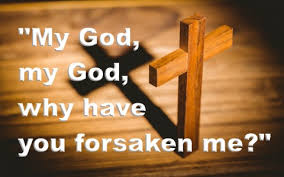
And finally, there is one of the most excruciating times a name was called out twice. Jesus, on the cross bruised, beaten, His flesh torn open and bleeding profusely experiences His darkest hour. In a lamentable, desperate and abandoned state He cries out, “My God. My God, why have you forsaken me?” (Matthew 27:46)
As I look back over these names and specific situations, it is interesting to point out that in some of the situations the person hearing their name twice did not know the One who was calling them, but it certainly seems that God knew them.
If you hear the Lord call your name twice, LISTEN UP!
Most smokers desire not to smoke and most persons know that overeating is harming their bodies. But unhealthy habits are especially hard to stop. Why?
We all have habits, good and not so good. Taking a shower and shaving along with brushing our teeth are all healthy habits. Habits begin with routines done over and over. When we develop a routine, the brain becomes conditioned so that our actions become automatic. In other words, our brains work far less hard when a routine is established.
Establishing good and bad habits really follow the same course. The major difference is when certain habits are pleasure-based. Enjoyable and repeated behaviors cause dopamine to be released by the brain. This feel-good chemical, dopamine, creates the craving to repeat the action.
When we’re attempting to quit a habit, we are attempting to force our hardwired brains to do something that it’s been trained to do otherwise. Then, when you add the pleasure-giving dopamine chemical to the equation, the battle becomes even more difficult.
Further, adding triggers to the routine cause more habit breaking problems as well. What do I mean by triggers? For example, when feeling nervous or anxious some people bite their nails. The anxiety one feels triggers the reaction of nail biting.
When a habit like viewing pornography begins, there are often triggers from feeling rejection created, but then there is the added feel-good reward of a dopamine wash as one viewes the images. So, certain routines cause certain triggers which can cause certain rewards.
Breaking Unwanted Habits
First and foremost, know and understand why you want to break a habit. The why is important because it could be coming from conviction, from a guilty conscience, or from fear of getting caught. Second, what is the benefit of breaking the unwanted behavior? These steps are a part of deciding that this specific habit is not a good one and your personal conviction is to stop it.
Note: realize there is a difference between sin, breaking God’s commands, and a bad habit. Recognize some bad habits are not sinful.
Third, ask yourself how you have been justifying this habit. What excuses have you been using to continue it? For example, I can eat several candy bars because I fasted a meal yesterday. Or, I can watch porn because my spouse is rejecting me. Discovering these justifiers will help you to be able to fully admit that this habit is rooted in a negative or harmful thought process.
Fourth, don’t blame others for your negative habits. You must personally take responsibility. If you regularly blame others for your porn addiction, you’ll never quit. If you blame others for your anger, your anger issues will not change. You must take ownership for your habits.
Fifth, stay away from the triggers. Remember, it was stated earlier that certain triggers, especially those which also contain reward, can cause us to act in the routine of certain bad habits. So, if there are specific persons (relationships) or places which help to promote those triggers, work at staying away from them.
Sometimes when we connect a negative habit with who it affects, it can help us to stop. For example, if our anger has begun to cause our children to become afraid of us (anger causing fear), then we realize change needs to occur so that our children know and respond to our love.
Sixth, enlist a faithful friend to hold you accountable. Ask someone who will not judge you but rather care enough to lend support toward change.
Step seven can be to replace the bad habit with a good one. This is an attempt at rewiring the brain away from the unwanted behavior toward the desired behavior.
Eight, practice self-control. The more you practice self-control, the more you exercise the brain to develop a new habit (like a muscle exercising). Both the new and the old habit are in your brain; practicing the new enlarges the self-control muscle. This is also the principle of sowing and reaping. As you sow the good habit, you will reap the good results.
Nine, keep enlisting God’s help. Keep depending upon the Holy Spirit to protect you, to provide new ways to respond and to give you new thoughts.
Ten. Lastly, one of the best ways to put to death a negative habit is to reinforce your healing, your change and your renewed mind by helping others in that very same area!
“…Clothe yourselves with the Lord Jesus Christ, and do not think about how to gratify the desires of the flesh.” (Romans 13:14) And, “Whatever you do, work at it with all your heart, as working for the Lord…” (Colossians 3:23)
In case you haven’t noticed, my blogs for the month of January are committed to making personal change and incorporating wisdom for the New Year. Find words of wisdom from the writer of the book of Proverbs found in the Old Testament of the Bible.
This book is filled with wisdom and I love to read it annually. Solomon, the author, begins by reminding us we are not to forget these teachings and commands because in obeying them they will “prolong life and bring us prosperity” (Proverbs 3:1-2). Now there is a promise to hold on to. Here are ten more wise sayings to incorporate into your life.
“Trust in the Lord with all your heart and lean not on your own understanding; in all your ways acknowledge him, and he will make your paths straight.” (Proverbs 3:5-6) How easy is it to fall back on our own understanding, but our wisdom is so limited. We will quickly come to the end of ourselves and our knowledge. We must integrate the knowledge of God’s understanding.
“The integrity of the upright guides them, but the unfaithful are destroyed by their duplicity.” (Proverbs 11:3) Integrity will guide you; deceitful ways will destroy you. Walk in high moral character and integrity. It takes a lifetime to build integrity and only minutes to lose it.
“A generous man will prosper; he who refreshes others will himself be refreshed.” (Proverbs 11:25) Generosity will prosper you! Jesus said to give and you will be given unto to. It’s simple, it’s true, and it’s life-altering.
“An anxious heart weighs a man down, but a kind word cheers him up.” (Proverbs 12:25) Anxiety, fear of the future, (mostly unfounded) will weigh us down. Kind words and truth-filled thoughts will cheer us up.
“A gentle answer turns away wrath, but a harsh word stirs up anger.” (Proverbs 15:1) When someone is arguing with us, raising their voice, and we use the same volume, anger will be continue. But when we can give a gentle response, it will lower the volume and keep the discussion more friendly.
“Pride goes before destruction, a haughty spirit before a fall.” (Proverbs 16:18) Humility is one of the godliest traits one can embrace in life. Pride will keep us from changing because it keeps us in a defensive, self-justifying mode.
“He who answers before listening–that is his folly and his shame.” (Proverbs 18:13) Listening is an acquired skill. Practice listening with your spouse and with your children. Before answering, make sure they are finished with what they need to say. Listening is showing honor.
“The rich rule over the poor, and the borrower is servant to the lender.” (Proverbs 22:7) Remember before you borrow money, you will become a servant to the lender. The lender has that power over you. Throughout your life, make every effort to become debt-free and use credit responsively.
“He who conceals his sins does not prosper, but whoever confesses and renounces them finds mercy.” (Proverbs 28:13) Do you want to prosper? Be honest; be accountable to God and with a spiritual leader about your sin. Do not try to conceal your sin because your heavenly Father loves you enough to reveal it. And don’t just confess it; renounce it–cut if off!
“Fear of man will prove to be a snare, but whoever trusts in the Lord is kept safe.” (Proverbs 29:25) It seems the scripture repeatedly reminds us that we have two choices: fear of man or trust in the Lord. You can’t have it both ways. Do not be ensnared in the fear of man (the pleasing of man versus the pleasing and the pleasure of trusting God).
There you have it–ten wonderful, life-giving words of wisdom for 2024. Pass them on to your family, your friends, your co-workers, and your neighbors.
Have you set goals for 2024? Do you know what you desire to accomplish and when you desire to accomplish it? Maybe you have some goals left over from 2023. I know I do.
But what about personal life goals? How do we see growth and change in our personal lives? Dealing with oneself is often a bit more challenging.
First and foremost, let’s remember God changes the heart. He brings His truth to us with His request for change. So, change begins with a heart to obey God and make the changes He is requesting of us. In fact, His word reveals that we show Him how much we love Him by how willing we are to obey Him. (See John 14:15.)
From the conviction in our heart, the scriptures give us a pattern for change and I like to refer to it as The Law of Constant Use.
The Law of Constant Use provides a three-part scriptural process for change from what we are accustomed to doing to what God desires of us. How does it work and how do we start the process of change?
Jeremiah 13:23 reveals, “Can the Ethiopian change his skin or the leopard its spots? Neither can you do good who are accustomed to doing evil.” What are you “accustomed to” doing? We become so accustomed to our actions and our thoughts that we often go through life without asking ourselves whether what we think, what we believe and what we do is correct.
The second verse in this process of change is, “All hard work brings a profit, but mere talk leads only to poverty.” (Proverbs 14:23) It is hard work to change. Don’t let anybody fool you or tell you it’s easy. This verse reminds us that true change is not just talking about change. We all have known those persons who have promised change, but yet never deliver. Why?
When we have programed ourselves to think a certain way or act a certain way, the reprograming part takes effort. We all have believed things that are simply not true about ourselves or others. And yet, we continued in those beliefs until we were confronted with the truth. However, even then we may have struggled to believe something different. We tend to always give ourselves and our beliefs the benefit of the doubt.
There is a third step in this process. Hebrews 5:12-14 wisely records, “In fact, though by this time you ought to be teachers, you need someone to teach you the elementary truths of God’s word all over again. You need milk, not solid food! Anyone who lives on milk, being still an infant, is not acquainted with the teaching about righteousness. But solid food is for the mature, who by constant use have trained themselves to distinguish good from evil.”
The Spirit of God wants to bring forth a new reality, that which you may not be accustomed to. He wants to take you from the milk of His word to the meat, a maturation process of change. He is letting us know that past experience is not necessarily present reality. God in our spirit is retraining us to be accustomed to His voice, His reality and His will. And by “constant use” we can experience change that becomes permanent!
Yes, change is challenging, but when God is at the center of the desired change, He makes a way for correcting our course. He provides a path for change. When we constantly incorporate His truth, His thoughts and His ways, enduring change will take place in our lives.
What do you (or perhaps better asked, what does God) desire to change in you in this brand-new year He has given?
Parents mean well, but make mistakes. I know; I am one. Children make mistakes too. So, when I hear the comment, “Raise up a child in the way he should go, he’ll not depart from it…” spoken in a religious, pride-filled, I-got-a-guarantee way, I cringe.
But, truth be told, we do not raise our children in a church so they can be perfect Christian specimens or simply do not sin and/or make wrong choices, because they do. Kids raised in a local church with their parents have the capacity to follow God or not; parents cannot force that.
Your local church should be reinforcing your values as a parent, providing a healthy youth group and reinforcing through other like believers what you as a parent are teaching them at home.
Our desire as parents in showing them the way of faith is to be preventative as much as it is to build eternity in their hearts. We want to give them the purpose and meaning of life so they walk in that purpose for themselves, maintaining the boundaries that God has written in His word.
As well, when our children do mess up they have an advocate with the Father, His Son. They will know forgiveness and truth that sets them free. When our children fall short of God’s glorious ideal, just as we do as parents, they’ll know Who they can go to. They’ll know His love and His approval along with His love-filled correction. They’ll discover that even when they do wrong their heavenly Father never leaves them or forsakes them. In fact, when being honest with God, He’ll embrace them even more.
Parents have the choice to offer unconditional love to their children on a daily basis. While the child may know this and take it for granted, it’s only when they mess up that they realize the grace and forgiveness found within true unconditional love.
The fact remains, nothing can separate us from the love of God. And God’s discipline is a part of that love. When we as parents correctly, respectfully and without anger bring correction to our children, we are modeling the love of God to them.
As a parent of three 30-40 somethings and four grandchildren, I will never apologize for training my children to love God first so that all good things from God can follow. I will never apologize for taking them faithfully to a local church, to church camp or encouraging them to travel with me around the world to minister to others. I will never apologize for taking the time to have family devotions, teaching my children the practical application of the word of God in their lives. All of these things are collectively fulfilling Colossians 1:28 and Galatians 4:19:
He is the one we proclaim, admonishing and teaching everyone with all wisdom, so that we may present everyone fully mature in Christ.
My dear children, for whom I am again in the pains of childbirth until Christ is formed in you.
As parents, our goal is not to build “us” in our children, but rather, to actively and by example build Christ in them.
It is seemingly unprecedented and unimaginable that the whole world could be experiencing an inordinate amount of stress today. While stress affects each of us differently, the article that follows is an attempt to address this everyday human emotion in a reasonable and biblical way.
Disease is a word we often use to describe an illness, an impairment of some kind. The prefix of the word is actually “dys,” which means “not.” We could say that a disease is when the body or the soul is literally “not at ease.” Stress and worry create mental, emotional or physical tension. What occurs when this tension is ongoing and is generated many hours over a course of many days? Some medical practitioners believe our bodies attempt to absorb this tension; however, the body is not built to handle long-term stress and will eventually begin to break down.
Proverbs 12:25 rightly reveals that an anxious heart weighs a man down. A good question to start with could be, “What are the areas of my life that I normally find myself becoming worried, stressed or anxious about?”
Francis Chan in his book, Crazy Love said, When I am consumed by my problems – stressed about my life – I actually convey the belief that I think the circumstances are more important than God’s command to always rejoice. Worry implies that we don’t quite trust that God is big enough, powerful enough, or loving enough to take care of what’s happening in our lives. Stress says that the things we are involved in are important enough to merit our impatience, our lack of grace toward others, or our tight grip of control. Somehow the stuff in my life is exceptional. Both worry and stress reek of arrogance.
To simplify this thought, Mark Batterson in the book The Circle Maker asks, “Are your problems bigger than God, or is God bigger than your problems?”
The Psalmist David actually requested of the Lord to check his heart for anxiety in Psalms 139:23 where he asked God to, “Search me, O God and know my heart; test me and know my anxious thoughts.” Why did he want God to do this? David knew that anxiety and stress puts a limit on our belief and our ability to trust God.
Seven causes of stress
A state of worry and a high need for control: In Luke chapter 10, Jesus looked at one serving Him and expressed, “Martha, Martha…you are worried and upset about many things.” If the Lord looks at you and says your name twice, you know you’re about to hear some “better change your life” words. I think Jesus was saying, “Relax, Martha, be who you are, but trust me. I can provide; there is a time for everything.”
A lack of faith: We can become anxious when we lack faith for our needs. (See Matthew 6:25-30.)
The loss of boundaries (also connected to the loss of control) provoking insecurity: If children feel safe, they will venture away and explore. If children are feeling insecure, unsafe and worried, they will cling to their parents. How were you trained as a child? Were you trained to be worried, to be in fear or to be friends with anxiety? Were the boundaries unsure, leaving you to find your own boundaries? Was your home and your family a safe place or a place full of the unknown and unexpected?
Not knowing the heart of God as your heavenly Father: Psalms 46:10 tells us, “Be still, and know that I am God.” When we do not know the Father’s heart toward us, we will never be able to be still. Until we discover the truth of what our Father is thinking of us, we have every reason, perhaps, to be in a state of worry.
A lack of trusting God: Did you know there is a “Do not worry” command in the Bible? Psalms 37:1-8 commands us to not fret, but trust, delight, commit, be still and refrain from anger. At the core of anxiety is a lack of trust, perhaps learned from the lack of boundaries; the lack of loving parents; not knowing the truth of faith or not walking in the revelation of the love, acceptance and approval of God. Scripturally, to walk in fret, worry and stress is to walk in the absence of trust.
A lack of protection and security: When I was a child, we not only had fire drills; we had bomb scare drills. It was the height of the cold war and Americans feared the Communists would drop “the bomb” on us at any time. In primary school, we were prepared for this as the teachers instructed us to place our heads under our desks. Those were some pretty powerful desks! As adults, we still need protection, thus we have laws to govern our societies and boundaries in the word of God enforced by loving leaders of faith – spiritual moms and dads. When husbands fail to protect and understand the principle of protection, wives will find themselves dealing with anxiety. If we as men are not walking in the governmental authority the Father has called us to walk in, we might be standing by and becoming a direct cause of anxiety within our family. When we as husbands and fathers hear from God and act in a scriptural manner of godly authority and covering, our wives and our children will be less anxious, more at peace and more secure.
When fear overrides faith: Where fear is present, love is absent. Where there is a presence of love, fear is absent. The two do not dwell together in any sense of harmony. Listen to Job 4:14,”Fearand trembling seized me and made all my bones shake.”An actual physical manifestation of fear was present. I John 4:18 reveals, “There is no fear in love. But perfect lovedrives out fear, because fear has to do with punishment. The one who fears is not made perfect in love.”
How can we define anxiety?It isa state of uneasiness; worry; an abnormal fear that lacks a specific cause. Here is an excellent biblical definition: Deuteronomy 28: 64-67 says,“And the Lord will scatter you among all peoples, from one end of the earth to the other, and there you shall serve other gods of wood and stone, which neither you nor your fathers have known. And among these nations you shall find no respite, and there shall be no resting place for the sole of your foot, but the Lord will give you there a trembling heart and failing eyes and a languishing soul. Your life shall hang in doubt before you. Night and day you shall be in dread and have no assurance of your life. In the morning you shall say, ‘If only it were evening!’ and at evening you shall say, ‘If only it were morning!’ because of the dread that your heart shall feel, and the sights that your eyes shall see. This scripture gives us a pretty descript picture of anxiety. As well, Proverbs 12:25 reveals that an anxious heart weighs a man down.
Considering some answers to stress and worry
I am convinced the answer to stress and worry is found in one word: trust. Here are some ways to grow trust in your life.
Worry takes the place of prayer: We cannot worry and pray at the same time. Worry says I have to do something about the circumstances while prayer says I cannot change circumstances, but God can. That’s why the scripture is so clear to us in Philippians 4: 6 “Do not be anxious about anything, but in everything by prayer and petition, with thanksgiving, present yourrequests to God.” And what does God say He will do?
“And the peace of God, which transcends all understanding (we won’t understand how we can have peace in the midst of a storm – just as Jesus slept through one), will guard your heart (that area David wanted tested) and your minds (the area where worry lodges itself to take the place of trusting God) in Christ Jesus.” (v.7) There is no peace in a state of worry.
Trust – How to build and grow trust vs. growing anxiety
Know God’s wordand implement it into your life – (Implement = meditate, memorize, put on 3×5 cards, post it on your mirrors, write it down over and over and pray the scripture into your spirit) Sample scriptures: Jeremiah 17: 7,8; Psalm 37: 1-8; Psalm 46: 1,7,10; Isaiah 41: 10,13; Luke 10: 42; Luke 21: 14; Matthew 6: 25-34; I Peter 5: 7 – “Cast all your anxiety on Him because He cares for you.” Knowing God’s word has a calming effect. To discover God’s thoughts through meditating on His word will allow our spirit to speak His thoughts to our mind. If we go to a scary movie we’ll observe people screaming and lowering themselves in their seats. If we go to a violent movie people can become agitated. If we listen to music we label as irritating, we will find ourself becoming irritated. Anxiety breeds anxiety; wrong thinking breeds wrong thinking. Read and meditate on the truth of God’s word and it will calm us, reduce stress, bring life and build Christ.
Anxiety and worry are basically builton thelesser story while God might be working on the greater story. We tend to get all worried when we do not have the finances for a bill that is due – lesser story. God may be using that present lack of finances to build faith for the greater story of His provision. We tend to worry and become self-consumed when our car will not start and we begin to tell ourselves that if our car won’t start, we’ll be late for work and if we’re late for work we will have our pay docked or our boss will be upset – lesser story. God purposely has our car delayed in starting because He is protecting us from an accident on the highway – greater story. What does it boil down to? Trust. Do we trust Him in all areas of our lives even when life is unpredictable?
Obedience to God’s Spirit of Truth – Is it disobedience to be filled with anxiety and not trust God? (Remember worry says, “I trust me” while faith and obedience say, “I trust God.”) We must come to this conclusion or we’ll never be serious about change. John 14: 15 reveals that He knows how much we love Him by how much we are willing to obey Him.
We change from our spirit to our mind and not our mind to our spirit – Romans 8: 5-9 tells us we are spirit, soul and body. Lasting change is made by God speaking to our spirit and then our spirit revealing to our mind the necessary changes. It is not our mind to our spirit. We need God’s Spirit in our spirit controlling our minds and not our minds controlling our thoughts, emotions or actions. Information and knowledge will grow our minds. Nutritional food and exercise will grow and keep our bodies in good health. But when the truth is received in our spirit by His Holy Spirit, our belief system begins to change. How does that happen?
From changed belief to changed behavior – Beliefs -> Thoughts -> Feelings (reactions) -> Actions. This unique formula describes what Romans 12:2 teaches us, “Be transformed by the renewing of your mind.” Are we telling ourselves the truth? Often anxiety is built on a lie. That lie housed within a memory has been with us so long that we can actually begin to perceive it as truth. How does it work? It works through the law of attribution.
The law of attribution is simply that which we attribute to be stressful, anxiety-filled will be! Sometimes this is built on truth, but more often it is built on a lie. I once met with a counselee who was fearful to drive over bridges, afraid the bridge would collapse. Was this fear built on truth? No, but deep within his memory bank it was a truth to him from a negative personal life experience. Anxiety is a present feeling or reaction because we tell ourselves anxious thoughts or believe lies that create anxiety. Let me add that not all stress is negative. Sometimes we feel stress and it motivates us to complete a task or to not look at a pornographic picture. It is a signal and what we do with it is up to us.
6. From fear to faith and trust – We must settle Romans 8:15 in our hearts, “For you did not receive a spirit that makes you a slave again to fear, but you received the Spirit of sonship. And we cry Abba, Father.” A spirit of fear is not from God. (See II Timothy 1:7.) One day Jesus and His disciples got into a boat to cross a lake. A storm came and began to sink the boat while Jesus slept. The disciples cry out for the Lord to help them and He calms the storm and then says,” Where is your faith?” In other words, why fear, have faith.
Psalm 112:7 reveals, “He will have no fear of bad news; his heart is steadfast, trusting in the Lord.” Why? Verse eight tells us, “His heart is secure; he will have no fear…”
Anxiety is up to us. It is our choice. There are levels of anxiety – some more severe than others. We can go to a doctor’s office for medication. Medication will treat the physical and mental manifestations, but it will not treat the core beliefs, the memories or the lies.
Someone once said that, anxiety is not trusting God for your future and depression is not trusting God for your past. Obviously, it’s not that simple, but God desires to teach and reassure us so that we can trust Him for our past, our present and our future. There are no anxious ways within Him or His kingdom. If he has everything under control and we are His, then at the end of the day we can pray, cast all our worries and anxious thoughts upon Him and go to sleep. (See Psalm 4:8.) I just don’t see God in heaven wringing His hands in total anxiety while mumbling, “Oh my word, what am I going to do now…are you kidding me…how can I get through this mess?”
Armed with a bit of truth and perhaps more faith, look back over your list. Are our anxieties comprised of areas in our lives that have not occurred as yet? Most anxieties that we walk in never materialize. Can we pray over this list and give it all to our heavenly Father?
Do your children have the best, most stylish clothing? Are your children playing a sport twelve months out of the year? Are they attending the best schools? Are they applying to the best universities or working at well-paying, highly respectable jobs?
I think we lose our vision for having children sometimes as they compare themselves among their peers and as parents do the same. Too many parents are living their lives vicariously through their children today. Too many parents think that things and stuff or more activity is what their children need. Too often parents feel that giving their children what they didn’t have somehow justifies always saying yes.
But listen to what Deuteronomy 6:2 says, “That you, your children and their children after them may fear the Lord your God as long as you live by keeping all his decrees and commands…” Where is the best place for our children to learn this? In our homes, around our dinner table, or when putting them to bed at night. Your home is to reflect something so much bigger, so much more important than the things mentioned above. Children who receive and then who walk in a godly legacy will be the best hope for the world around them.
Parenting is a sacred calling, a full-time job, a place honored and created by God. It’s a place to advance God’s kingdom. There is a biblical precedent to walk in this calling to the very best of our ability. It is not how much money a family has; how large their house is or how many toys and electronics kids have but rather how much of God is present in the home.
If we fail to train our children to love and serve God, then our children will live life without God and that’s a scary place to be for anyone.
It is said that the number one and most frequent argument in marriage is about money. My wife and I struggled early on with our differences when it came to the use, the saving and the spending of our finances. But, after eight years of mission work we discovered that we could fight and argue about money or pray and agree for our needs. Both methods are powerful.
However, it took us even longer to get to the root of our differences. It is in this vein that I would like to share how those differences are important, can be valued and embraced to make better financial decisions along the path of finding financial agreement.
See if you see yourselves in any of the points made below.
Financial differences are about differing expectations (good and not so good) and our insecurities around money. Does money provide security to us and in what ways? Are our expectations and the use of money different than our spouses? Work toward making those differences a plus and not a negative. We need to ask ourselves how do our financial differences strengthen us as a team? For example, my wife was more of a giver than a spender. We needed to ask ourselves how giving helps our overall financial picture.
Differing values – one wants to save and one wants to purchase.When is just saving negative? When is just purchasing negative? Saving for savings sake loses its focused goal of saving for a car or a house down payment. When we agree to save toward a goal, we find unity in that decision even with differing financial values. Purchasing simply for spending can be habitual or even addictive with huge losses realized down the road.
False beliefs must be confronted. For example: “If you possess a lot of money, you do not argue about money.” Is it money itself or is it differing beliefs about money that we’re arguing about?
“Spenders” are also investing, not just “savers.” They are often investing in family fun, the marriage, their children, or toward vacation. Imagine a vacationless, not-so-fun family. And, as mentioned above, sometimes spenders are really givers. They love to bless others with gifts because it’s a part of their love language.
Learn to value choices with money that moves your heart in giving, in sowing, in investing. Allow your partner to invest in what moves them and, at the same time, takes finances.
Work toward honoring what the other person cares about. Give one another an allocation to spend, give, save and invest toward their thing, their passion. It’s why you agree on an amount and an allowance for each other. This is not without accountability, but allows for far more freedom for each partner.
When you have a financial difference, be sure to enact James 4:1-3, pray and ask God in sincerity together!
As you grow through the financial differences, honor one another, and come into agreement by embracing what your marriage partner brings to the table, the arguments will decrease and you will discover more and more agreement in how you save and what you purchase. Further, the older you become, the less you need and the more focused you will be on giving to others!
Early in our marriage, my wife and I served as missionaries for eight years. Looking back, here are a few lessons we learned that may also be applicable to your life today.
1. Calling vs. a ministry or a job. When God calls us to something, we
do not leave when it gets tough. Hirelings leave when the road becomes
too rocky for their comfort, but “called-out” ones do not leave until that
same Voice that called them speaks again in order to move them on to the new. (Isaiah 50:4)
2. Faith is at the core of all you do and think. Without faith it is impossible to please God or anyone else for that matter. Faith makes a way for your
leadership. Your faith will be tested. (James 1: 2, 3)
3. Critics will always be present if it’s a true calling. Your critics will assure
you that you are on the right path. They will come from outside you and
from within. You must listen to them, consider their words, pray and move
on about the Father’s business. Critics will come from the community when
you are attempting to do something for God in your community. Critics will
force you to hear God and refine the vision. (Luke 6: 9)
4. Never stop looking forward. If you keep looking back, focusing on your
mistakes you will inhibit your gain. Never stop imagining, dreaming and
praying toward that end. Do not lose your thankfulness or you will begin to
focus on what you feel God is not doing rather than what He is doing. (Isaiah
43: 18, 19)
5. Your insecurities will surface under pressure. When the pressure is on
your insecurities, your immaturities and your self-preservation will surface.
Recognize this fact, face them and ask the Lord to heal, restore and rebuild
you from the inside out. Pressure produces good things if we allow it to.
Pressure is not wrong; it’s how we deal with the pressure and what we tell
ourselves about the pressure. (Mark 8: 34, 35)
6. Trust is greater than understanding. You will not understand all that
happens in leadership and you do not need to, but you will need to trust your
Father in the process. Trust in God and knowing that He knows everything
that is going on is essential. He makes no mistakes and He is totally aware of
all you are experiencing and feeling. (Proverbs 3: 3-6)
7. Relationship testing will always be present. Often it is not who you are
serving, but rather who you are co-laboring with. Healthy relationships are
a key to any work to succeed. Those relationships will be tested, put through
the fire and some, no matter your effort, will be lost. It is those lost
relationships that hurt and wound the most. (II Peter 1: 5-9)
There you have it, seven keys. Which one or ones are you presently working on in your leadership call?













 Steve Prokopchak