
 I do not mean for the title of this blog to be controversial or provocative, so, if you are married, do you go to bed together at the end of your day? We are finding more and more couples who do not. Why is this?
The Gottman Institute research has shown that couples tend to stop going to bed together within the first three-and-one half years into marriage and something like 75% of couples do not go to bed at the same time.
Many couples maintain differing schedules and are not shy about it. Some couples are opposite when it comes to being a late-night person versus an early morning person. Still others are working on needed household chores late into the evening and others are enjoying their down time after the kids are in bed. Then there are those couples who have no evening ritual of communication and ending their day together spiritually.
I would like to propose something different: Go to bed at the same time and end your evening in one another’s arms. Why? Well, I tend to think there are some extraordinary benefits. Here are seven.
- You can converse even as you spend time in the bathroom or bedroom preparing for sleep.
- You can deeply communicate about those things the children and others simply should not hear. Call it pillow talk.
- You’ll be together, touching one another emotionally which can lead to a greater opportunity for cuddling and sexual intimacy.
- It creates a level of connection which inspires happiness in the marriage.
- When you go to bed together, you tend to maintain a similar schedule together.
- If there are poor late-night choices (like pornography, internet surfing or social media) being made, going to bed together lends accountability to one another and to unplug.
- And the very best reason to go to bed together? You can top off your day by praying and reading God’s word cooperatively as one.

Try it for 30 days and see if you can establish a brand-new habit that brings life and connection to your marriage. Remove the TV from your bedroom if there is one. Turn off devices, say “I love you” every night and practice giving thanks for what you both brought to the marriage and family that day. You’ll never regret it!
 Author Gary Thomas wrote in his book, Sacred Marriage, “…the opposite of biblical love isn’t hate; it’s apathy.” Do you agree? When a partner within marriage becomes apathetic, it can become a destroyer of the relationship. An intimate relationship like marriage takes effort, planning, intentional closeness and investment. In other words, there is a very clear plan of building.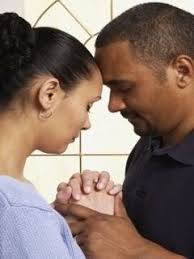
 Your comments concerning Beth Moore and women like her seem shame-filled, judgmental and clearly challenged by the word of God and the life of His Son while on the earth. Please consider these scriptures found in the book of Luke concerning those who supported Jesus’ ministry.

 Often the phrase, “Well, I’ll just divorce him or her,” is glibly spoken. If you are truly considering this option, then also consider some of these very real consequences.


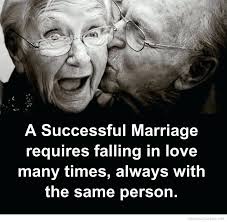 Journalist and author Mignon McLaughlin once said, “A successful marriage requires falling in love many times, always with the same person.”

 Someone once shared with me these words, “I’ll respect him when he starts respecting me.” Still another said, “When she starts acting respectable, I’ll show her respect.” Really? Since when is respect conditional upon another respecting you?
 I love how author Gary Thomas weighs in on this very subject, “As our partners and their weaknesses become more familiar to us, respect often becomes harder to give. But this failure to show respect is more a sign of spiritual immaturity than it is an inevitable pathway of marriage.” He also notes, “When there is mutual respect in marriage, selflessness becomes contagious…. If you want to obsess about them [weaknesses], they’ll grow, but you won’t!”
 Marriage minefields are fields where we have buried or hidden devices (memories) just below the surface. We actually move forward in life by frequently looking backward. Most day-to-day life is not filled with new revelation but memory. Memory helps us to find our way home after work. Memory is used daily in order to live life. Life without the ability to recall even the slightest, most mundane details or important ones would be disastrous.
 Some of our memories contain lies or misbeliefs and still others are inaccurate. It was not uncommon for John and Elizabeth (not their real names) to experience knock-down, drag-out arguments. In sheer frustration late one evening, John looked at Elizabeth and said, “That’s it; I’m out of here!” Immediately, Elizabeth went silent and fell to the floor in a fetal position, where she sobbed uncontrollably. Even though John ran immediately to his wife, knelt beside her, and desperately tried to console her, it was as if he had left. Elizabeth didn’t or couldn’t hear his voice or acknowledge his presence. John later discovered that when his wife was six years old, she overheard her parents fighting. Her father’s words rang out as he screamed, “That’s it; I’m out of here!” Elizabeth never saw her father again
 Elizabeth was no longer fighting with John; she was wrestling with pain-filled memories planted in a minefield just below the surface. Was it the argument they needed to resolve, or was it Elizabeth’s past hurts that needed to be healed? From many stories like this one, I have come to believe that most relationship issues in the present have a connection to the past; therefore, what seem like marital issues are often individual issues. I am convinced that when Jesus heals our individual issues, sins, hurts, and disappointments, marriage relationship issues can also be healed. *
 Many years ago, a wiser, older, more mature couple taught us this phrase: praise in public; construct in private. By that phrase they meant to always provide a word of praise for your mate when with your family, at your work place, with your friends or in any social setting. They also encouraged us to never, ever put our mate down, shame them, humiliate them or correct them in a negative sense in public. We took this counsel to heart and have adapted it for our marriage relationship.

 Perhaps lechery is a word you are not familiar with. If you look into its meaning the dictionary states, “…unrestrained or excessive indulgence of sexual desire.” I have come across this “desire” within some marriages. Usually, it is the man who relentlessly pursues an inordinate desire for sexual relations, but this is not always the case.
 Steve Prokopchak