 Sin. That is not an often-used word today. Very few desire to be reminded of their sin or have their sin pointed out to them. Have we become soft on sin to the point of straying from the use of the word? Certainly it’s a biblical word – one found in the Old Testament and the New Testament, including the gospels. (Numbers 32: 23; I Kings 8: 46; Romans 3: 23; John 8: 34)
As a professing Christian, is it right to mention this word to others? Is it right to discuss sin issues in public and in sermons or small groups? Has the current generation so shied away from this word that it has, at the same time, caused or created an affirmation of sin? Is sin still sin or is there a nicer, more politically correct and acceptable word to use? (I John 1: 8; 3: 4, 6-8)
I prayed to give my life to Christ in 1971 and sin was pretty black and white back then. Preachers preached on it and friends were bold enough to point it out, taking me to the word of God and speaking to me forthrightly about the need for repentance. I embraced it, even appreciated it. I did not grow up in a religious home and I was not equipped with very many moral guidelines. (I Cor. 5: 12; Gal. 6: 1; James 5: 19-20)
If the church becomes lax on sin, then moral guidelines become more and more difficult to determine. From Genesis chapter three, the evil one has determined to make right wrong and wrong right. If we can no longer identify the right, we’ll never know the wrong and vice versa. The overall purpose of the law, the Ten Commandments, was to point out sin, boundaries (exposing our sin). God was determined that for society to function together in a normal, healthy way there needed to be rules – guidelines of wrong and right. Why? Because He hated mankind? No, the exact opposite; He loved mankind and wanted us to live a long and prosperous life free of sin and disease. (Psalm 119: 11, 133; Matthew 5: 17-20; Romans 8: 3-8; Gal. 3: 23-25; Hebrews 12: 1-10)
There is a deviation in the church today. It seems we’re fearful of calling sin, sin…afraid to offend. We’re afraid that we’ll hurt someone’s feelings or tramp on someone’s toes. We fear backlash from the younger generation who might be quite ignorant of the word of God and what sin actually is. And we can fear persecution from the world that actively walks in sin and does not want to be reminded of their wrongdoing. We live in a culture that defends its sin and calls it “personal rights” or “my business” that ‘hurts no one.’ Really? Alcoholism hurts no one? Adultery that breaks up a family hurts no one? Selfishness in pursuing pornography hurts no one? (I Cor. 2: 25, 27-28)
If someone stole all the money in your savings account, money you worked a lifetime to gain, would that be sin? Would you confront that person of their sin? Would you desire them to be arrested for their sin of thievery? Why wouldn’t it be correct to acknowledge sinfulness as hurting many?
If you work alongside someone who works harder at getting out of work rather than actually working, does their slothful attitude hurt anyone other than themselves? Guessing you’re getting the point. Sin does hurt others; it does have a direct effect upon others in our life. Sin, according to God’s word, is wrong and it is what Jesus died for. Our wrongdoing affects our relationship with our heavenly Father and the price that His Son paid. The Holy Spirit is grieved by our sin because it separates us from God. (Romans 6: 23)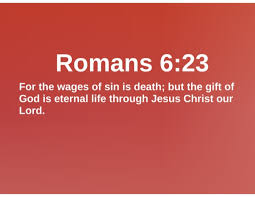
If we profess faith in Jesus, then we must deal with the sin in our life and not whitewash it. It doesn’t matter what we feel about it or if we think it hurts no one else. Sin separates us from our Savior and it can do so eternally. (II Peter 2: 4-10) So, yes, sex outside of marriage is still sin. Drunkenness is sin. Gluttony is sin. Gossip is sin. Stealing is still sin. Coveting what others possess is sin and profaning the name of the Lord is sin. Paul wrote to “flee” from sin because as believers our bodies are the temples of the Holy Spirit and we were bought with a price. (Romans 1: 18-23; I Cor. 5: 9-11; 6: 9-11; 6: 18-20)
If we’re not serious about this thing the scripture calls sin, then we’re not serious about truly following Jesus. Never do we desire to hear one day that Jesus did not know us, even if we claim to know Him. (Matthew 7: 21-23)
Here’s the good news, Jesus gave His life for our sin, not to keep on sinning, but to receive His redemption and His forgiveness. We need to receive His truth today and begin to deal with the sin in our life, allowing His love to cleanse us of all unrighteousness. (II Cor. 5: 21)

 Over decades of suffering from the disease of glaucoma, my 94-year-old father is now completely blind. Of course, it is a life challenge, but I have learned something through his blindness that applies to my spiritual life.
 I’ve dedicated and spent most of my adult life in some form of counseling profession, e.g., foster parent, group home leader, social worker, marriage and family counselor and overseer. My foundational basis of counsel has always been the word of God. The truths found in this book have radically changed my life from the inside out, so why wouldn’t these same truths change the lives of others? And it is on that basis that a number of years ago I put together a book that lists those scriptures and connects them to specific areas of need.
 Is Judge Roy Moore guilty? Yes, he is. But then, so are you and I because we have all sinned and come short of the glory of God. I do not know about any current accusations against him, but I pray he tells the truth for his sake and for the sake of the women who are accusing him.
 I was recently able to spend the greater part of a week with my newest grandson, Phoenix. Yep, my baby girl had a baby boy and she is a GREAT mother to him.
 Sitting in Chicago O’Hare airport helping my parents travel back from their granddaughter’s wedding in California, an American Airlines worker in his flight line overalls stopped in front of my, then, 89 year-old father. What he did next surprised all of us, not the least of whom was my Dad. Down on one knee, directly in front of him, he said, “Sir, did you serve in WWII?” My father answered, “Yes, I did, I was in the Army.” This young man continued, “Thank you, sir, for your service. It is because of men like you that I was able to immigrate here with my parents.” As quickly as he came, he left. My father was clearly taken aback, but appreciative of the sincere remarks he just heard.
 Do you know a veteran? Thank them for their service and let them know you appreciate living in a country full of freedoms that they helped to protect.
 Were you aware of the fact that greed is sin? Not sure if I ever heard a sermon on that subject, but it is. Jesus once told the Pharisees that the inside of their cup was full of greed and self-indulgence. Yikes! Greed was even in a list of sins that Jesus mentioned in Mark chapter seven. And in Luke He told us to be on guard from all kinds of greed.
 Life is full of insecurities. We all have them. I recently turned 63 and realize that I can still deal with insecurity. You’d think that after six decades of life insecurity would be behind me, a distant memory. It’s not though, and here’s why.
 I recently returned from serving a local church in Chicago, IL and was reminded in so many different ways of why we each need a local church in our lives and the lives of our family. To me it is imperative to be in close relationship with those persons who care about you and your family. It is essential to have that connection for not just receiving, but giving as well.
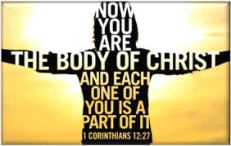
 I have experienced all of these and more in many local churches and I appreciate the body of Christ so much. God is not angry at His church as so many speak today, but rather, He loves His church, He died for His church and longs for His church to be with Him one day. Until then, be a vital part of a growing, Bible believing and faith-filled local church body. You and your family will grow and help to grow others.
 We are settled. We do not have to always agree, but rarely do we disagree. Steve is Mary and Mary is Steve and we desire the very best and the highest goodwill for each other. We are not competing with one another and we are not jealous of each other. We will not settle for mediocre in our relationship and we will not allow a spirit of discontentment to show its ugly head. We both know that through the grace of God and His goodness to us, we gained something…or someone in marriage. When we said “yes” to one another, we said “no” to every other possible partner out there. We have no regrets.
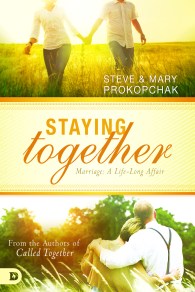 You’ll find those six words, maybe nine, in chapter thirteen, the final chapter of
  Steve Prokopchak