
Issues of the Day, Marriage, Postmarital

Staying Together Chapter Six: Marriage Has A Mission

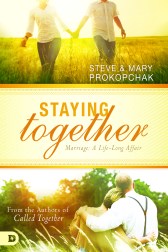
Note: This thirteen-week blog series will share a snippet from each chapter of our new book, Staying Together, Marriage: A Lifelong Affair by Steve & Mary Prokopchak. This, our latest book, is now available through House to House Publications.

It astounds us to discover how many couples do not know why they are married. This is the question this chapter will probe—what is your mission together as a couple? For what reason(s) has God called you together into this union? Those who once were two have been called to move as one.

Businesses, civic organizations, churches, and the military all have mission statements. If they understand this statement and what goals are to be accomplished, all of the members or employees of these organizations know why they belong. Mission statements are composed of descriptive terms like “to serve the homeless of our city,” “to build a better and more efficient home,” or “to protect our nation’s borders.” When God created man, He also created a mission for man. God gave Adam and Eve an assignment from heaven—to tend the Garden of Eden and to rule over creation.

Life can get busy and pass us by rather quickly. Before we know it, we’ve been married for five or even ten years. We can begin to myopically focus on the stuff of life that has no real or eternal value or lasting effect upon our lives and the lives of others. It’s important to remember why God called you together in matrimony, and writing your mission statement as a couple can help to refocus your marriage on the things that truly matter.

Chapter six of Staying Together will guide you through writing this all-important marriage mission statement and provide you with the qualities of a successful marriage.

Other ordering options:

B&N: https://www.barnesandnoble.com/w/staying-together-steve-mary-prokopchak/1125534926?ean=9780768414905

Amazon: https://www.amazon.com/Staying-Together-Marriage-Life-Affair/dp/0768414903/ref=sr_1_2?s=beauty&ie=UTF8&qid=1499959168&sr=8-2&keywords=steve+prokopchak

CBD (Christianbooks.com): https://www.christianbook.com/staying-together-marriage-a-lifelong-affair/steve-prokopchak/9780768414905/pd/414905?event=ESRCG

Standard
Marriage, Postmarital

Staying Together Chapter Five: Moving Beyond Our Histories

Note: This thirteen-week blog series will share a snippet from each chapter of our new book, Staying Together, Marriage: A Lifelong Affair by Steve & Mary Prokopchak. This, our latest book, is now available through Destiny Image Publishers or presently with House to House Publications.

Prior to marriage, we spend hours communicating face to face and, when apart, by phone, text message, e-mail, and Facebook. We study one another and practice our listening skills to really hear each other’s hearts. We attempt to win the other through our attentiveness, our affirmation, our words of love, and our body language of acceptance. One couple told us communication was so easy and came so naturally to them that they could not understand what the big deal was about the subject of communication within marriage.
Nothing magical happens when we say, “I do.” There are no internal switches that turn on or off to inhibit the flow of communication. However, in many ways the pursuit is over. The other-focus can begin to return to self-focus and our own particular needs now that our partner has officially and publicly committed to being ours, “until death do us part.” The areas that you had the patience to overlook prior to marriage often become stumbling blocks in the first year of marriage. That which you once shrugged off as cute is now irritating.

What happened? Were we faking it? Were we trying to expose only our good side? It was fun having our heads in the clouds and not needing to worry about all that could go wrong. Reality during engagement is different from reality during marriage, neither of which is necessarily good or bad. So, what’s the issue?

God created us for relationship with Him and others, but at times we personally long for independence from both. How do we move beyond that natural bent toward independence? Are there memories that are hindering our healing? Read about “memory minefields” in this chapter and how to be free of them.

Order your copy Staying Together today here.

Other ordering options:

B&N: https://www.barnesandnoble.com/w/staying-together-steve-mary-prokopchak/1125534926?ean=9780768414905

Amazon: https://www.amazon.com/Staying-Together-Marriage-Life-Affair/dp/0768414903/ref=sr_1_2?s=beauty&ie=UTF8&qid=1499959168&sr=8-2&keywords=steve+prokopchak

CBD (Christianbooks.com): https://www.christianbook.com/staying-together-marriage-a-lifelong-affair/steve-prokopchak/9780768414905/pd/414905?event=ESRCG

Standard
Marriage, Postmarital

Staying Together Chapter Four: Healthy Boundaries For A Healthy Relationship

Note: This thirteen-week blog series will share a snippet from each chapter of our new book, Staying Together, Marriage: A Lifelong Affair by Steve & Mary Prokopchak. This, our latest book, is available in August, 2017 through Destiny Image Publishers or presently with House to House Publications.

Healthy relationships bring happiness to our lives. They add fun, reduce stress, and decrease anxiety as we give love to and receive love from the people around us. The opposite is true of unhealthy relationships. They increase stress and anxiety in our lives. They bring broken hearts and spirits.
For relationships to be healthy, they must have boundaries. What does this mean? Literally, boundaries are the physical, emotional, sexual, and spiritual limits we place on a relationship. Unhealthy relationships do not respect these limits; they cross boundaries all the time (for example, abuse of any kind, from manipulation, demands, unrealistic expectations, or loss of freedom to even more severe abuses).

If we don’t maintain an awareness of our distinction from others (where one person ends and the other begins), we will be incapable of being who God has called us to be as a healthy individual. Instead, we will attempt to be who we think another desires us to become. If we do not set healthy boundaries for ourselves, we empower others to manipulate and control us to be who they selfishly want us to be (to meet their own personal needs) rather than who God has designed us to be. Oneness within a marriage relationship is never about control or manipulation but, rather, love that respects personal boundaries. Control and manipulation are about exercising power, while love is about freedom.

For more on boundary perceptions and the twelve values found in healthy marriage relationships, see chapter four of Staying Together.

Other ordering options:

B&N: https://www.barnesandnoble.com/w/staying-together-steve-mary-prokopchak/1125534926?ean=9780768414905

Amazon: https://www.amazon.com/Staying-Together-Marriage-Life-Affair/dp/0768414903/ref=sr_1_2?s=beauty&ie=UTF8&qid=1499959168&sr=8-2&keywords=steve+prokopchak

CBD (Christianbooks.com): https://www.christianbook.com/staying-together-marriage-a-lifelong-affair/steve-prokopchak/9780768414905/pd/414905?event=ESRCG

Standard
Marriage, Postmarital, Premarital

Staying Together Chapter Three: The “One” of Us

Note: This thirteen-week blog series will share a snippet from each chapter of our new book, Staying Together, Marriage: A Lifelong Affair by Steve & Mary Prokopchak. Now available to purchase at a 30% discount through House to House Publications.

When we buy a new car, we enjoy the new-car smell. We appreciate the fact that it doesn’t break down from age and worn parts. We love that it’s clean and shiny, without a single stain on the carpet or scratch in the paint. However, unless we provide the proper maintenance in the months and years that follow, our car will eventually break down.

It’s not necessarily bad or wrong for a marriage to run on “new” for a season. Because it’s new, kindness abounds; disputes are short-lived; forgiveness comes easily. But when the new begins to fade, we tend to be less forgiving and extend less grace. Like the new car that begins to exhibit problems, has its dings and dents, and shows signs of wear, we become less concerned about its daily care and its future. In fact, we may even begin to dream about its replacement.

Thankfully, human relationships are different from cars. Old love is deeper and stronger than young love. As we age together, we can appreciate the differences rather than trying to make our spouse like us. The wise couple learns to use that “incompatibility”—those differences—to their advantage. They begin to learn that no team is made up of similar talent, and each member has a different strength to be used in a particular area. Just as in a healthy business, management acknowledges its own weaknesses and then hires those who can make up for those differences by bringing their strengths alongside a discerning leader. As our marriage matures, we learn to not be threatened by those strengths. We begin to realize that God called together this team of two to become one.

For much more on the process of two becoming one along with challenging assessments and questions, please see chapter three in our book, Staying Together.

Other ordering options:

B&N: https://www.barnesandnoble.com/w/staying-together-steve-mary-prokopchak/1125534926?ean=9780768414905

Amazon: https://www.amazon.com/Staying-Together-Marriage-Life-Affair/dp/0768414903/ref=sr_1_2?s=beauty&ie=UTF8&qid=1499959168&sr=8-2&keywords=steve+prokopchak

CBD (Christianbooks.com): https://www.christianbook.com/staying-together-marriage-a-lifelong-affair/steve-prokopchak/9780768414905/pd/414905?event=ESRCG

Standard
Marriage, Postmarital, Premarital

Staying Together Chapter Two: The Fear and Insecurity Found in Us

Note: This thirteen-week blog series will share a snippet from each chapter of our new book, Staying Together, Marriage: A Lifelong Affair by Steve & Mary Prokopchak. Now available to purchase at a 30% discount through House to House Publications. 

Growing up with an angry and physically abusive father, Greg (a real person in our lives) adopted mechanisms of self-protection. Those mechanisms kept him out of harm’s way with his dad. He learned when to talk and when not to talk; he also learned that silence kept him from revealing his true self and his true emotions. Introversion protected an already fragile esteem and, in his environment, helped to prevent the experience of further pain.

Bringing those personal childhood precautions into marriage did not help Greg, however. His wife thought he became distant and quiet because of something she did or said. She continually second-guessed what he seemed to be thinking or feeling. Growing up, Greg’s insecurities were a direct result of his fear of his father’s abusive treatment. Today, even though he lives as an adult with a woman who loves him, he has been unsuccessful at overcoming this fear and being vulnerable with her. It is slowly killing his marriage. What once served a purpose and worked for him is now harmful and destructive. The inward silence speaks loudly to the very person he should feel most comfortable opening up to, his wife.

Other causes of insecurity can include:

■ A poorly developed concept of oneself, brought on by a low or underdeveloped self-confidence

■ Feelings of inadequacy

■ A negative body image

■ Never having felt accepted or approved of by others, especially those who were perceived as important in our life

■ Unrealistic expectations by authority figures still trying to be met as an adult

When our identity becomes intertwined with our insecurity we can become steeped in self-adoration. Perhaps the most telling definition of long-term insecurity is that of the idol of self. We bring these emotional insecurities and identities into our marriage, tending to look to our spouse to meet our unmet needs and provide all that we lacked in our lives prior to this relationship. This is unfair and unrealistic to our spouse.

For answers to insecurity within your life and your marriage, please see chapter two of Staying Together.

Other ordering options:

B&N: https://www.barnesandnoble.com/w/staying-together-steve-mary-prokopchak/1125534926?ean=9780768414905

Amazon: https://www.amazon.com/Staying-Together-Marriage-Life-Affair/dp/0768414903/ref=sr_1_2?s=beauty&ie=UTF8&qid=1499959168&sr=8-2&keywords=steve+prokopchak

CBD (Christianbooks.com): https://www.christianbook.com/staying-together-marriage-a-lifelong-affair/steve-prokopchak/9780768414905/pd/414905?event=ESRCG


Standard
Marriage, Postmarital

Staying Together Chapter One: The “Me” In Us

Note: This thirteen-week blog series will share a snippet from each chapter of our new book, Staying Together, Marriage: A Lifelong Affair by Steve & Mary Prokopchak. Now available to purchase at a 30% discount with House to House Publications. 

We live in a consumer-oriented society. We can obtain almost anything we desire, and we can have it our way, in our color, in our price range. If it doesn’t fit, we can return it. If it breaks, we can replace it. We can call toll-free numbers, complain to our boss, or even hire a lawyer if we are dissatisfied. I (Steve) once had a briefcase on which the handle fell apart. It can be pretty tough to carry a briefcase without a handle, so I contacted the company directly. The customer service person asked for the model number of the briefcase and said she would have a replacement sent to my door, at no cost, no questions asked! Literally the next day there was a box at my door with a brand-new briefcase in it. As a consumer, this company won me over.

Marriage, however, is not for the consumer; marriage is for the committed. Consumerism can spoil us. What happens when we bring consumerism into our marriages? We might expect to have everything our way. We might expect to have our needs met first. We might even expect our spouse to act like a customer service representative, bending over backward to win us over. We might expect a kind, cheery, or calm response to all of our selfish questions and requests. And because the customer is always right, if we act as customers in our marriages we feel perpetually justified.

After years of counseling and speaking all over the world, hearing story after story from many different couples, we have come to realize that most social scientists have missed the mark when it comes to identifying the primary cause of marriage breakup. While finances play a part, as do compatibility and sexual issues, these are all secondary to the primary reason—selfishness. When we become a consumer in our marriage, we become selfish and frequently used to getting what we want.

One time in a marriage counseling session, a husband responded, “I give her whatever she wants. She doesn’t work outside the home. She has a car. All I ask is that she…” That sentence could be finished with any number of things—get up and cook me breakfast, give me a back rub and listen to me when I come home from work, balance the checkbook, run the entire household, cook delicious meals, always be available for sex. You get the picture. The spirit of consumerism says, “I give to my spouse, therefore, I expect a certain return.” If you’re looking for a specific return, then you are looking for an investment and not a committed marriage relationship.

Order the book here.

Or other options: B&N: https://www.barnesandnoble.com/w/staying-together-steve-mary-prokopchak/1125534926?ean=9780768414905

Amazon: https://www.amazon.com/Staying-Together-Marriage-Life-Affair/dp/0768414903/ref=sr_1_2?s=beauty&ie=UTF8&qid=1499959168&sr=8-2&keywords=steve+prokopchak

CBD (Christianbooks.com): https://www.christianbook.com/staying-together-marriage-a-lifelong-affair/steve-prokopchak/9780768414905/pd/414905?event=ESRCG

Standard
Children, Encouragement, Issues of the Day, Parents

Ten Ideas to Help Your Son or Daughter Pay for College

My wife and I helped three children through college and we learned a lot from that experience. There are some things we would do over if given the opportunity, but more so we wanted to pass on to you some ideas about paying for college. It can seem impossible, but we do not believe that your son or daughter has to leave college with huge debt that inhibits them for their future. So here are our recommendations for those children who may be college bound.

  1. Take as many college courses as possible while still in high school. This can start while your student is still a junior in high school and it’s cheap. These courses are typically affiliated with a local college campus and they love starting students in their educational programs early.  Also, high school AP courses are often accepted for college credit.
  2. Start looking for scholarships while still in high school. Have them talk to their high school counselors about local scholarships. Money is out there; you have to make it your job (and your student’s job) to find the resources. We even found interest free loans from agencies in our local area that helped our children. Some schools, in conjunction with local rotary clubs and the like, have loan funds available to students.
  3. Attend a school in your state. Often there are heavy discounts for attending a school in your home state. (Obviously these are state schools only and not private schools.) Sometimes scholarships are available just for staying in state.
  4. Take your general education courses (normally the first two years) at a local community college. Community colleges are so much less expensive than universities offering the same courses. Live at home and go to community college and then attend your last two years on the campus of your choice to complete your education. It doesn’t sound as exotic, but it dramatically lowers the debt load.  As well, take advantage of on-line courses. Nine out of ten colleges now offer on-line courses at a far less expense.
  5. Take a year off to work after high school – a “gap” year. There definitely is a gap year advantage as most students do not know what they desire to study. Enter the work force and learn about labor, serving, hourly wages, taxes and saving for college. Perhaps you can locate a job that will continue even as you enter college. Two of our children were waiters at local restaurants and made good incomes in the field.
  6. Do you have a grandparent that would like to sow into their grandchildren’s education? Ask…perhaps they are waiting to help in any way possible. Start 529 Education Savings accounts into which parents and grandparents can contribute and those contributions may be state income tax-deductible.
  7. Be very aware of which loans you sign up for. When parents co-sign for loans they become responsible for those loans. You cannot predict what might happen in the future. Know that federally “subsidized” loans have deferred interest until six months after graduation. Complete your FAFSA forms as early as possible for possible state grant money.
  8. Keep working to lower your borrowed dollars. Your student should work full-time during the summer and at least part-time during the school year. There are jobs on campus and off. It all adds up and helps tremendously.
  9. Keep a close eye on all your loans, the accrual and the interest rates. A good rule of thumb is that your child would graduate from a four-year college program with no more than one year of tuition debt.  (For example: if tuition is $28K per year, your student would graduate with no more than $28K in debt.)
  10. Finally, consider a career assessment test for your son or daughter that helps them to narrow down and/or identify possible majors to study. When your child knows what they desire to study according to their gifts, wasting money on subjects that will not relate to his or her field of study will decrease.

Bonus: Teach your son or daughter to utilize a budgeting tool so they learn how to budget their money and help control their spending and saving while on campus. It might help them to not visit Starbucks daily, purchasing five-dollar drinks. Train them to use cash or debit cards and not credit cards for common purchases. Finally, check out this blog on 7 Ways To Go To College For Free.

Standard
Marriage, Prayer, Premarital, Singles

Finding a Life Mate: The Character Traits Worth Looking For #22


In 2011 my first twenty-one blogs were titled, “Finding a Life Mate: The Character Traits Worth Looking For.” I loved the idea of starting a blog about something I am passionate about: preparing for marriage. I recently read through all 21 of them once again and did a bit of editing. In doing that, I realized I missed a really important area. That area was spiritual formation through prayer.

In learning to place God first in our lives, my wife and I have discovered that our similar spiritual values and our longing to pray for and with one another are vital to the health of our relationship. Dating to eventually marry a fellow believer with the commonality of core spiritual values has created a oneness in our relationship that is simply unsurpassed to any and all other areas of marriage unity.

When we encounter a difficulty or a bump in the road of marital bliss, our first response is to pray together. The scripture relates that the reason we fight and argue is because we do not pray first. (James 4: 1-2) If we can discover this freedom with the one we are looking at as a life mate, we are well ahead of the game. Why? Because our relationship with Jesus and our ability to pray and look to Him is the most intimate thing we can do together. And, it is by far, the most mature act. Look for a life mate that looks to God first, it will take a lot of pressure off of you.

Start reading those first 21 blogs here.  Or, recommend them to a friend who is looking for their life mate.

Standard
Encouragement

Three Very Important Days in Each of Our Lives

There are three days that we each share (to add to a Mark Twain quote): The day we were born; The day we were born again: The day we discover why we were born.

The day we were born:

Regardless of where you were born, what family you were born into or any negative aspects of your birth and life, our heavenly Father so much wanted you to be born that you were given life by Him. He created you and He breathed life into you for this exact time on the earth. Life is a gift from God!

The day we were born again:

This is the day we realized God’s love for us and our sinfulness. This is the day we were given eternal life through the death of God’s Son, Jesus. This is the day our Savior longs for in the life of each and every being He has created. It is this day which marks us for an eternal kingdom, a kingdom not of this world.

 The day we discover why we were born:

The why of our life… every person on earth wants to know the reasons for which they exist. Everyone longs to know their purpose, their call, their gifts and their contribution to this short season on earth. When we discover our uniqueness, our calling and our purpose, we discover the Jesus call to live life through Him, for Him and from Him.

So we keep praying for you, asking our God to enable you to live a life worthy of his call. May he give you the power to accomplish all the good things your faith prompts you to do. (II Thessalonians 1:11)

Standard
In the news, Issues of the Day, Mission Report

Twenty-Five Years After a Rwandan Genocide and Genocide of Another Kind

The Rwandan government is speaking and teaching there is only one people group in the nation of Rwanda. There are no longer tribes and factions. On paper and in speech this sounds fine, but there’s a deep wound in Rwanda that is still not healed.

To speak “one nation” without major heart transformation, forgiveness and blessing rather than cursing would seem like empty and hollow words. Words that mean well, spoken to move the country forward, but words, nonetheless. Unity cannot be legislated while a process of healing cannot be forfeited.

I just returned from this beautiful, clean and prosperous nation in Africa. The Rwandans from the churches that I was part of are dealing afresh with trauma as many of those persons who were incarcerated for their crimes against humanity are now being released from their prison cells. These persons are once again walking the streets and it is causing a response of fear and unrest.

There was so much blood spilled on this soil, but it seems the best answer the world or a government has is to put it out of your mind and move on. How does one reach forgiveness of those who now walk free while their fathers and close family members are in the grave? How does one obey the law of the land while at the same time find freedom from some of the deepest pain a human can endure? Genesis three and verse seventeen records God’s response to Adam concerning the ground he was working. Due to his disobedience God told him, “Cursed is the ground because of you…”

Does the blood of thousands of innocent Rwandans soaking this ground bring life or a curse to this soil?

Thank God that His Son became a curse for us (Galatians 3:13). The Son of God died on a Roman cross and was placed into the cursed ground only to be miraculously resurrected. Our King became victorious over death, hell and the grave. The soil could not hold Him. The blood He shed would break the curses of generations.

I was seated at a local church in Kigali, Rwanda waiting for my time to speak thinking about the entirety of the above and actually thanking God that my home nation has not experienced such horrific pain and suffering, at least in my lifetime.

Almost immediately I had this thought, “Not true of America, your home.” And then my next thought was concerning the present holocaust: abortion. Everyday my nation is killing babies in the womb, spilling innocent blood and everyday we walk through life as though it is a normal occurrence to be accepted. My government protects this practice and calls it “a choice.” There is no choice for the baby found living in the womb.  

According to the World Health Organization, every year in the world there are an estimated 40-50 million abortions. This corresponds to approximately 125,000 abortions per day. In America there are 1.3 million abortions a year, that’s 3,562 per day!

The definition of genocide is: The deliberate and systematic extermination of a national, racial, political, or cultural group. Between April and June of 1994, an estimated 800,000 Rwandans were killed in the space of 100 days. Since Roe vs. Wade we, America,  have realized almost 60 million killings!

Can you imagine that we have politician after politician, governors, presidents and Supreme Court members who work tirelessly to keep this crime of abortion alive? Can you imagine that people vote for these politicians dedicated to keep babies torn to pieces by the thousands per day? Rwanda’s genocide is over and has been for many years while ours continues on and on and on, day after day after day and year after year.

Governments will never find the solution for the broken human heart. Legislation cannot change our blood-saturated soil. Even our national leaders would call those leaders who kill their own people uncivilized barbaric murderers. And yet, they themselves are doing similar.

Judas, after betraying his Master, Jesus, said that he had “betrayed innocent blood.” (Matthew 27:4) The Psalmist describes this sin of shedding the innocent blood of children when he writes, “They shed innocence blood, the blood of their sons and their daughters, whom they sacrificed to the idols of Canaan, and the land was desecrated by their blood.” (Psalm 106:38)

Their blood desecrated the land and themselves (v.39); do we get that?

I am extremely grateful that the tide is turning and the younger generation is far more pro-life today, but I also hear the present generation say to me that they are not one-issue voters. Could this aberration, this abnormality called abortion be normal now in the mind of a believer in Jesus? Could this injustice and lack of mercy toward the unborn be a curse in our land as this innocent blood is shed daily?

In Rwanda there was a tribe dedicated to killing another tribe. And in America there is a demonic tribe dedicated to eradicating the lives of the unborn. If it’s murder to kill a child outside the womb, is it not murder to kill a child inside the womb? I agree that abortion is not the only important issue, but it is foundational to values that we hold dear. It is foundational to what we call life and it is foundational to how we respond at every other level of life.

It was Mother Teresa who said that if we do not respect life in the womb, we would not respect life at any stage of life. We experienced the first school shooting in our nation right after she spoke these words while in Washington, D.C.

The blood of the innocent cries out in Rwanda for sure, but the blood of the innocent child cries out in America too. Are we listening? Are we speaking up for them? Are we a voice for those who have no voice?

Endnote: In the time that it took you to read this there were approximately 80 abortions performed in America.

Standard