 I grew up without a fear of dogs until one cold and snowy day. While sledding at my neighbor’s house, their mean-spirited German Shepherd was released from his chain (a big chain I might add). He chose to go after me while on my sled and bite me in my meatier portion through several pair of pants. I immediately went home crying. Later, around age 15, I was riding my motorcycle past a neighboring farm and their mongrel decided he didn’t like motorcycle riders. He actually caught me, made a leap straight up and latched on to my left arm. I had several really nice puncture wound, landing my mother and me at the Dr. for a tetanus shot and wound care.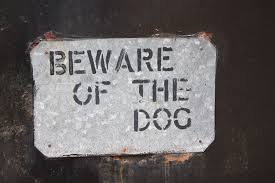
Undoubtedly, I became a little skittish around dogs, especially big dogs. But was my fear legitimized by these incidents? I believe it was. The fear was based on real life encounters with real life dogs and real life bleeding wounds to prove it. Fears can be real due to actual life experiences and fears can be false. Let me explain.
Bethany said “I do” to Derek, madly in love with him. Without reason, she struggled almost daily that Derek would one day leave her. No matter what Derek said and no matter how he reassured her, she still maintained her fear. Where was it from and why was it so powerful in her life?
When Bethany was just five years old, her father walked out of her life. She carried that fear into her marriage and was waiting for her husband to do the same one day. It was a false fear, based on no present reality or truth.
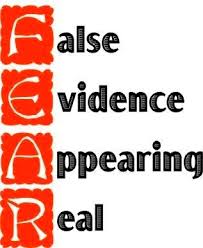
Someone once shared with me that the word FEAR could be an acronym.
When our fear is based on the real, our Father can heal that place in us by His love because His love casts out fear (See I John 4: 18). When the fear is false, His truth can set us free from the lie that is holding us captive. Our job is not to assume that all of our fears are based on truth. We can pray as they are identified and ask God what is true and what is false so that healing can follow.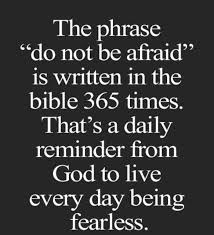


 A number of years ago my wife and I visited some churches in the nation of Rwanda. We were responding to an invitation to share marriage principles with these lovely, but broken people. Just leaving the airport, we were told by our hosts, “But first, you will visit the genocide museum.” Mary and I could hardly speak after seeing those images and reading about what happened in this war-torn nation. We were wrecked from the inside out and, quite honestly, our hearts ached. It was difficult to gather our emotional selves for the service that evening. As we looked into the Rwandan’s eyes that night, we wondered what images they carried with them.
 Our family often had the nations around our table as our children grew up. We loved the cultural examples each one brought to us. I remember in particular a couple from Zimbabwe who we invited from a local college for Thanksgiving. In the middle of the meal the wife told us, “You throw away the best parts of the turkey.” We all had a great laugh because we do not eat the head, liver or the feet of a turkey. But we desired our children to know and understand that every life is valuable to God and His design for them. God’s kingdom is a kingdom of nations and nations represent people.
 Proverbs 12 tells us, “The words of the reckless pierce like swords, but the tongue of the wise brings healing.” What does your tongue bring to those around you, your co-workers and your acquaintances? I am personally challenged by my thoughts (not often spoken, but still thought) that do not think the best of others or those thoughts which do not give those different from me the benefit of the doubt. To have the privilege of traveling the world and to experience different cultures is enlightening, while at the same time difficult to not think comparatively, i.e., my culture vs. their culture.
 Recently while in the nation of New Zealand, a friend pointed to a fellow teacher and said, “See that older gentleman?” I assured him that I did. He went on to explain, “I am younger than him and I am retired from teaching.” I asked why he chooses not to retire figuring the conversation was leading that way. My friend replied, “He tells me he wants to continue teaching because it is far better than going home and living with his critical wife.”



 In God’s word, Ephesians chapter five is where we often find ourselves concerning the husband and wife relationship. We tend to quote those parts that we like in these verses, but often fail to remember the parts that require effort from us. For example, what man doesn’t like the fact that God requires a woman to respect her husband? And, what woman doesn’t like the part that asks a husband to love his wife?
 Politicians can be an especially difficult bunch due to their near truths or outright lies, placating, patronizing, cover-ups, political correctness and bottom line desire of being reelected. You rarely know who is telling the truth today. You especially rarely know the full truth because of a press that now also includes “fake news.” Further, the news outlets often only report what will support their causes and their politicians. It is why I love inside reports from Christian leaders I am acquainted with (throughout the world) who are in the know about so much of what is truthfully happening around the world.
 As Christ followers, we have a long way to go to do more listening, considering, growing and developing. But there are many undeniable written words from God that do not and will not change with culture. We are called to influence culture with Biblical truth. While our opinion may be valuable to some, it will not supernaturally change a life.
 Where did your beliefs come from? Have you ever thought about that question or do you just assume your beliefs are mostly correct? It’s a simple question that takes a fair amount of reflection.
 Dating is not a centuries old concept. Dating is a far more recent notion than that, but unlike what Hollywood presents, dating is NOT about how good someone is in the bedroom. The following are ten distinctive thoughts to consider if you or someone you know is involved in a dating relationship.