
 I first wrote this and shared it with a victim of rape. She was deeply hurting, feeling victimized and of course dealing with shame. If the enemy of our soul can keep us in shame and victimization, he will keep us from future effectiveness. Perhaps something written below will speak to you and help with something you still feel from your past or maybe a friend is in need of it.
- You are not a victim. Victims give up influence and assertion. Victims do not know who they are because victims are lost in insecurity and suffer a loss of identity. But, because the believer’s identity is not in himself, it is already lost to Christ and the power of His resurrection. (See II Corinthians 12:9 – His power is made perfect in your weakness.)
- God’s plan is victory. Sin is a part of the Genesis three world we live in. Victory means that God takes the evil of this world and turns it into something victorious. Being a Christian does not mean we do not experience the evil of this world because it rains on the just and the unjust. It means God has a bigger plan, a greater story.
- You are not responsible for someone else’s sin against you. True guilt leads us to repentance. Shame leads us to condemnation. True guilt followed by true repentance leads to life. Shame leads to death of one’s spirit and soul. Shame leaves us feeling exposed, injudicious, inadequate or defective in some way. Shame breeds condemnation and condemnation breeds more shame. Jesus took our shame on the cross, as well as, our sorrows. He spoke to you from the cross, “Shame off of you.” We must ask ourselves: What am I responsible for and what am I not responsible for? What is the responsibility of the offender? What am I learning about myself through this?
- What boundaries did I break or do I need to instill in my life? Perhaps we realize that we broke our own boundaries or had not thought through God’s boundaries. We need to search His word for His boundaries and His values that He gives us for protection. God’s boundaries are not as the world’s boundaries because He has our best interest in mind.
- Do not repress your anger. Often we have a tendency to go inward with our anger after severe hurt(s). Anger can erupt from feeling powerless and out of control, wanting to “make someone pay”. Allow your anger to be a positive force for healing and personal change. Anger does not make a better athlete or person, but a more careless one. If pressed down, it leads to bitterness and self hate. (See Job 7:11 and Ephesians 4: 26-27 where we are told to not allow our anger to cause us to sin.) Talk through and work through the anger so you are not stuck in its grip. Keep moving through the sadness so you can reach the acceptance piece of godly grief.

- Obsessions of thought. Watch for thought obsessions turning into actual physical obsessive compulsions. Maintain life balance through prayer, worship, counseling, talking to parents and trusted friends who are confidential.
- Forgiveness pursued. Watch for defense mechanisms, e.g., rationalism, denial, unforgiveness, becoming the fixer or the peacemaker. Matthew 18:21 says to forgive continually. There is a difference between extending forgiveness and complete forgiveness. Not forgiving or forgiving only partially will initially cause us to feel power over the perpetrator, but it will only punish us in the end. Take steps to forgive the perpetrator as God gives you the grace to do so. Forgive yourself; He has forgiven you. You cannot change what decisions you made, but you can forgive yourself and move on so you can grow from them. Forgive God rather than allowing bitterness or anger at God. Because of Jesus, God understands our disappointment. Remember Jesus said from the cross, “My God, why have you forsaken me?”
- Move on and mature in God. Allow a tragedy to become a springboard for a better future. For example, we will never know why we were born into the family we were born into, but we do know that God has used it to make us who we are today. (Isaiah 43:2)
You cannot change this situation, but you can let it change you to become more secure, more compassionate, a stronger and more loving person used by God to bring healing to others.
 I am not totally sure why comparison is so often our human go-to mode.
 Ask God to help you hear your own thoughts of comparison and allow Him to speak truth-filled words over you rather than your own negative or pride-filled mental dialogue. I wrote another prayer tract called,
  “The truth is, I never loved her.” Unfortunately, I’ve heard these words more than once. Since I probably never have been totally honest in my response, I’ll be honest with you.
 We make a personal choice with whom we marry – no one forces us. Do you want to stay in love? Then love your spouse with all your heart. Do you want to be happy? Then work toward making your spouse happy. Ask God to show you all of your personal selfish desires so that you can continue your love commitment through every stage of your marriage.
 “I grew up in a Hindu family and was introduced to the worship of many gods,” said my new friend. “However, those ‘gods’ as I grew older, became more and more aggressive, unfriendly, demanding and evil.” Her family told her this familiarity was highly favored and to be embraced, but nothing about this world felt favorable to her. At the age of sixteen, someone introduced her to Jesus and she received Him and His love into her heart. She told me there was a profound change in her life and she soon realized that the “gods” she carried with her were actually demonic presences or spirits meant to torment her. She wanted them gone from her life.
 I really enjoy thatching my lawn every spring for several reasons. The most obvious is that a long winter season is coming to an end, the birds are singing and the perennial flowers are breaking through the earth’s surface. Secondly, I love working outside, especially after a cold spell that keeps you held captive to the indoors. Third, it is meaningful that my heavenly Father has provided a place for me to live and enjoy and lastly, most of all, thatching is a reminder of God’s ability to remove the old, unwanted and dead vegetation that is no longer productive.
 I could barely believe the conversation that was going on in front of me. It was impossible not to hear. The international airline lounge was packed with weary travelers and I needed to stay put while waiting for my flight. I’ll get back to this story later and tell you about the specifics of this conversation, but first let’s consider a hard question.
 Incorporating those who pray over you and your vision for ministry seems like a no brainer. But how do you identify these persons and better yet, how do you keep them praying?

 Individuals are “hooking up” at the workplace, on social media and along the sidelines of their kids sporting events. We tend to have an insatiable desire for understanding and a listening ear and when we receive that from someone other than our spouse, we are walking on shaky ground.

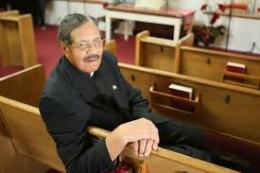 There is a job description that reads somewhat endlessly: Counselor; encourager; prayer warrior; evangelist; healer; teacher; preacher; visitor of the sick and shut-in; visitor of the incarcerated; visitor of the lonely; tending the sheep; Sunday School teacher; camp counselor; wedding performer; funeral arranger/speaker; mediator; janitor; maintenance worker; trash hauler; fiscal operations manager; overseer; meeting coordinator; leader of leaders; etc., etc., To top it off, the person in this position is on call 24 hours a day, 7 days a week.
 What does the resurrection of Jesus Christ, the Son of God, mean to you?