Children, Training

Our Children and Money

imagesAs parents we are responsible for our children’s view, value, use and relationship with money. How we use our finances, whether or not we use a budget, if we maintain a balance on our monthly credit card statements, how liberally we share with others and our tithing practices are all acts of training our children in finances. Exercising financial restraint versus instant gratification is also valuable child rearing. Financial stewardship and how we recognize God’s ownership of our money speaks volumes to our children who are watching us make transactions on a daily basis. How we handle our money, it is said, is an outside indicator of an inside spiritual condition.  Below are some ways in which we trained our children to handle and how to value money.

  •  First and foremost, gaining money is not the total goal, but rather being the best steward possible of what we do receive and/or earn is.
  • Teach your children to tithe off of their income/gifts and also to share with those in need. Coupled with this is the realization that it is all God’s, 100%.
  • Teach them to save for something they desire and not to borrow for it (delayed gratification). They will appreciate it a whole lot more and they will take better care of the item.
  • Teach them to invest for the future. Our sons saved for their first car in which they paid cash.
  • Teach your children the value of work and that they earn an allowance, it is not handed to them. Our children had an hour or so of “work time” every summer day and many Saturdays, along with daily chores. Our kids really learned to appreciate this work ethic in their first year of college.
  • Teach your children a certain standard of work. It must be acceptable in order to earn their allowance or pay. Our children still talk about this around our table today.
  • Be clear about your financial boundaries and do not give in to what every other parent is doing. Financial value boundaries will protect your children.
  • Use a formula similar to the following: 10% tithe; 50% savings; 10% rainy day fund and 30% spending money.
  • Older children can pay room and board (those who are working and out of school); be taught to use an ATM appropriately; learn to make and live by a budget; learn to write checks and use a credit card appropriately by paying off the monthly balance in full.
  • Teach your children about investments, savings, ownership of a home, home maintenance, assets verses liabilities, car payments, proper vehicle maintenance and insurance costs.
  • Here is a huge one, allow your children to fail and make mistakes financially while they live at home and then incorporate that mistake as a learning tool. Better now than when they no longer live with you.
  • Teach your children the many Proverbs and scriptural principles found in the Bible that deal with money.  For example: …”the borrower is servant to the lender.” Proverbs 22:7

If you will do this, your children will return to thank you, earn their own way as responsible and productive adults and not look for ongoing entitlement, gifts and handouts from their parents and others.images-2

Standard
Children

Five Grievous Ways to Parent

Parenting is one of the toughest and most unappreciated jobs on the face of the earth. It can also be the most rewarding. There are, however, methods of parenting that will grieve a child. Here are just five that I have personally observed.images-2

1. Constantly saying “no” to your child because in saying “yes” you have to do something you don’t want to do. Lazy parents use the word “no” more often than they use the word, “yes.” Why? It’s too inconvenient to stop what they are doing and give their child time and attention. When you don’t want to take the time to play a game your child is politely asking you to play, then your adult world is just too important. You, Mr. or Mrs. Parent, are missing your child’s childhood. Charles Swindol once said that if he could change anything in raising his family it would have been to say “yes” more often to his children.

2. Making excuses for unacceptable behavior in your child. “He missed his nap.” “If the other child would not have…my child would not have…” Excuses will come back to haunt you. One day your child will be making them just like you are and you will be dumbfounded as to why. Stop making excuses and start taking the time to train your child. Yes, I know it’s inconvenient, but his or her future attitude is dependent upon it.

3. Thinking that more gifts and more stuff is what your child needs. Your child needs fewer things. Children in America are inundated with toys and technology. Around the world I often observe children playing with sticks (the number one toy of all time), a “discarded” tire, a totally worn out soccer ball or even a two liter plastic bottle. They are outside getting exercise and using their imaginations. These kids often appreciate what they do have more than the children who have it all. Truly, sometimes less is more.

4. Thinking that quality time makes up for quantity time. Your children need you. They need your presence, your laughter, your instruction, your reading to them, your story telling and your correction. It all takes time. It is not the babysitter’s job, the school’s job or the church’s job – it is your job. You took the time to bring this child into the world, now give the time he or she needs from you to raise them, to hug them, to love them and to look them in the eye and tell them how special, wanted and affirmed they are. Of course it’s inconvenient to have a “helper,” but making your home a haven of acceptance rather than a pit of rejection will make life-long and amazing memories.

5. Yelling at your child rather than getting up, going to them and speaking face to face. This is another lazy parenting tactic. Lethargic and idle parents stay in one place and scream commands expecting their child to come running. Really, did you enjoy that as a child? Is your child not worth more of your personal attention than your household pet? Parents who do more yelling than speaking respectfully will one day be on the other end of the screams. Trust me, having been a child welfare social worker it is inevitable. A calm spirit, full of heart and compassion will sow seeds of life into your child. The end result will be that they will know your love, acceptance and approval because you honor them for who they are – your flesh and your blood.

Standard
Children, Encouragement

Building a Wall for Your Daughter

IMG_0357Recently my daughter sent me an email in which she proceeded to thank me for “building a wall and not a door” in her life. The reference was out of Song Of Songs 8: 8,9. The young girl who is a door does not know who she is, her worth, or her value, she lacks faith, depth, astuteness and wisdom. But, the tower of self-worth, self-confidence, self-respect, strength of character, integrity, honesty and humility protect the daughter who is like a wall. She knows whose she is and she knows her father’s love, acceptance and approval. She has value from godly training through her family and good judgment of the opposite sex.

She knows that she is “a catch,” a reward, gifted, intelligent and beautiful. Her strength is her confidence in her Savior and she need not take a second look at any unsuitable suitor. Neither does any young godly man intimidate her so she doesn’t need to dumb herself down in order to be led spiritually. In fact, she does not need to do or be anyone else other than who she has been created to be. She knows that she changes for only One, her Lord. Her father will not need to intimidate the young man who comes calling because she will have chosen wisely as her own dignity does the job. Frequently tell her she is beautiful, a gift from God, loved just as she is and continue to build the wall of Christ in her life. Neither she nor you will ever regret it and one day a young man of God will express appreciation too.1403706_604500141201_2141456521_o

Standard
Children, Encouragement

The Number One Inhibitor of Children

imagesKeeping with the theme of raising children, natural or spiritual, what do you think is the number one inhibitor of growth in a child’s life? What do you think is the number one killer of creativity? What do you think is the number one limitation placed on vision, hope and dreams? The answer, I’ve been told, is critical judgment. Imagine a parent consistently providing negative judgment and criticism toward a child especially after the child feels he or she has done their best. When wrong or harsh judgment is cast upon another human being, that person begins to suffer a creativity and an identity crisis. Teachers can identify those children who continually suffer from words of critical judgment with their heads bowed down and their insatiable need for encouragement.

Adults who have suffered from ongoing critical judgment lose creativity and pursue acceptance in every means possible. The life is often sucked out of them and they will gravitate toward any form of attention, especially the negative. They align themselves with lie-filled thoughts based upon what has been spoken over them. They believe these thoughts and grow up only to pass critical judgment upon themselves, continuing to reinforce everything negative. The Bible is clear that we are to judge sin and not one another (Romans 14:13; James 4:11,12) As parents ask the Lord to help you see the positive, to operate out of a spirit of praise and encouragement and to heap words of life upon your children. God knows they hear enough of the negative throughout their day from the world around them.images-2

Standard
Children, Training

I Got Cheese in my Peaches – Traditions

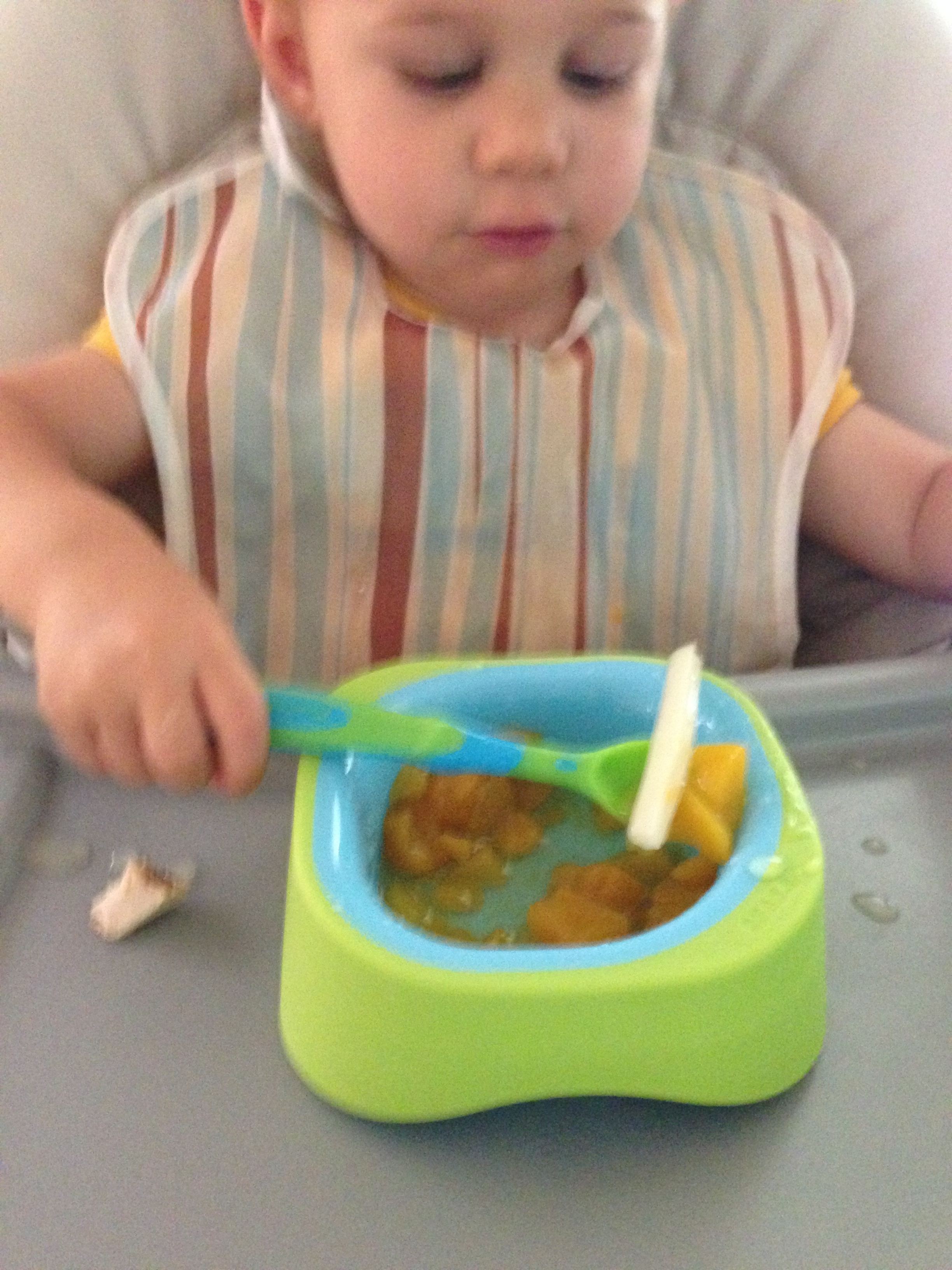
IMG_0991Not long ago I was babysitting my (at that time) less than eighteen-month-old grandson, Roman. For lunch, his parents prepared a variety of items, two of which were peaches and some string cheese. I gave him his bowl of peaches along with his spoon. Tearing the cheese into smaller pieces I laid those on his high-chair tray. What he did next caused me to wonder. With each piece of cheese he methodically and carefully placed it into his bowl of peaches. He then ate them together with each spoon full. Spontaneously, we began to sing a made-up-on-the-spot song with the words: I got cheese in my peaches, I got cheese in my peaches, I got cheese in my peaches all day long — all day long!

Later I realized that I too like cheese and fruit together. Years ago while in Scotland, I was introduced to a spreadable cheese which they taught me to place on my toast. Secondly came a beautiful fruit jam on top of the cheese spread. Ever since then, I have on many occasions, placed cheese and fruit jam on my morning toast. (Stop laughing and give it a try, it’s actually really good.) Perhaps Roman was playing with his food at the time, but he found a combination that worked for his taste buds. Traditions are like that. Some of them begin by mistake, but end up becoming a part of our life. The dictionary states that traditions are elements of culture handed down from one generation to another. Have you discovered some good and some not so good generational traditions handed down to you? I certainly have and it reminds me of a key, life-changing verse in the book of Peter that I am extremely thankful for.

For you know that it was not with perishable things such as silver or gold that you were redeemed from the empty way of life handed down to you from your forefathers. I Peter 1: 18

Standard
Children, Encouragement

Correction vs. Punishment

images-3Raising and training children is one of the most important jobs on the face of the earth today. My wife and I had three awesome kids who somehow made it through preschool years, primary school, high school, college and then marriage. The test of parenting was always more about the parents than it ever was the children. We discovered that it was the grace of God that allowed us to make many mistakes and yet have whole and healthy adult children. Life was far from perfect in those days and our finances never seemed to go far enough, but that never stopped us from laughing around the table at mealtime, playing football in the front yard or going on low-budget vacations.

Honestly, the most difficult times were when I had to enforce a boundary for my children as their father. Providing the appropriate discipline in the appropriate manner was often a challenge. You see, children have this ability to bring the worst out of you as the parent. At my worst, I might have over-corrected or when angry dished out punishment rather than correction. Is there a difference? Yes, there is.  (And by the way, seeing your “worst” is not such a bad thing.)

imagesPunishment has to do with me preserving my right to be angry with my child and keeping my posture as the one in charge. It says that my child must pay for what he or she did wrong. Punishment is often done out of anger lacking any training toward change, just simply a more powerful parent enforcing his or her will upon the weaker child. Punishment is more about inflicting shame and pain for wrongdoing. Correction, however, is not just about reward and punishment, it is more about challenging actions and shaping a will in a life-giving method. It is training out of a spirit of love. It is more about guiding and forming the spirit of the child rather than reinforcing the will of the parent. It is less about anger and more about what’s best for the child. Correction takes time to administer because it includes instruction toward a different and healthier future. Punishment on the other hand is normally abrupt, more about reaction and often with little thought. Proverbs admonishes us to “train” a child in the way he should go (Proverbs 22:6). That word train in the Hebrew is used in the imperative sense and literally means to dedicate. Are you as a parent dedicated to training your children through correction toward growth or simply punishing them for your own personal comfort?

Standard
Children, Encouragement, Leadership, Training

Have You Spoken a Blessing Lately?

I have been reminded recently of the words of blessing that we can speak and receive.  Reading the Old Testament books of Genesis and Exodus lately has been that reminder.  The blessing of God to Abraham, Isaac and Jacob and the blessing of fathers to their children were so present in these two books.  It caused me to think about the fact that “the blessing” might be somewhat missing, dormant or at the least decreased among us as believers today.  The fact that we have been blessed from the many saints before us to the blessings that we can speak into the future is evident in the chapters of these two books.  When God speaks a blessing He does not revoke it with a…”whoops, wrong one.”  When Jacob showed up after hunting his game and desired his father’s blessing it had already been deceitfully stolen and Jacob asked, “Do you have only one blessing, my father?” Because of Joseph, the Egyptian’s were blessed.  Even Potiphar realized blessing from the life of Joseph.  The scripture says, “The blessing of the Lord was on everything Potiphar had, both in the house and in the field.”  In the book of Exodus, a blessing was pronounced on your food and water and freedom from sickness if you will bless the Lord in your worship.  That’s pretty powerful.  After all the many plagues, when Pharaoh finally summoned Moses and Aaron in order to give in and let the Israelites leave Egypt he said, “Take your flocks and herds, as you have said, and go. And also bless me.”  (Ex 12:32) After all the issues with this leader, he has the audacity to ask Moses for a blessing.  Even the resistant and ungodly knew the power of the blessing from the righteous.images

You are a blessing to your family, your local church ministry, your work place and your neighborhood.  You can bless or curse with your words and it will stick.  In obedience to the Lord, we bless and receive blessing. (Dt. 11:26)  You can bless your natural and your spiritual children today.  You can bless others in prayer – praying a blessing forward.  Because you are blessed, when you show up a blessing is present to those around you.  When you lack confidence, know you have been blessed.  When you are feeling insecure or fearful, remind yourself of the blessing of God to you as a son or daughter of God.  When someone curses you or speaks negative about you, return a blessing to them.  Bless those who curse you…  (Luke 6:28)  Our Father loves to bless and so should we as His children.

Standard
Children, Marriage

The Most Important Need of a Child

Parents spend a lifetime caring for their children, from midnight feedings and diaper changes to teaching them to drive a car. Parenting is more than a full-time job and one that never really ends. Even when your children are grown and married, parents never stop influencing or being available to help and serve. I always loved parenting, the good and the not so enjoyable seasons. We never had the “terrible twos.” We decided to have the “terrific twos.” We never expected rebellious teenage years or a time of “sowing wild oats” as some teach. Children are the natural outcome of God’s design for marriage. Watching my grandson chase bubbles or find Easter eggs now brings back a flood of fond parenting memories. To have the privilege of parenting is simply a joy and a gift from our heavenly Father.IMG_0803

Mary and I discovered the most important key in raising children and it wasn’t a new video game, bicycle, larger home, extra allowance or more stuff. We discovered along the path of child rearing the greatest need of a child. We discovered the way in which a child is most secure, happy, and well-adjusted. Was it discipline? Was it maintaining appropriate boundaries? Was it providing for them? Was it loving them? Yes, a thousand times “yes” to each and every one of these most important areas. But, even more importantly, it was when my wife and I made the time to pray for them and then taught them to pray. It was training them to look to Someone outside themselves and their parents. It was training them to depend upon the Source of life, of esteem, of security, of provision, of love and of salvation. He who fears the Lord has a secure fortress, and for his children it will be a refuge. (Proverbs 14:26)

Standard
Children, Encouragement

My Heavenly Father is a Gift Giver

It can be overwhelming for me to stop and consider the gifts my heavenly Father has bestowed upon me.  First and foremost there is the gift of my salvation.  Of course the gift of Holy Spirit living within me.  He has generously given me a wonderful and godly wife of almost 39 years.  I have three amazing children who have all gone to college and are now happily married living responsively on their own.  I have had the privilege of working for over 27 years in a ministry I love.  He has given me a home with many possessions.  To top it off, I am now a grandfather.   I am blessed with great health and wealth!


stock-vector-vector-set-of-hands-clients-purchasing-work-in-flat-retro-style.html.jpg  Those blessings toward me from heaven have caused me to be a giver.  I love giving gifts.  I usually give Mary gifts before it’s Valentines Day or even Christmas.  I anticipate and can’t wait to see her face when she is surprised with the new flowers on the dining room table.  I just can’t  seem to wait until the proper day to give.  I love giving gifts to my children.  One day we were enjoying a meal together with my adult children on our deck and I handed each of them some money just to bless them – no other reason.  My oldest son asked, “Who died” and provoked a bit of laughter.  When my children were teenagers, I would locate their wallets at random times and place a $20.00 bill in them.  Why?  My heavenly Father is an extravagant giver and I have come to believe that a sign of Christ-centered maturity is found in our ability to be generous.  The scripture states that as we water others we ourselves will be watered.  Has there been any dryness in your life lately? 


Standard
Children, Leadership, Training

The Law of Attribution

I was helping a middle-aged man with a fear of suspended bridges a number of years ago.  His fear was that he literally could not drive his car across them.  He had to plan all of his travel in such a manner that he did not cross a bridge that spanned a river or a mountain valley.  Imagine how limiting that would make life.  After some digging around, he told me that when he was a young boy he and his grandfather were stopped in construction traffic at the peak of one of those bridges.  When you are just sitting on the amazing expanse of such a structure, you can actually feel the bridge sway.  It literally moves underneath your vehicle.  His grandfather began saying, “Do you feel that?”  Further, he teased his young heart and mind with, “The bridge is collapsing, THE BRIDGE IS COLLAPSING and we’re going to end up in the river.”

A spirit of fear came over the young man that day and it still gripped him as he sat before me shaking with the memory exposed.  To this man, bridges were something to fear.  A lie was spoken to him through innocent teasing and his soul and spirit received the lie.  The Law of Attribution, defined, says, “That which you attribute to be fearful and stress producing will be.”   When approaching a bridge, a warning light and alarm went off within him and told him to avoid it, pull over and back up.  There was no truth in the lie, but still fresh and deep within his memory bank.  What do you attribute to be fearful, anxiety or depression producing?  How has the law of attribution been put into effect within your life?  Stay tuned for more on the subject next week.

Standard