One day, Amy received some pornographic pictures on her phone. She called the phone company and asked how that could happen if she never visited such websites. They told her someone most likely used her phone to access pornographic material. She questioned her sons, and then she questioned her husband. No one confessed.
She knew her husband had a “past issue” with pornography but had no idea of how current and active it presently was. She pressed in once again with Jon and he denied any involvement. “I felt so horrible,” Jon said, “but lying seemed like my only alternative.” He just couldn’t believe he was at this point; he had been telling himself it would never get out of his control. That thought was now a past hope, not a present truth.
I asked Jon why he lied to Amy about his sexual addictions, and he said, “To protect my sin.” But then he went on to say, “Living in sin is going to bring pain, lots of it, but so is telling the truth. My denial kept me from change and being honest with myself, others, and Amy.”
Jon spoke softly, “We have to decide which one is going bring more freedom: lying or telling the truth. For a season, I thought that lying was the only way to keep pain from my wife and family. So, to be accepted and loved, I would tell others what they wanted to hear.”
We turned to Amy. “As a wife, I discovered that I was married to a lie after it all came out. There is not a word in the English language that can explain what I felt when hearing about Jon’s addiction and unfaithfulness.”
Meanwhile, Jon wondered, If she knows the truth about me, will she even like me?
Amy continued, “Every foundation I stood on began to fall apart – my belonging, my acceptance, all within minutes of Jon’s confession seemed to disappear,” Amy shared. “My self-worth, my security, and my spiritual security just dissipated.” Amy then said something we’ll never forget hearing: “The sense of shame flooded me and I began to battle constant thoughts of, ‘I’m not good enough,’ ‘I’m not pretty enough,’ ‘I’m just not enough,’ and I ended up in a fetal position on our bathroom floor begging God to kill me.”
What follows is directly from the heart of this precious couple whose marriage has survived this major infraction and is in the process of healing and becoming stronger again. These steps of healing are the redemptive part of their story and they desire to share them with you.
- Start making better choices through honesty and a spirit of humility.
- Meet with your pastor/spiritual leader and tell your whole story. Leave nothing out and cover nothing up. Discuss present roles and responsibilities in your local church and evaluate any necessary changes.
- Immediately start professional counseling.
- Meet with any other spiritual leaders in your lives, share your story, and receive healthy input and discipline for your life.
- The person struggling with sin needs a lot of intervention, counsel, prayer, accountability, and education concerning the sin and how it affects him or her as well as others.
- The non-offending spouse needs just as much intervention, education in the truth, counsel, prayer, accountability, friendship, acceptance, and pastoral care.
- Begin working toward forgiveness before working toward rebuilding trust. Forgiveness is key to healing.
- Recognize that trust disappears through the fractured relationship. It must begin to be rebuilt, layer by layer. To rebuild trust, you have to start being honest in everything. There can be no more lies, not even one.
- Be accountable and remain accountable to God, to one another, to your counselors and to your pastoral oversight.
Are you needing to bring something from darkness to light in your relationship? Honest confession and truth telling will start the process of healing.
(Adapted from Staying Together, Marriage: A Lifelong Affair, Steve and Mary Prokopchak, Destiny Image Publishers)











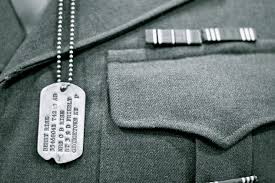 In 1936 William Randolph Hurst, the newspaper tycoon, wanted to challenge support for President Roosevelt’s New Deal. Apparently Mr. Hurst heard that the newly formed Social Security Administration wanted to give out nameplates for personal identification. Hurst referred to them negatively as “dog tags.”
