
 Should we wait until our leaders are experiencing physical, emotional and spiritual exhaustion in their lives before we develop a sabbatical policy for our local church or ministry? In a New York Times article titled, “Taking a Break from the Lord’s Work” (Aug. 1, 2010), Paul Vitello wrote, “Members of the clergy now suffer from obesity, hypertension and depression at rates higher than most Americans. In the last decade, their use of antidepressants has risen, while their life expectancy has fallen.”
Leaders are failing and quitting at alarming rates. Do they need proper financial support? Yes. Do they need vacations? Yes. Do they need time with their families? Yes. But, is this enough? Could these failures be a direct result of depleted spirits, drained emotions and not enough rest? Could the lack of healthy recharging today have something to do with those untimely failures affecting so many lives?
Leaders burn out and leaders need intervention. Leaders get into unhealthy life patterns in order to serve others and miss out or set aside certain godly disciplines that will help to maintain their personal health. A two to three-month sabbatical can change that when the right plan is attached.
For Biblical insights into a plan, how to take a sabbatical and the four-step process of a healthy sabbatical, see or recommend the book, The Value Of A Sabbatical, Refocusing Your Life for a Healthy Future. You can order it here.
 Quite a number of years ago I fell in love with a couple of verses found in the Old Testament from the prophet Jeremiah. This man of God heard the Holy Spirit whisper in his ear these words:
 Over decades of suffering from the disease of glaucoma, my 94-year-old father is now completely blind. Of course, it is a life challenge, but I have learned something through his blindness that applies to my spiritual life.
 I’ve dedicated and spent most of my adult life in some form of counseling profession, e.g., foster parent, group home leader, social worker, marriage and family counselor and overseer. My foundational basis of counsel has always been the word of God. The truths found in this book have radically changed my life from the inside out, so why wouldn’t these same truths change the lives of others? And it is on that basis that a number of years ago I put together a book that lists those scriptures and connects them to specific areas of need.
 Is Judge Roy Moore guilty? Yes, he is. But then, so are you and I because we have all sinned and come short of the glory of God. I do not know about any current accusations against him, but I pray he tells the truth for his sake and for the sake of the women who are accusing him.
 I was recently able to spend the greater part of a week with my newest grandson, Phoenix. Yep, my baby girl had a baby boy and she is a GREAT mother to him.
 Sitting in Chicago O’Hare airport helping my parents travel back from their granddaughter’s wedding in California, an American Airlines worker in his flight line overalls stopped in front of my, then, 89 year-old father. What he did next surprised all of us, not the least of whom was my Dad. Down on one knee, directly in front of him, he said, “Sir, did you serve in WWII?” My father answered, “Yes, I did, I was in the Army.” This young man continued, “Thank you, sir, for your service. It is because of men like you that I was able to immigrate here with my parents.” As quickly as he came, he left. My father was clearly taken aback, but appreciative of the sincere remarks he just heard.
 Do you know a veteran? Thank them for their service and let them know you appreciate living in a country full of freedoms that they helped to protect.
 Were you aware of the fact that greed is sin? Not sure if I ever heard a sermon on that subject, but it is. Jesus once told the Pharisees that the inside of their cup was full of greed and self-indulgence. Yikes! Greed was even in a list of sins that Jesus mentioned in Mark chapter seven. And in Luke He told us to be on guard from all kinds of greed.
 Life is full of insecurities. We all have them. I recently turned 63 and realize that I can still deal with insecurity. You’d think that after six decades of life insecurity would be behind me, a distant memory. It’s not though, and here’s why.
 I recently returned from serving a local church in Chicago, IL and was reminded in so many different ways of why we each need a local church in our lives and the lives of our family. To me it is imperative to be in close relationship with those persons who care about you and your family. It is essential to have that connection for not just receiving, but giving as well.

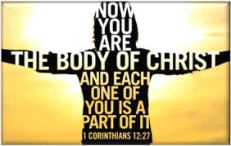
 I have experienced all of these and more in many local churches and I appreciate the body of Christ so much. God is not angry at His church as so many speak today, but rather, He loves His church, He died for His church and longs for His church to be with Him one day. Until then, be a vital part of a growing, Bible believing and faith-filled local church body. You and your family will grow and help to grow others.
 Steve Prokopchak