
Marriage, Parents, Singles, Training

Forgiving One Another

images-13I know of scarcely anything more difficult, more challenging and more humbling than expressing forgiveness. But at the same time, I know of scarcely anything more freeing than forgiveness. In the Holocaust documentary titled Shoah, a Warsaw ghetto victim states, “If you could lick my heart, it would poison you.” Nothing depicts a non-forgiving heart better than that picture. Author Gary Thomas once wrote, “We will be sinned against, and we will be hurt. When that happens, we will have a choice to make: We can give in to our hurt, resentment, and bitterness, or we can grow as a Christian and learn yet another important lesson on how to forgive.”

images-12Forgiving is not something we naturally love to do. Even though we have been forgiven of so much and have fully come short of God’s ideal, we love to withhold forgiveness simply because (we might tell ourselves) the person has not suffered sufficiently for what they did to us. The truth is, One already suffered so we could be forgiven; we must now make the choice to do likewise (See Colossians 3:13). To do anything less is to take a position of critical judgment, freely giving ourselves over to the use of the evil one in heady, heartless self-righteousness.

Standard
Leadership, Training

What Years of Ministry has Taught Me About Integrity

imagesIntegrity is a condition we choose to walk in. If we choose not to walk in integrity, we will eventually need intervention in our lives.  The following are examples of life lessons in integrity.

  1. Integrity is God’s choice for me. (I Kings 9:4)


  1. Integrity is a choice that I must choose. (Job 27:5,6; Psalm 7:8)


  1. Integrity starts in my heart. (I Chronicles 29:17)


  1. It is easier to not be a man or woman of integrity. (Job 2:9)


  1. It is something that you grow in. (Psalm 103:13,14)


  1. Finding a model to emulate is helpful, as well as being that model. (Titus 2:7)


  1. It means humbling ourselves when we fail. (Romans 12:3)


  1. It means not being able to defend yourself before others at times. (Psalm 25:21; 41:12)


  1. Jesus maintained integrity before men who constantly judged him. ( Mark 12:14; Hebrimages-2ews 5: 8, 9; Proverbs 29:10)


  1. The closer we come to Jesus, the more integral we become. (Proverbs 2:21; 10:9 NLT; 11:3; 13:6)
Standard
Encouragement, Small Groups, Training

The Four P’s

images-5 Have you ever heard of the four P’s? If not, here they are:

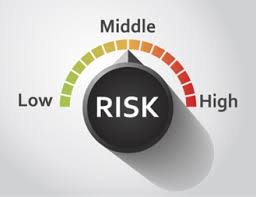
People of risk; Places of risk; Possessions of risk; Processes of risk

Those who are in Christ are called a new creation (II Corinthians 5:17) and in order to fight the forces of our past, God will give us wisdom and insight into how to resist the pull of finding ourself off course.images-6

There once were people in our lives who helped us to sin. I call them people of risk. These were the ones who always knew where the party was. As we are learning to walk a different way, people of risk should be avoided. Further, quite often people of risk are found in places of risk. These are the places that you now realize are places of darkness. We, through the discernment of the Holy Spirit, need to steer clear of these places so as to not be tempted to re-enter our former life, at least until we are strong enough to handle the temptations of that former life style.

images-7Possessions of risk are those items that enabled us to disobey God or at the very least did not draw us toward our Savior. An example of one of those items might be inappropriate books. In the book of Acts, chapter nineteen, the new believers actually conducted a book burning. They burned their possessions of risk. In this case, they were books of sorcery.

The last one is processes of risk. This one is a bit difficult to define, but can you think of a time when God spoke to you and revealed that your present way of thinking was a part of your old mindset? The scriptures reveal that we have been given the mind of Christ (I Corinthians 2:16). So, a process of risk might be a return to anger or jealousy in order to get what you want. The Father wants to give you a new process in order to arrive at what He desires for you.images-2

There you have it, the four P’s. How can they help you walk differently today and when can you share them with another?

Standard
Children, Parents, Training

18 Ways to Train Children and Teens to be Financially Responsible

images-31Ever wonder why some people have strong financial skills and others missed that class? For the most part, it’s in the parental training or lack thereof. Some young people never experienced financial training or a good example of responsible stewardship while growing up and others had to discover for themselves the hard way, through loss. There is a better way, however. Take the financial lessons you have learned and use them as a teaching tool to those little ones in your life, either as a parent, a grandparent or a caretaker. Their future teachers and employers will love you for it. Author and financial teacher Larry Burkett once said that we are not responsible for our children’s decisions, but we are responsible for their training. Here are some “training” insights to consider when it comes to handling money:images-30

  1. It all begins and hinges on helping them to understand that God owns it all. We are to be the best stewards of everything He shares with us.
  2. Be generous and teach generosity. There is no greater blessing than to give.
  3. Teach the difference between self-discipline, delayed gratification, and immediate self-gratification along with the direct consequences of each one.
  4. Be an example of all things in moderation vs. excess.

images-275. Give your children regular and meaningful responsibilities – jobs without pay, e.g., picking up their toys.

6. Do not give an unearned, free ride allowance, but rather give your children regular jobs with generous pay, e.g., mowing the lawn or folding the cloths.

7. Teach your children to tithe from every dollar earned or given to them. It is all God’s but discipline in regular giving grows a  habit.images-35

8. Teach your children to save a percentage of their income for the future (30-50%), all the while designating a percentage of what can be spent immediately.

9. Teach the difference between an asset and a liability – a consumable.

10. Train your children to follow through. They must learn to complete the job in the way requested or there is no reward.

11.Help them to understand the concept of investing and how that will help them beyond today into the future.

12.Develop a budget with your child as soon as they can comprehend the idea. It will serve them the remainder of their life.images-34

13. Start a savings account and when age appropriate, obtain a checking account and an ATM card. Teach them how to responsibly use and balance them.

14. Train them in the proper use of credit and how the borrower is servant to the lender.

15. Share with them the difference between paying interest and growing interest on their money/investment.

16. Share with your children your financial mistakes and how they can learn and benefit from them.

17. As is appropriate, walk them through all other financial concepts like loans, taxes, utilities, owning a home, maintenance, buying a car, auto repairs, insurance, etc.

18. And finally, take the time to teach your children what God takes the time to teach you about money and His resources. They’re never too young to learn.

Standard
Children, Training

Our Children and Money

imagesAs parents we are responsible for our children’s view, value, use and relationship with money. How we use our finances, whether or not we use a budget, if we maintain a balance on our monthly credit card statements, how liberally we share with others and our tithing practices are all acts of training our children in finances. Exercising financial restraint versus instant gratification is also valuable child rearing. Financial stewardship and how we recognize God’s ownership of our money speaks volumes to our children who are watching us make transactions on a daily basis. How we handle our money, it is said, is an outside indicator of an inside spiritual condition.  Below are some ways in which we trained our children to handle and how to value money.

  •  First and foremost, gaining money is not the total goal, but rather being the best steward possible of what we do receive and/or earn is.
  • Teach your children to tithe off of their income/gifts and also to share with those in need. Coupled with this is the realization that it is all God’s, 100%.
  • Teach them to save for something they desire and not to borrow for it (delayed gratification). They will appreciate it a whole lot more and they will take better care of the item.
  • Teach them to invest for the future. Our sons saved for their first car in which they paid cash.
  • Teach your children the value of work and that they earn an allowance, it is not handed to them. Our children had an hour or so of “work time” every summer day and many Saturdays, along with daily chores. Our kids really learned to appreciate this work ethic in their first year of college.
  • Teach your children a certain standard of work. It must be acceptable in order to earn their allowance or pay. Our children still talk about this around our table today.
  • Be clear about your financial boundaries and do not give in to what every other parent is doing. Financial value boundaries will protect your children.
  • Use a formula similar to the following: 10% tithe; 50% savings; 10% rainy day fund and 30% spending money.
  • Older children can pay room and board (those who are working and out of school); be taught to use an ATM appropriately; learn to make and live by a budget; learn to write checks and use a credit card appropriately by paying off the monthly balance in full.
  • Teach your children about investments, savings, ownership of a home, home maintenance, assets verses liabilities, car payments, proper vehicle maintenance and insurance costs.
  • Here is a huge one, allow your children to fail and make mistakes financially while they live at home and then incorporate that mistake as a learning tool. Better now than when they no longer live with you.
  • Teach your children the many Proverbs and scriptural principles found in the Bible that deal with money.  For example: …”the borrower is servant to the lender.” Proverbs 22:7

If you will do this, your children will return to thank you, earn their own way as responsible and productive adults and not look for ongoing entitlement, gifts and handouts from their parents and others.images-2

Standard
Children, Training

I Got Cheese in my Peaches – Traditions

IMG_0991Not long ago I was babysitting my (at that time) less than eighteen-month-old grandson, Roman. For lunch, his parents prepared a variety of items, two of which were peaches and some string cheese. I gave him his bowl of peaches along with his spoon. Tearing the cheese into smaller pieces I laid those on his high-chair tray. What he did next caused me to wonder. With each piece of cheese he methodically and carefully placed it into his bowl of peaches. He then ate them together with each spoon full. Spontaneously, we began to sing a made-up-on-the-spot song with the words: I got cheese in my peaches, I got cheese in my peaches, I got cheese in my peaches all day long — all day long!

Later I realized that I too like cheese and fruit together. Years ago while in Scotland, I was introduced to a spreadable cheese which they taught me to place on my toast. Secondly came a beautiful fruit jam on top of the cheese spread. Ever since then, I have on many occasions, placed cheese and fruit jam on my morning toast. (Stop laughing and give it a try, it’s actually really good.) Perhaps Roman was playing with his food at the time, but he found a combination that worked for his taste buds. Traditions are like that. Some of them begin by mistake, but end up becoming a part of our life. The dictionary states that traditions are elements of culture handed down from one generation to another. Have you discovered some good and some not so good generational traditions handed down to you? I certainly have and it reminds me of a key, life-changing verse in the book of Peter that I am extremely thankful for.

For you know that it was not with perishable things such as silver or gold that you were redeemed from the empty way of life handed down to you from your forefathers. I Peter 1: 18

Standard
Encouragement, Leadership, Prayer, Training

The Value of a Sabbatical

images-3Taking a sabbatical is not a new concept. The word Sabbath taken from the Old Testament of the Bible simply means rest. It seems that God understood the concept of cessation and not just for man, but He also included the fields and the animals. (See Leviticus 25:3-4 and Exodus 23:12) Rest is something we are all familiar with, but an extended period of rest (beyond the typical one week to ten-day vacation) to most is thought to be somewhat unreasonable. Cindy Kirschner Goodman in her McClatchy Tribune article on sabbaticals said that, “Among the Fortune 100 Best Places to Work, 22 companies boast of offering fully paid sabbaticals.” She went on to write, “Companies find if they don’t do something, their workers will burn out and leave, or worse burn out and stay.”

Charles Spurgeon once said, “Rest time is not waste time. It is economy to gather fresh strength… It is wisdom to take occasional furlough. In the long run, we shall do more by sometimes doing less.” In my lifetime I have had the privilege of experiencing three sabbatical periods. Each one was unique within itself, but without fail God spoke to me significantly. There is something about detaching and refocusing that allows one to be sharper in the spirit and allows for growth. Perhaps the secret is that a sabbatical is not an extended vacation or a time to pursue a degree, but it is a time set aside for prayer, reflection, listening, and counsel for a healthier future. On that note, I just finished a book titled, The Value of a Sabbatical, Refocusing Your Life for a Healthy Future and I am totally excited about helping others through God’s concept of a Sabbath rest.

Standard
Encouragement, Leadership, Small Groups, Training, Uncategorized

Encountering Risky Business Through the Four P’s

images-6 (Note: I am sending this blog out early due to taking some vacation time next week.) Wanting to follow-up on last weeks post, I thought it appropriate to share four types of risk to steer clear of. I am unsure where some of these originated from, but I have used them for years in attempting to help others in their personal life. I have urged many to stay away from: people of risk; places of risk; possessions of risk; and processes of risk. What do I mean?

Often as a young believer, it is difficult to discern who to hang out with, old friends with bad habits or all new relationships. Initially, it might be advisable to stay away from those persons who are risky to your personal growth and change. Identifying persons of risk can eliminate being talked out of new life patterns. A place of risk is a pretty obvious one. In other words, for now stay clear of those establishments that allowed and promoted your former life-style of sin. Possessions of risk are a bit tougher to discern or even do away with. In Acts chapter 19, it was discovered that many new believers had been involved in sorcery. The new converts made a large bonfire and threw their sorcery scrolls into the fire. They eliminated many possessions of risk. Today this may include books/magazines, music CD’s or even computer games.

Lastly, it is important to consider processes of risk. Process is the connection to our thoughts. For example, prior to becoming a Christian our process of thought when being verbally attacked might have been inordinate anger or running away. Both became familiar and established life patterns, but both of these can be risky due to the fact that we might not be processing truthfully. As the word of God is received and acted upon, our responses will begin to change because our thought processes encounter truth and truth will set us free from former life patterns of risk. Which of the four P’s are you working on?

Standard
Encouragement, Training

Fear, Something we all have in Common II

imagesFear has a way of distorting reality. Have you ever been to a scary movie? It’s not real – you know it’s not real, but your heart is beating faster, your palms are sweaty, your body is becoming tenser and your tongue is getting thicker. The emotional reaction of fear has literally changed your heart rate and physiological make-up. Remember those scary nightmares as a child or the “monsters” under your bed? Never once were they real, but your body sure was fooled. How so? Your mind, the voices from your past, coupled with your beliefs created a non-reality and then made a reality simply by self- generated thought. Fear is a reaction to a thought and, quite honestly, that thought does not have to be true.

Most fear is actually created by what we tell ourselves concerning a past incident or the future. If we tell ourselves that public speaking is fearful, it will be. Don’t get me wrong; fear is not always a bad emotional reaction because sometimes it’s based on truth. If someone robs you at gunpoint, fear will be a part of what you deal with along with perhaps some post stress disorder. That fear is based on a reality and meant to protect us. But fear can take on a life of its own. It can be something that we accept as normal to our life when in fact it is inhibiting us from growth. We can walk in fear of the future, fear of the loss of employment or fear of failure. What fears can you identify in your life and how have you attempted to deal with them?

Standard
Leadership, Small Groups, Training, Uncategorized

It’s a Good Time for the Plane to Break

It always intrigues me how people respond when they hear their flight is being delayed or canceled due to needed maintenance. First there is this huge sigh, then a buzz of talking (mostly to complete strangers about how badly run this particular airline is) and then they head for the gate agent to release their tension and anger. At that point, I really feel bad for the agent who has to take the customers’ entire wrath. My question of relief is, “Do you want the plane to break in the air or on the ground?” Yes, it’s inconvenient, time-consuming, and a huge bother but when that plane gets in the air I want it to stay there. There is actually very little you can do to change the situation, so…what are you telling yourself?images-4

Self-talk is constant, even while we sleep. But, what may not be constant is listening to our self-talk. Stop right now and ask yourself, “What am I thinking at this very moment even as I read this blog?” What we are telling ourselves (our self-talk) is what we will eventually react to. If we tell ourselves that a broken down plane, being late and missing our connection is anxiety producing it will be. But, if we tell ourselves it’s an opportunity to grab a bite to eat, it may even come as a relief. Listening is an acquired skill. People pay people $150.00 per hour to be listened to and quite often feel better. Why? Someone is listening in order to understand them. If you’ll take the time to listen to your self-talk, you’ll discover a lot about yourself. You’ll discover both lies and truths, the latter leading to right action and the other leading to wrong (re)actions. In the future, when a “plane” breaks in your life, stop and listen to your self-talk, you may discover something you didn’t know about yourself.

Standard