
 Journalist and author Mignon McLaughlin once said, “A successful marriage requires falling in love many times, always with the same person.”
After dating for over three years, Mary and I finally were able to marry. She completed her nursing degree and I was going into my final year of military service. Our long-distance relationship of me living in southern Virginia and Mary living in Pennsylvania would come to a welcomed end. We would stop saying goodbye for months at a time and end going to pay phones with pockets full of coins…finally.
We were newlyweds feeling as though we were playing house. Everything was new: living together, sleeping together, eating most meals together and hanging out 24/7 together. After an amazing two-week-long honeymoon, we settled into our new apartment in Newport News, Virginia, six hours from any family. It was glorious, fun, exciting, new and in our minds, permanent.
Yes, we were young and we were inexperienced. We had no track record of marriage for ourselves, no experienced sexual lives, no marriage mentors or counselors, but we made it. We prayed. We found an awesome church home that became family. We volunteered in ministry together. We played together and we reached out in love to our neighbors together. We grew in our relationship day by day, paying our bills, attempting to fill our apartment with furniture, communicating about everything and finding agreement in as many areas as possible.
We rarely had a disagreement because neither of us was disagreeable, rather we were happy, elated really. We were in love. Discovering the one you want to spend the rest of your life with, finding the one that captures your heart, well, it was remarkable.
That was 44 and a half years ago. What has changed and how are we different concerning all of the above? We’re gray haired. (At least I think my wife has gray hair?) We’re slower; more intentional. We’re dealing with arthritis. We’re grandparents. We don’t hear as well. We have annual physicals in which the doctor asks us questions we never thought we’d be asked. But then again, we love doing the same things and have such similar thoughts from long-term agreement and communication. We’re best friends and we accept our differences as marital strengths. We love growing older together, still holding hands, still kissing and still saying “I love you” each and every day.

It’s good, really good and we truly give God thanks for one another. One of the keys to all of this is as quoted above – we just keep falling in love over and over with the same person!
 Someone once shared with me these words, “I’ll respect him when he starts respecting me.” Still another said, “When she starts acting respectable, I’ll show her respect.” Really? Since when is respect conditional upon another respecting you?
 I love how author Gary Thomas weighs in on this very subject, “As our partners and their weaknesses become more familiar to us, respect often becomes harder to give. But this failure to show respect is more a sign of spiritual immaturity than it is an inevitable pathway of marriage.” He also notes, “When there is mutual respect in marriage, selflessness becomes contagious…. If you want to obsess about them [weaknesses], they’ll grow, but you won’t!”
 Marriage minefields are fields where we have buried or hidden devices (memories) just below the surface. We actually move forward in life by frequently looking backward. Most day-to-day life is not filled with new revelation but memory. Memory helps us to find our way home after work. Memory is used daily in order to live life. Life without the ability to recall even the slightest, most mundane details or important ones would be disastrous.
 Some of our memories contain lies or misbeliefs and still others are inaccurate. It was not uncommon for John and Elizabeth (not their real names) to experience knock-down, drag-out arguments. In sheer frustration late one evening, John looked at Elizabeth and said, “That’s it; I’m out of here!” Immediately, Elizabeth went silent and fell to the floor in a fetal position, where she sobbed uncontrollably. Even though John ran immediately to his wife, knelt beside her, and desperately tried to console her, it was as if he had left. Elizabeth didn’t or couldn’t hear his voice or acknowledge his presence. John later discovered that when his wife was six years old, she overheard her parents fighting. Her father’s words rang out as he screamed, “That’s it; I’m out of here!” Elizabeth never saw her father again
 Elizabeth was no longer fighting with John; she was wrestling with pain-filled memories planted in a minefield just below the surface. Was it the argument they needed to resolve, or was it Elizabeth’s past hurts that needed to be healed? From many stories like this one, I have come to believe that most relationship issues in the present have a connection to the past; therefore, what seem like marital issues are often individual issues. I am convinced that when Jesus heals our individual issues, sins, hurts, and disappointments, marriage relationship issues can also be healed. *
 Many years ago, a wiser, older, more mature couple taught us this phrase: praise in public; construct in private. By that phrase they meant to always provide a word of praise for your mate when with your family, at your work place, with your friends or in any social setting. They also encouraged us to never, ever put our mate down, shame them, humiliate them or correct them in a negative sense in public. We took this counsel to heart and have adapted it for our marriage relationship.

 Perhaps lechery is a word you are not familiar with. If you look into its meaning the dictionary states, “…unrestrained or excessive indulgence of sexual desire.” I have come across this “desire” within some marriages. Usually, it is the man who relentlessly pursues an inordinate desire for sexual relations, but this is not always the case.
 Recently we took our five-year-old grandson with us for a weekend away. It wasn’t uncommon for him to say, “I’m bored” or “This is boring.” I forgot how much entertainment a young child needs. It makes me think about how boring and predictable our marriages can become. So much of life is routine oriented, repeated each and every day like that old movie, Groundhog Day starring Bill Murray.
 Recently Mary and I celebrated 44 years of marriage. Quite honestly, there have been those


 The glue that holds all this together? Prayer. Learn to pray together. There is no better way to communicate, resolve issues, gain wisdom or “cast your care” than to pray together. You will find the intimacy you have only dreamed of if you’ll pray together. You will discover answers to lifelong problems, to long-term financial disagreements, to present frustrations and to future visions and goals. Prayer is intimacy of the highest degree in marriage as together we reveal our hearts’ desires to God and to one another.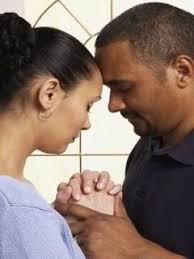



 Recently my wife and I had the privilege of spending a weekend with some young married couples on a retreat. Amidst our time together, we desired to ask them a question. That question went something like this: If you were given the chance to share with a younger couple just entering into marriage, what advice would you pass on to them? What follows is some of the excellent input we were given.

