Children, Encouragement, History, In the news, Issues of the Day, Just for fun, Parents

It’s Christmas!

Christmas is that wonderful time of year when we celebrate the birth of Christ with our families and the world. This season is celebrated around the world in different forms and fashions, but the holiday is dedicated to remembering and rejoicing in the birth of our Savior and Redeemer, Christ.

Here are some fun facts about Christmas gathered for your family enjoyment:

  • The tallest Christmas tree ever displayed was in Seattle, Washington. It measured 221 feet tall.  
  • The top six Christmas tree producing states are Oregon, North Carolina, Pennsylvania, Michigan, Washington and Wisconsin.
  • Buying all the gifts from the “12 Days of Christmas” song would cost you a ton of money. The most expensive being “Swans a Swimming.”
  • When the candy cane was created in Germany, it was made into a “J” for Jesus. The red                 stripes symbolize His blood and the white His purity. 
  • It is a tradition in Japan to eat KFC for Christmas. Orders must be placed two months in advance.
  • 1 in 3 men wait until Christmas Eve to do their shopping.
  • Christmas trees usually grow for close to 15 years before they can be sold. 
  • Bing Crosby’s version of “White Christmas” is the highest-selling single of all time.
  • Christmas lights were so expensive that they used to be rented rather than sold. An electrically lit tree was a status symbol in the early 1900’s.
  • The first Salvation Army collection kettle took place in San Francisco’s Oakland Ferry at the foot of Market St. It was a large crab pot with a sign that read “Keep the Pot Boiling.”  
  • In 2012 there were more than 15,000 holiday decorating injuries during November and December. The most common being falls, 34% of all injuries.  
  • The word “Merry” in Merry Christmas was not always accepted because being merry used to signify slight intemperance.  
  • The Charles W. Howard Santa Claus School in Midland, MI hosts 130 Santas each year where they gather and learn about the history of St. Nick, popular toys and Santa etiquette.  
  • In 1980, the highest selling Christmas toy was a Rubik’s cube for $1.99. It now retails for $10.
  • The abbreviation X in X-Mas is not an abbreviation. It stands for “Chi,” meaning Christ in Greek.  
  • The reason we give presents during Christmas is to symbolize the gifts given to Jesus by the three wise men.

There you have a few facts about Christmas, some rather strange. I pray that your Christmas season is full of fun, family, love, and of course CHRIST!

For a child is born to us,
    a son is given to us.
The government will rest on his shoulders.
    And he will be called:
Wonderful Counselor,
[a] Mighty God,
    Everlasting Father, Prince of Peace.
His government and its peace
    will never end.
He will rule with fairness and justice from the throne of his ancestor David
    for all eternity.
The passionate commitment of the Lord of Heaven’s Armies
    will make this happen! (Isaiah 9:6, 7 NLT)

Standard
Challenge, Encouragement, Issues of the Day, Leadership, Marriage, Men, Postmarital, Premarital, Singles, Training, Women

Can Divorced Persons Serve in Church Leadership?

I have been asked this question multiple times. I am not the final authority, but one thing I know for sure is that not every divorce is sinful, but most are the result of sin. 

“Not every divorce is sinful.” Does that statement in and of itself leave room for the divorced to be placed in local church leadership? I believe it does and here’s why.

Historically divorce was rare in the United States, and it was easy to simply say that divorced persons could not serve in leadership. In other words, in the rare case of divorce, denying leadership responsibilities was easy, quick and involved far less discussion and prayer. But that position can be punishing and made more so out of tradition.

With the changes in divorce proceedings and forced divorce, i.e., no-fault divorce, we are left with multiple interpretations of scripture. Also, one must decide if they desire to be led by feelings and culture or scriptural precedent. As a counselor, I often heard the following, “How can it be so wrong if it feels so right?”

Well, lots of things can be wrong that feel right. So, leaving selfishness behind, let’s delve into the question. 

First, divorce in and of itself is bringing trauma to the family. It rips apart two adults who have become one in covenantal relationship, and it is devastating to children. Kids do not care about 2 +2 if mom and dad are ending their marriage and affecting all the security they need, know, love and crave. As churches desire to be “relevant to culture,” they will cave to the feeling side of divorce. Church leaders in an effort to not offend will compromise the scripture. 

But God “hates” divorce (Malachi 2:16) because He knows what it does to individuals, families, extended families and ultimately to culture. I love when leaders are compassionate to those who have experienced the trauma of divorce, but that compassion dare not lead to an unscriptural view. 

Many who experience divorce would tell me that it occurred before they were Christians. However, marriage is not a Christian act; it’s a creation act of God. That means that any and all marriage vows are spoken to God until death do we part. 

Timing in divorced leaders is important. If the divorce was a year ago or even three plus years ago, there needs to be time, a season to observe the prospective leader’s character and integrity. How have they grown through what occurred them? What was the cause of the divorce and was it scriptural to divorce?  Has there been a remarriage of either party? Was there repentance and ownership taken for their part in the marriage ending? Have they received counseling for the wound(s) of divorce on the soul and spirit?

Paul told Timothy (I Timothy 3:2,12) that an elder must be the husband of one wife. Did that mean one wife versus multiples wives (polygamy)? Did that mean only one marriage partner for life? Or did that mean the divorced and remarried person is simply disqualified since they are now living with a second wife or husband?

The literal Greek translation was “one-woman man.” This meant a man who walks in integrity with eyes and faithfulness toward one woman and one woman only–his wife. The focus was and is moral purity. 

My personal reasoning behind this is that scripture did allow divorce for marital unfaithfulness and for abandonment. The church must focus on Christlikeness in character, longstanding integrity and godly leadership. Why? Because leaders are to be an example to the body of Christ–ones to emulate. 

Divorce is not God’s plan, and it will never be. With that clearly stated, we live in a fallen world and divorce is a part of it just as multiple other fallen nature things are. Redemption has come through Christ and He redeems the whole of man, not just partial aspects of mankind. We live and we walk in His redemption, through His shed blood and by receiving the forgiveness of our sin. (Ephesians 1:7)

Standard
Challenge, Encouragement, In the news, Issues of the Day, Leadership, Politics

When Political Leaders Disappoint Us

So many Americans (and persons from other nations) have become disappointed in their political leaders, especially in the last several decades. There has been a lot of discouragement with government figures and that goes for any side of the aisle you find yourself on. 

And it’s not just their political decisions, but their integrity as well. There has been enough lying going around, scandalous affairs, stealing, misappropriation of funds and the like to become disillusioned with almost all politicians. It’s heartbreaking really. Who can we trust? 

A major result of all this is voters become apathetic and stop trusting anyone who runs for office. We lose faith in their vision and in the leaders themselves. Another result is that we tend to give our favored candidates a pass or the benefit of the doubt, even when doing wrong (which we purposely fail to point out). To the opposing side, we let them have it on social media and anybody who will listen. We can be so busy tearing them apart that we don’t know how to speak words that affirm.

Here’s a truth: wrong is still wrong and right is still right. There is no double standard. When politicians say wrong things publicly, they should be held accountable publicly. When they take wrong action, their party should hold them accountable. It is as simple as that. Instead, each party defends the wrong in their party and then accentuates the wrong they identify in the opposing side. 

Losing faith in leadership is detrimental to the good of our or any nation.

What do we do?

For those of us who follow a Savior, we must get back to putting Him first. We must look to Him before we look to a politician. He is “the author and finisher of our faith.” (Hebrews 12:2) Jesus is The Leader, our leader who first cared for us. No politician can save you, only Jesus. 

Secondly, season with salt your conversations. I frequently travel to a nation where it is illegal to criticize the government. How do believers respond to this requirement? They stick with Jesus. Our nation could use some of that wisdom. (See Colossians 4:6.)

Third, please remember we are light because He is Light and light dispells darkness. You cannot be light and at the same time offer snarky, meanspirited, dark answers about political persons or those who support them. Let your conversation be seasoned with salt AND light. (See Matthew 5:13-16.)

Lastly, pray for your leaders. If you pray in one breath, it is pretty difficult to criticize with the other. If you take issue with a certain position, feel free to write a letter to the appropriate person, but then pray. (See I Timothy 2:1-4; Romans 13:1.) Your critical attitude helps no one. Your prayerful attitude blesses everyone.

Politics has become extremely divisive, but you don’t have to be!

Standard
Challenge, Encouragement, Healing, Identity, Issues of the Day, Men, Parents, Singles, Small Groups, Training, Women

Shame: A Tool of God or the Enemy?

Many of us, if not all of us, are well acquainted with the emotional upheaval of shame. Since almost the beginning of our existence on earth, shame has been present. 

Does shame serve a purpose? Is there a biblical or spiritual reason for shame? Is shame always considered something bad? Can shame motivate us? Should Christians ever accept feelings of shame?

Where it all began

God created a perfect world and placed mankind into a perfect garden – His garden. With the fall of man, came what is known today as the emotion of shame. The Lord God called to Adam and asked him where he was. God couldn’t find him? Not so. God could not find the Adam that previously faced Him without shame and fear. 

“He [Adam] answered, “I heard you in the garden, and I was afraid because I was naked; so I hid. And he [God] said, “Who told you that you were naked? Have you eaten from the tree that I commanded you not to eat from?” (Genesis 3:10-11)

Fear and shame of Adam’s nakedness filled his heart, and the separation from his Maker began. Then, in response to the shame they felt, what does God do for Adam and Eve? By verse 21, God was handcrafting garments for Adam and Eve. Why? To cover their nakedness and to remove shame.

Just what is shame?

Because we as humankind are so full of pride when we fail or we sin, our pride creates a desire to hide just as Adam did. We failed and we don’t know how to deal with the feelings we feel. As God’s creation who desired to be like God, we fail to live up to our own expectations, the expectations of others, and/or what we feel God expects. And that is enough to bring about feelings of shame and disappointment. 

Shame creates false thinking like: I am a bad person because of my failure. I will never be good enough. I deserve to feel bad because I constantly come up short. I am worthless. I’ve been such a fool. Shame is something we place upon ourselves when we have thoughts like these.

I dealt with shame

As a child growing up in the 1950’s and 1960’s, parents often used shame as a means of attempting to correct wrong behavior. They thought they could shame us into better or more appropriate responses. They did this through words like, “You should be ashamed of yourself, acting like that.” Or we often heard this one, “What are you, stupid?” And then there was this one, “How could you be so dumb?” Shame-filled words do not administer correction, they create a defeated self-concept of oneself that can eventually lead to a very low esteem or even self-punishment.

Our Lord does bring discipline and correction to us, but He does it in a life-giving, loving way. His goal is not to crush our spirit with the use of shame, but to correct in a spirit of hope and encouragement to change our beliefs, thoughts and actions. 

Why then do Christians struggle with shame?

For many of us who have trusted in Jesus for our salvation, shame can still plague us. The enemy of our soul wants to remind us of our past deeds, sins, mistakes and then bring back the familiar feelings of shame. Often there are voices and scenes stuck in our heads with old video messages of shame-filled words that multiple people spoke over us. We often give in to those false messages and we allow these persons and their voices to have power over us.

It’s interesting that we are told in the scriptures our heavenly Father does not hold shame or sin over us. Why? Because it is not a motivator for becoming shame-free. In fact, God’s word says, “Instead of your shame you will receive a double portion, and instead of disgrace you will rejoice in your inheritance. And so you will inherit a double portion in your land,
and everlasting joy will be yours.” (Isaiah 61:7) Instead of shame…everlasting joy.

Also, through divine inspiration, the prophet Isaiah wrote these power-filled words: “Fear not; you will no longer live in shame. Don’t be afraid; there is no more disgrace for you. You will no longer remember the shame of your youth and the sorrows of your widowhood.” (54:4)

As Christians, we can still struggle with shame because we do not realize the price that our Savior paid for that shame. How can I be so confident of that? Listen to what Paul wrote to the Roman church, “Anyone who believes in him will never be put to shame.” (Romans 10:11) The more we believe God’s word (His promises and not the tapes in our head from our former misbeliefs), the more truth that we store in our spirit, and the more faith and hope we have in the penalty Jesus paid. Consequently, the freer we become of shame.

Again, Peter harmonizes with Paul and writes, “For in Scripture it says: ‘See I lay a stone in Zion, a chosen and precious cornerstone, and the one who trusts in him will never be put to shame.’” (I Peter 2:6)

Stop hiding

Adam and Eve hid, and we’ve been hiding from God ever since. There is only one place that we are called to hide, only one place where we can rid ourselves of shame, and only one place where there is no longer any fear that leads to shame: “…fixing our eyes on Jesus, the pioneer and perfecter of faith. For the joy set before him he endured the cross, scorning its shame, and sat down at the right hand of the throne of God.” (Hebrews 12:2)

Jesus was led like a sheep to the slaughter, arrested, mocked, spit on, beaten, insulted, given a crown of thorns – all a picture that was full of shame and humiliation. Jesus chose to obey His Father as He bore our shame and our guilt through a torturous and agonizing death.

There is no other place to go for freedom, for atonement, and for cleansing of our shame. Shame always says we’re guilty, but from the cross Jesus said that guilt and shame were paid for. He died for shame-filled sexual sin, theft, out of control anger, abuse, and anything else you can name from your life. When we repent of our sin and receive Him as our Savior, He pronounces over us that the penalty for our sin, the guilt, the shame, the menicing weakness we feel is covered by His blood and sacrifice on the cross. And from that cross He says, “Shame off of you!”

Jesus is the only one that we can trust to deal with our shame. He helps us to flee from the sin-filled choices we once made and lifestyles we once lived. In desiring to please Him, we can turn over those old video files and request that they be erased – permanently. We no longer need to feel ashamed.

“In you oh Lord, I put my trust; let me never be ashamed; deliver me in your righteousness.” (Psalm 31:1)

“In you, Lord, I have refuge; let me never be put to shame.” (Psalm 71:1)

“I trust in you; do not let me be put to shame,  nor let my enemies triumph over me. No one who hopes in you will ever be put to shame but shame will come on those who are treacherous without cause.” (Psalm 25:2,3)

Choose a life of joy, free of condemnation

As we confess our sin, our fear, and our shame, believe God to release you of those burdens. Forgive those persons who spoke words of shame over you. Often those persons spoke out of their own shame-filled souls. Make use of the scriptures in this article to counteract the lies and the misbeliefs of your past. Remember that it is not what others think of you, it’s what your heavenly Father thinks of you and what Christ has done for you on the cross. Finally, live out the truth of this verse, “There is, therefore, now no condemnation to those who are in Christ Jesus, who do not walk according to the flesh but according to the Spirit.” (Romans 8:1)

“Those who look to him for help will be radiant with joy; no shadow of shame will darken their faces.”(Psalm 34:5)

Standard
Challenge, Encouragement, Issues of the Day, Marriage, Men, Parents, Postmarital, Prayer, Premarital, Training, Women

Building Intimacy Through Couple Prayer

Too often Christian couples are not praying together outside of a prayer before their meal. Many leadership couples are not praying together consistently. Some couples tend to focus on the barriers of prayer rather than prayer itself. Barriers like, “We’re too busy; our children’s needs come first; we’re too tired; I am waiting on my spouse to initiate prayer,” etc.

Besides speaking to God, just what does prayer in our marriage accomplish?

  • A spiritual intimacy that is greater than sexual intimacy
  • Love
  • Faith
  • Thankfulness
  • Appreciation
  • Protection/covering
  • Honesty
  • Friendship
  • Communication
  • Unity
  • Agreement
  • Openness/vulnerability
  • Heart connections
  • Healing

To take it to an even deeper level, praying with our spouse can reduce:

  • Stress/tension
  • Frustration/anger
  • Disagreement as we agree in prayer
  • Personal judgements as we hear each other’s heart

Prayer with our marriage partner fulfills the scripture found in Matthew 18:19, “If any two will agree in prayer it will be done…” Couple prayer increases two walking together in agreement – “How shall two walk together unless they agree to do so.” (Amos 3:3)

What are some reasons that couples are not engaging in prayer together? Here are a few:

  • They do not know how to pray or how to pray together.
  • It’s just too intimate.
  • It’s too risky – putting our hearts out there or exposing our greatest needs.
  • Feeling inadequate or awkward in prayer.
  • Unwilling to take or make sufficient time.  
  • Trust/mistrust – what will my spouse do with the information I share in prayer?
  • Fear of exposure.

Honestly, how can we walk together without prayer in our lives? How can we grow in intimacy without engaging in spiritual intimacy first? Start by taking five minutes (once a day or once a week) to give God thanks and then laying your requests at His alter. It will change you and it will radically change your marriage!

Standard
Challenge, Children, Encouragement, History, Issues of the Day

The Purpose of Christmas 

Christmas is not random and neither is it simply another work holiday. Billy Graham said, “The very purpose of Christ’s coming into the world was that He might offer up His life as a sacrifice for the sins of men. He came to die. This is the heart of Christmas.”

We will gather around a tree and open presents to hopefully create smiles and the joy of laughter. Unfortunately, not everyone has that privilege. I think of the homeless, the marginalized, and those suffering from insufficient resources. 

But I also think that Mary and Joseph would identify with those who struggle at Christmas. They were not wealthy and their first Christmas was a tough one. How so?

Caesar Augustus ordered everyone to register for a census of the “entire Roman world” from their hometown. Mary and Joseph, who were “pledged to be married,” lived in Nazareth and had to travel to Bethlehem. Mary was nine months pregnant and the trip to their hometown was a very distant and grueling 90 miles! Can we even relate to a ninety-mile trip, being almost ready to deliver a baby, on a donkey or a horse through rough and dusty terrain? 

When they reached Bethlehem, there were so many people that all the inns were booked to capacity. Where would Mary be giving birth? Someone offered them a stable, a barn or the lower part of a home. Yikes, a filthy, germ infested, smelly and unsanitary animal stable!

Jesus is born and some shepherds, considered the lowest class of workers, notice a star, a very bright star. They show up to see the miracle Christ child after the angel said to them, “Fear not: for, behold, I bring you good tidings of great joy, which shall be to all people. For unto you is born this day in the city of David a Savior, which is Christ the Lord.”

The Gift arrived. The final sacrificial Lamb of God. No more bloody altars of sin offerings. Jesus would be God’s sin offering for all of mankind into the ages to come. 

Have you opened this Gift? 

Standard
Challenge, Encouragement, Identity, Issues of the Day, Leadership, Prayer

Does Your Serving Jesus Get in the Way of Your Knowing Him?

After a week of rest at a retreat center, I found myself hearing and thinking lots of different thoughts. I have been winding down my full-time work with DOVE International and was taking the time to ask God what’s next. The following are some of my interactions with Him.

Doing has always been important to me. I love work and I, for one, am grateful that God gave us the gift of work. I love labor and the results thereof. I love ministry and its results. I love fulfilling God’s call on my life. But sometimes, I am His “helper.” This week He revealed He already has a Helper, Holy Spirit. 

I can be driven, especially with labor. My wife tells me all the time, “Steve, stop, you’ve done enough for today.” And I just want to finish one more thing. Am I driven or am I drawn when it comes to my relationship with my heavenly Father?

Sometimes I need to remind myself that Jesus had 12 disciples and then He had 11. In Mark chapter six, Jesus sent His disciples out to do ministry, to preach the kingdom. Upon their return His counsel was, “Come with me by yourselves to a quiet place and get some rest.” He must have seen the weariness in their eyes.

Matthew 13:1 records a habit that I believe Jesus walked in, “That same day Jesus went out of the house and sat by the lake.” Jesus, the Son of God, took time with His Father and sat by a body of water to refresh Himself, His spirit, His soul. I asked myself this week what refreshes me, what rejuvenates me?

You and I need a constant sabbath. God rested from creation as an example to us. We are each capable of a lot, but are we called to always say “yes?” I heard someone say this week, “Sometimes the word ‘no’ is a complete sentence.” My Lord was always active in doing the Father’s will, but He never seemed to be in a hurry. He labored out of rest. 

Are you tired? Worn out? Burned out on religion? Come to me. Get away with me and you’ll recover your life. I’ll show you how to take a real rest. Walk with me and work with me–watch how I do it. Learn the unforced rhythms of grace. I won’t lay anything heavy or ill-fitting on you. Keep company with me and you’ll learn to live freely and lightly. 

(Matthew 11:28-30 The Message version)

Standard
Challenge, Encouragement, History, Leadership, Training

Who Are the Eight?

When a Hebrew person wanted to declare or express an intimate response to someone they would often repeat their name twice. It was an endearment or expression of closeness.

Most of us remember Jesus saying to his friend Martha, “Martha, Martha, you are worried and upset over many things, but only one thing is needed.” (Luke 10:41) Mary was worshipful while Martha was busy. One was over-occupied while one was overcome with His presence. Martha was frustrated while Mary was being refreshed.

Why? Many things are needful and necessary, but it was a Person who was loving and being loved that Martha was missing out on. 

Abraham takes his son up the mountain for a sacrifice. He builds an altar, places the wood on it, ties up his son, Isaac, and lays him on the altar. He raised his knife and from heaven he hears, “Abraham! Abraham!” (Genesis 22:9-12) God stops him dead in his tracks and Abraham’s obedience is proven. 

Further in the book of Genesis, we have another example of God getting someone’s attention. Jacob is spoken to by God in the night. “Jacob! Jacob!” Jacob replies, “Here I am.” (Genesis 46:2) God reassured him to not be afraid to go to Egypt because He said, “…I will make you into a great nation there.”

Moses sees a burning bush. He moves closer to take another look at why it wasn’t being consumed. He then hears “from within the bush, Moses! Moses!” (Exodus 3:4) God calls Moses to bring His people out of Egypt and the slavery they find themselves in. 

On to I Samuel chapter three. There is a young boy asleep in the tabernacle of God who awakes hearing a voice. It was a voice he didn’t recognize. Eli the priest realized it was the voice of God calling Samuel and he told him to go back and lie down on his bed. Eli instructed him that when he hears the voice again say, “Speak, for your servant is listening.” Verse ten records God’s final call to Samuel, “The Lord came and stood there, calling as at the other times, ‘Samuel! Samuel!’”

It was the Last Supper and the disciples were disputing who among them was considered the greatest. Jesus singles out Peter to tell him that he will deny his Savior. Jesus looks straight at him and says, “Simon, Simon, Satan has asked to sift you as wheat. But I have prayed for you, Simon, that your faith may not fail.” (Luke 22:31-32)

God was after a really zealous character, one who was unashamedly persecuting “the Way,” the believers in Christ. Saul is on the road to the town of Damascus when all of a sudden there is a light from heaven that flashes like gunpowder when lit. Saul falls to the ground and hears these words, “Saul, Saul, why do you persecute me?” (Acts 9:4) Saul becomes Paul, a selected apostle to carry the Name to the Gentiles. 

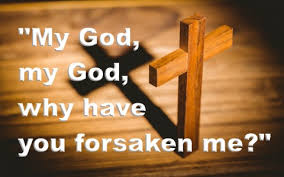
And finally, there is one of the most excruciating times a name was called out twice. Jesus, on the cross bruised, beaten, His flesh torn open and bleeding profusely experiences His darkest hour. In a lamentable, desperate and abandoned state He cries out, “My God. My God, why have you forsaken me?” (Matthew 27:46) 

As I look back over these names and specific situations, it is interesting to point out that in some of the situations the person hearing their name twice did not know the One who was calling them, but it certainly seems that God knew them. 

If you hear the Lord call your name twice, LISTEN UP!

Standard