 It has been on my heart to address something going on particularly in America right now, but I also know there are some similarities around the world when it comes to elections.
We are in the middle of a political year here in America and the world is watching. Recently while in another country, I heard a businessperson say publicly, “God help us all if Donald Trump becomes the next US president.” I understand the comment, but I am challenged by the attitude and the attitude of so many (including myself at times). I receive a lot of Facebook posts from leaders and at times I am horrified by some of them. I am not angry at what I see and read as much as I am grieved. I feel that we as Christians are simply adding to the problem of creating a greater level of disunity and anxiety among our family and the world around us. While we desire to spread truth, we must be careful that we are not at the same time wounding others in the process and spreading fear.
A statement that I recently read in Shawn Bolz’s new book, Translating God, challenged me. This one statement jumped out at me in light of how I perceive some (including myself) dealing with the political differences and climate around us. Shawn wrote, “We will have no authority over that which we do not love.” In other words, if I had the opportunity to speak to our president would I speak what I have posted in FB or forwarded in a negative email? If I had opportunity to share with him would he know my love for him, my prayers for him or just my oppositions? If we do not love, we will certainly miss out on possible assignments from our Father.
I long for authority in the Spirit to pray for our leaders, but at the same time struggle with their agenda and their damaging decisions. I can’t reconcile a Christian voting for an extremely pro-abortion candidate, but I know they do. I may never understand it, but can I walk in unity with that person? Let me share a few verses that I would like you to read and consider sharing with others as the Lord leads you in light of this subject.
(See: I Corinthians 1:10; Philippians 2:1-4; Ephesians 4:1-4; Colossians 3:12-14; Romans 15:5-7; and John 17:21-23.)
Then in John 18:36 Jesus said, “My kingdom is not of this world…” Our kingdom is NOT of this world. We walk in this world of politics, dissension, disagreement and disunity, but we are to be unified as believers because our kingdom is not of this world! Yes, we need to vote, discern, discuss and be clear from the pulpit on godly values when it comes to voting, but at the end of the day we are not to lose our unity with one another in building the kingdom of God, especially as we may vote differently.
I continually think of Daniel in light of this topic. A godly leader who stood to pray for, work with and eat with a very ungodly, secular government and system. While he did not compromise, his love must have continually come through. Daniel, “…resolved not to defile himself.” He received knowledge and understanding through the literature of the culture he was thrust into. He continually spoke with, “…wisdom and tact.” As God’s politician they could not find any corruption in him. The reason for his favor? Daniel 6: 23 says that he trusted in his God. There was no vote. Daniel was not voted into office, God placed him there.
We share from the pulpit on godly values when it comes to voting, but at the end of the day we are not to lose our unity with one another in building the kingdom of God. Recently I heard someone say, “Don’t be deceived to believe that man’s view is always God’s view or that man’s thoughts are God’s thoughts.”
Do you remember the argument in Romans 14 over food, what was clean and what was unclean and then who was weak and who was strong? The whole chapter was about how to treat the weaker in the faith and in the end the writer inspired by God says, “So whatever you believe about these things keep between yourself and God.” That’s something to think these days…
Jesus and the disciples faced this very thing on a daily basis and then gave their lives, not in opposition of their government but in standing for a kingdom that was not of this world system. Yes, I realize that some wanted Jesus to set up His kingdom on earth at that time, but that was never God’s goal for His Son. Rather, it was to reach the cross and bring to us the ultimate form of freedom.
Paul stood before the government leaders of his day and it was his own Jewish people who insisted on that same government ending Paul’s life.
The message of the kingdom of God is not full of political judgement, issues and division, it’s a message of the heart for the heart. God’s kingdom is a reconciling kingdom. It’s a message of the unifying love of Christ.
So, let’s pray for our next president as believers united in Christ so that we can work together to see His kingdom come with a sense of unity. Let us unite in the need of a leader who stands from a position of integrity, high moral character, experience, truth and one who loves this nation and desires to see it prosper in order to serve other nations. However, let us also realize no politician can save us, only one Name can do that.
And please be reminded of whose side you are on and it’s not liberal or conservative. I have literally been trying to remind myself through these thoughts, “Jesus loves you, this I know even if I disagree with everything you stand for…Jesus loves you and I need to love you as well.” Help us, Father, to love so that we might be known by our love. And as we stand for our beliefs, values and convictions may we work toward unity of the Spirit of Christ.

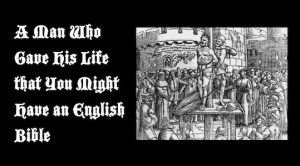 It was the early 1500’s when an ordained minister was executed after imprisonment, being strangled and finally burned at the stake as a heretic. This “heretic” was a Protestant theologian and was the first to translate the Bible from the original languages into English. However, King Henry III and the English church authorities were hostile toward the project. William Tyndale finished only the New Testament and this Bible was printed in 1525.
 The National day of Prayer was originally designated on July 4, 1953 as a day of prayer and penance. However the man who instituted this day spent July 4, 1953 fishing, golfing and playing bridge. During the 1950’s, church attendance was at an all-time high in America and most best-selling books were religious ones. Crime rates were low and divorce was rare. Unemployment was low and the nation was prospering. Prior to the turmoil of the decade to come, the nation had a confidence in God.
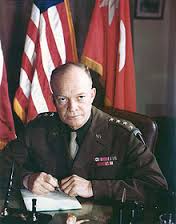 Who was this all-important and influential man who designated such an important annual day of reflection for America? It was Dwight D.Eisenhower. Dwight was named after the great evangelist Dwight L. Moody. Dwight Eisenhower’s parents were devout members of a German Mennonite group called the River Brethren. The River Brethren were known for their pacifism and certainly did not condone drinking alcohol, smoking or playing cards, of which Dwight eventually did all three. General Eisenhower grew up in a home that was dedicated to teaching him the Bible and he could quote many passages at length. Today he is hailed as one of the greatest US military generals.
 Was this two-term President a hypocrite or did he believe that America had a duty to acknowledge God? Was he fallen away from his personal relationship with Christ or was he being used by and obeying Christ for such an important season of America’s history? “…Listen closely to my words. Do not let them out of your sight, keep them within your heart; for they are life…” (Proverbs 4:20-22)
 We all have needs. Recently I asked the following question to a group of persons outside of the US, “What is your biggest need in life?” The answers were varied, but a few included: education, money, food and medical attention. I then posed a second question, “What if I could bring a very wealthy man or woman to you and they would meet all of your need?” The group erupted with applause and responded with a brief conversation to the one seated beside them. I could tell they were looking at me wondering if I would bring just such a person. I followed up with this question, “After your need is met, will you ever have another need and then desire to meet with this person once again?” Some could see where the line of questioning was headed.
 What follows are many excuses as to why some believers and non-Christians have either stopped or rarely read the Bible. I hope that you do not find yourself in any of these categories.



 My wife, Mary, and I were on a plane traveling to the Midwest and it was the dead of winter. We were conducting our first weekend marriage seminar in this frozen, sub-zero temperature state. We jumped off the plane and onto the small airport tarmac to be greeted by the coldest, howling wind we’ve ever felt. Our eyes began to water and our noses started to run. It was cold.
 Are you a conservative or a liberal? These two words are really polarizing these days in our world of political correctness, especially in a two-party voting system like we have in the USA. These two words have created two opposing sides. It has divided our nation and the daily news loves to point out the differences, further dividing us.
 I placed this question before the Lord one day: “Are You a conservative or a liberal?” The question wasn’t posed in the political sense, but more in a spiritual sense. What follows is the answer that I thought I received to the question.
 Mary was a “spender” and I was a “tight wad.” At least those were our thoughts and to be honest, sometimes our spoken words. If Mary had cash, there was something to purchase. If there was money left over at the end of the month, I thought it was there for only one reason, to save. This is how we operated for years into marriage until one day we discovered a morsel of revelation.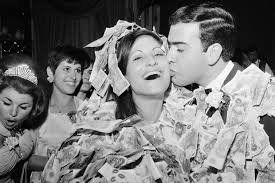
 For eight years, Mary and I were foster parents of adjudicated teenage boys. Over that eight-year period we fostered 25 different youth. We loved those kids and longed to instill the love of our heavenly Father within them. No state program compared to godly, affirming and accepting foster parents who loved unconditionally. Daniel was with us for over two years, went to Bible College for four years and continued to be in relationship with us until one dreadful day. This is what I learned from loving Dan.
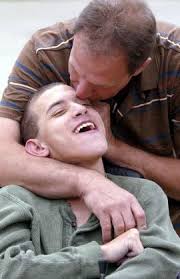 Father’s can’t meet all of their children’s needs. After a failed marriage and many failed same-sex relationships, we received a call that Daniel ended his, all-to-young, 45-year-old life. I wish it could be different, but I am so grateful for what he taught me about life, pain and love without conditions. I know his struggle was real and I just hope he felt real love and acceptance from a temporary foster Dad.
