Challenge, Encouragement, Healing, Issues of the Day, Leadership, Men, Parents, Training, Women

Raising Your Pain Tolerance; The Good Part of Pain (Part III)

We were created to feel pain. Pain in our body is an indicator, a warning that something needs medical attention or intervention. Pain is often a danger signal. It forces a response from us. 

Unfortunately, most persons fear pain, especially emotional pain. Think of losing that loved one, the engagement breakup, or the loss of a job. Often we try to avoid pain; it’s just too, simply put, painful. Perhaps God desires to take us through it? 

Is it really the fear of what happens in our life or is it the fear of the pain that follows significant and pain-filled life experiences that we would rather avoid? 

In this blog, I want us to consider how pain helps to build some very important things in each of us and how it requires our attention. 

God never wastes pain in our lives: Every leader in the Bible went through traumatic and painful experiences. Think of Joseph, Job and Daniel. No Christ follower was or is exempt of pain. God uses it to build us spiritually, emotionally and physically. He builds character through pain-filled life experiences. He often allows tests through those areas where we are weak. Pain produces in us more self-awareness and self-knowledge. If we listen to it, we will learn and grow. Why? Because pain is a strengthener. Seasoned leaders have learned to use the pain in their lives to strengthen their leadership abilities. 

Pain is a strengthener: Pain makes us stronger and tougher. Think of the weightlifter. As they push against the pain, they are building muscle mass. Resistance is a strengthener.  Pain is a precursor to healing. We tend to push against pain, but the pain we can tolerate will strengthen us for the next painful situation we find ourselves in. When we persevere, endure and grow through the pain, it is strengthening us. You will handle pain more effectively in the future. You will handle life challenges more efficiently. 

Pain keeps us humble: It builds humility in us by causing us to be less prideful and more real. We often tend to think well of ourselves and sorry for that poor person who is suffering. Pain lets us know it CAN happen to us. It CAN be a reality check. Pain in our lives will help to build compassion and empathy for others. It hopefully builds a greater sense of love for others and what they go through in life. Often we are looking for empathy because we want significant persons in our lives to know we’re in pain. We need them to notice and to “give us a break.” But God is working humility in our lives.

Pain can be self-inflicted: If it is self-inflicted through our reckless mistakes, then we suffer the consequences and learn from those mistakes. But sometimes pain is self-inflicted because we need to recover from surgery, lose weight or grow in more grace-filled responses. This self-inflicted pain for growth is a positive pain that produces a greater good in our lives. 

Pain teaches self-discipline: We need discipline in our lives. We need boundaries. If we suffered from the lack of control in some area of life, the pain of self-discipline can get us back on track. When we fail in a life discipline or goal, it is not a bad thing to suffer pain. This form of pain can teach us to readjust or plan another strategy. 

Pain grows leadership qualities: The more pain we work through, the greater level of pain tolerance we will experience. The greater level of pain tolerance we grow, the greater level of leadership capacity we will grow. Low tolerance…the lower level of leadership.

Pain draws boundaries: When someone is abusing you, it is appropriate to draw a boundary. Pain inflicted upon us for selfish gain or gratification should cause a healthy reaction of setting a boundary from that unhealthy person. Pain will sharpen your senses and cause a greater alertness to yourself and to others. 

Further, to go through personal pain we will appreciate the non-painful times more. We will appreciate pleasure and happiness more. When we suffer the pain of heartache, we will appreciate even more the deep and joyful feeling of love. If we go to great lengths to avoid pain, we might miss what God is wanting to build in our lives. 

Take responsibility for the pain in your life. Long-term victims remain long-term victims by blaming others for their pain. While others have inflicted the pain, at some point we will have to face it and mature through it rather than blaming others. The longer we blame others for our pain, the longer we can stay stuck in our pain.

One day there will be no more pain. “He will wipe every tear from their eyes. There will be no more death or mourning or crying or pain, for the old order of things has passed away.” (Revelation 21:4)

Until then, “…We also rejoice in our sufferings, because we know that suffering produces perseverance; perseverance, character; and character hope.” (Romans 5:3)

Standard
Challenge, Encouragement, Leadership, Men, Singles, Training, Women

Raising Your Pain Tolerance (Knee Surgery Part II)

Experiencing the replacement of a knee cannot be lightly categorized as a simple, in-and-out procedure. It has meant being out of commission for a season. It has meant unrivaled pain. It has meant disciplining oneself to faithfully do physical therapy (aka, “personal torture”) exercises. And, it has meant having to be patient with the healing process.

If you are listening to your thoughts about what you are experiencing while you are experiencing it, you can learn something about yourself and you can learn some things about life. What follows are some life lessons I learned while in the recovery process that have also become life applications. 

I can’t count how many people said to me, “No pain; no gain.” I told my wife one day that if one more person says those words to me, I think I am going to give them some pain. But that old saying is literally true. Recovery from surgery can be painful and it’s why some patients give up. Simply put, it just hurts too much.

I was listening to a teaching about how pain in our lives – all pain – produces something: a higher pain tolerance. I felt that those words were directly from God for me. He was asking me to develop a higher pain tolerance physically, yes, but emotionally and spiritually as well. You see, the higher our tolerance, the less offended we can become, the less offensive we will be. With a higher pain tolerance, we can return good for evil, we can love in greater measure and we can tolerate far more irritants (or irritating persons). 

Speaking of irritants, when someone is experiencing pain, it is difficult to be ones normal self. Small irritations can become enlarged rather quickly. However, pain can grant God permission to show me, me. When in pain, inhibitions are lowered and what’s really inside is allowed to surface. Overall, not a bad thing. 

Here’s another saying we often have to endure post surgery, “Push through the pain.” Yes, it hurts, but you must push through the hurt so you can become stronger. Who on earth elects to do that? How many of us relish inflicting pain upon ourselves no matter the results? I can quickly throw the desired results out the window if it includes suffering. Funny that Jesus told us in this world we would suffer pain, we would have trials and tribulation, but He has overcome the world. (See John 16:33.)

I could have blamed my smiling therapist for the hurt she inflicted. But the reality was my mindset had to change to how the hurt, the pain was actually good for me. Said another way: it hurts for my good. The therapist is inflicting pain, but for my personal strengthening, which ultimately brings healing.

Imagine actually going back to someone who deeply hurt you and saying to them, “Thanks for the hurt you inflicted upon me. Because of it, I have grown in my walk with Christ and I am learning patience and discipline as my pain tolerance increases.” But that is exactly what is happening as you suffer. Hebrews twelve reveals, “No discipline seems pleasant at the time, but painful. Later on, however, it produces a harvest of righteousness and peace for those who have been trained by it.”

How has personal pain helped to grow you?

Standard
Challenge, Encouragement, Healing, Issues of the Day, Leadership, Training

Leadership Fatigue and Burnout

I can recall an important part of a message that I heard many years ago. I remember one small but impacting statement the speaker made. It went like this: “If the evil one cannot move you away from God, he’ll push you into God!”

What does that mean? 

It means he is relentless at letting you know you’re not doing enough, not praying enough, not studying the Bible enough, and not testifying enough. If he can push you to believe these lies, he can discourage you and cause you to think you simply are not enough. 

The end result is spiritual exhaustion, physical depletion and emotional discouragement. And that can affect your work, your ministry, your marriage and your family. In the last decade over 29,000 evangelical pastors have left the pastorate. Lifeway Research has noted that 71% of churches have no plan for sabbaticals; 66% lack a support group for the pastor’s family and 33% do not have a list of counselors for referrals. 

Leaders burn out, fail and fall. Our leaders are sheep as well and we all need shepherds in our life. 

That’s where sabbaticals come in. It’s not a new idea, just one that is rarely utilized. In the Monterey Herald newspaper article “Beating Burnout,” writer Cindy Kirschner Goodman reports, “Among the Fortune 100 Best Places to Work, 22 companies boast of offering a fully paid sabbatical.” She writes, “These companies find if they don’t do something, their workers will burn out and leave, or even worse burn out and stay.”

A sabbatical is preventative medicine. It is some of the best preventative medicine/maintenance a company or a ministry can initiate for their long-term, full-time workers. 

So, how is it done? I believe in and have written about a four-phase approach:

  1. Disengage and Rest – Disengage from life as normal and then engage in what will provide rest to you physically, mentally and spiritually.
  2. Retooling and Refocusing – After rest, one is often ready for some input into their life that promotes personal growth and health.
  3. Regeneration or Renewal – This is the evaluation phase and then the vision stage; assessing the past and looking toward the future. 
  4. Resolution – This phase is a firm or unwavering determination toward a solved problem or solution toward healthy boundaries to sustain a balanced lifestyle. It is a written plan for your future so you do not return to life as “usual,” but rather implementing the changes that are necessary.

You can catch an in-depth look at sabbaticals in this book

Standard
Challenge, Encouragement, History, Leadership, Training

Who Are the Eight?

When a Hebrew person wanted to declare or express an intimate response to someone they would often repeat their name twice. It was an endearment or expression of closeness.

Most of us remember Jesus saying to his friend Martha, “Martha, Martha, you are worried and upset over many things, but only one thing is needed.” (Luke 10:41) Mary was worshipful while Martha was busy. One was over-occupied while one was overcome with His presence. Martha was frustrated while Mary was being refreshed.

Why? Many things are needful and necessary, but it was a Person who was loving and being loved that Martha was missing out on. 

Abraham takes his son up the mountain for a sacrifice. He builds an altar, places the wood on it, ties up his son, Isaac, and lays him on the altar. He raised his knife and from heaven he hears, “Abraham! Abraham!” (Genesis 22:9-12) God stops him dead in his tracks and Abraham’s obedience is proven. 

Further in the book of Genesis, we have another example of God getting someone’s attention. Jacob is spoken to by God in the night. “Jacob! Jacob!” Jacob replies, “Here I am.” (Genesis 46:2) God reassured him to not be afraid to go to Egypt because He said, “…I will make you into a great nation there.”

Moses sees a burning bush. He moves closer to take another look at why it wasn’t being consumed. He then hears “from within the bush, Moses! Moses!” (Exodus 3:4) God calls Moses to bring His people out of Egypt and the slavery they find themselves in. 

On to I Samuel chapter three. There is a young boy asleep in the tabernacle of God who awakes hearing a voice. It was a voice he didn’t recognize. Eli the priest realized it was the voice of God calling Samuel and he told him to go back and lie down on his bed. Eli instructed him that when he hears the voice again say, “Speak, for your servant is listening.” Verse ten records God’s final call to Samuel, “The Lord came and stood there, calling as at the other times, ‘Samuel! Samuel!’”

It was the Last Supper and the disciples were disputing who among them was considered the greatest. Jesus singles out Peter to tell him that he will deny his Savior. Jesus looks straight at him and says, “Simon, Simon, Satan has asked to sift you as wheat. But I have prayed for you, Simon, that your faith may not fail.” (Luke 22:31-32)

God was after a really zealous character, one who was unashamedly persecuting “the Way,” the believers in Christ. Saul is on the road to the town of Damascus when all of a sudden there is a light from heaven that flashes like gunpowder when lit. Saul falls to the ground and hears these words, “Saul, Saul, why do you persecute me?” (Acts 9:4) Saul becomes Paul, a selected apostle to carry the Name to the Gentiles. 

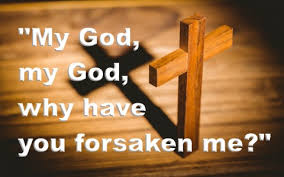
And finally, there is one of the most excruciating times a name was called out twice. Jesus, on the cross bruised, beaten, His flesh torn open and bleeding profusely experiences His darkest hour. In a lamentable, desperate and abandoned state He cries out, “My God. My God, why have you forsaken me?” (Matthew 27:46) 

As I look back over these names and specific situations, it is interesting to point out that in some of the situations the person hearing their name twice did not know the One who was calling them, but it certainly seems that God knew them. 

If you hear the Lord call your name twice, LISTEN UP!

Standard
Challenge, Encouragement, Healing, Identity, In the news, Issues of the Day, Leadership, Parents

Wasting Your Life Blaming Others

I can’t begin to tell you how many people who entered my counseling office over numerous years attributed all of their life issues to another person or persons. It can always be someone else’s fault. Why? We are very good at finding others to blame.

We can blame:

  • Our parents
  • Our spouse
  • Our ex-spouse
  • Our boss
  • Our coworkers

The list could go on and on. But here is a word of counsel that you can take to the bank:

As long as we feel we can blame another for our problems, we will never know wholeness for that area of our lives.

Said another way:

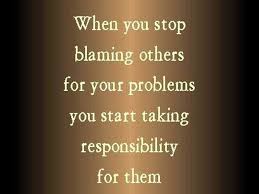
When you stop blaming others, you will then begin your journey to wellness.

When we constantly and consistently blame others for our life problems, we will breed entitlement in our life. Entitlement is an immature “others owe me” mentality. And, they owe me because of what they did to me. Entitlement will breed victimhood. 

Victims do not have to change because…well, they’re victims. Victims remain victims because our culture embraces victimhood as an excuse to live with a life controlling problem. Victims will have a distorted view of reality because they suffered and need others to understand that things happened “to” them. Victimhood will breed unforgiveness. 

Unforgiveness will support us in maintaining a depressed and unthankful heart. It keeps us in the unhealthy state of “That person does not deserve my forgiveness of them.” Unforgiving people are unhappy, unthankful and unhealthy persons.

Maybe your parent was abusive and it started a vicious cycle of hurt and pain. In that case, you are an innocent victim of your parent’s abuse. You may have the option of spending your life blaming your parent(s) and I guess you’d have every right to do so, but staying in blame and not pursuing personal healing only hurts you, not them. 

Jesus was a victim of unjust persecution, as were many in the scriptures.

Jesus knew that ultimately there was a purpose in His suffering and nothing would deter Him from His goal of salvation for all. Even when suffering, Jesus did not adopt a victim mentality. 

Blaming others and walking in longterm victimhood will never allow us to see our own failures, our personal shortcomings. We’ll see the splinter in others’ eyes, but not the log in our own. It will rob us of the initiative to change.

Blaming others and becoming a victim destroys the relationships around us. You cannot dialogue with or challenge someone who is always innocent and right. They simply will not take responsibility for their wrongdoings and wrong words. By the way, this is also why “identity politics” fails so miserably. It constantly creates victims (good people) and oppressors (bad people). There is no healing in this victim-filled mentality.

To heal means you must stop blaming others for your ills and to stop expecting others to fix you or make life right for you.

We need to own our reactions to our hurts and what we tell ourselves about them. To rise above blaming others is to take on the attitude of Christ and His sufferings. Listen to what Peter wrote about suffering.

Do not repay evil with evil, or insult with insult, but with blessing, because to this you were called…But even if you should suffer for what is right, you are blessed. Do not fear what they fear; do not be frightened…[that] those who speak maliciously against your good behavior in Christ may be ashamed of their slander. (I Peter 3: 9,14,16)

So then, those who suffer according to God’s will should commit themselves to their faithful Creator and continue to do good. (I Peter 4:19)

God knows what you suffered at the hands of another. He suffered with you. When we turn our victim status over to Him and receive His healing, we will become victors.

Standard
Challenge, Encouragement, Issues of the Day, Leadership, Men, Parents, Small Groups, Training, Women

Ten Words of Wisdom for the New Year

In case you haven’t noticed, my blogs for the month of January are committed to making personal change and incorporating wisdom for the New Year. Find words of wisdom from the writer of the book of Proverbs found in the Old Testament of the Bible. 

This book is filled with wisdom and I love to read it annually. Solomon, the author, begins by reminding us we are not to forget these teachings and commands because in obeying them they will “prolong life and bring us prosperity” (Proverbs 3:1-2). Now there is a promise to hold on to. Here are ten more wise sayings to incorporate into your life.

  1. “Trust in the Lord with all your heart and lean not on your own understanding; in all your ways acknowledge him, and he will make your paths straight.” (Proverbs 3:5-6) How easy is it to fall back on our own understanding, but our wisdom is so limited. We will quickly come to the end of ourselves and our knowledge. We must integrate the knowledge of God’s understanding.
  2. “The integrity of the upright guides them, but the unfaithful are destroyed by their duplicity.” (Proverbs 11:3) Integrity will guide you; deceitful ways will destroy you. Walk in high moral character and integrity. It takes a lifetime to build integrity and only minutes to lose it.
  3. “A generous man will prosper; he who refreshes others will himself be refreshed.” (Proverbs 11:25) Generosity will prosper you! Jesus said to give and you will be given unto to. It’s simple, it’s true, and it’s life-altering.
  4. “An anxious heart weighs a man down, but a kind word cheers him up.” (Proverbs 12:25) Anxiety, fear of the future, (mostly unfounded) will weigh us down. Kind words and truth-filled thoughts will cheer us up.
  5. “A gentle answer turns away wrath, but a harsh word stirs up anger.” (Proverbs 15:1) When someone is arguing with us, raising their voice, and we use the same volume, anger will be continue. But when we can give a gentle response, it will lower the volume and keep the discussion more friendly.
  6. “Pride goes before destruction, a haughty spirit before a fall.” (Proverbs 16:18) Humility is one of the godliest traits one can embrace in life. Pride will keep us from changing because it keeps us in a defensive, self-justifying mode.
  7. “He who answers before listening–that is his folly and his shame.” (Proverbs 18:13) Listening is an acquired skill. Practice listening with your spouse and with your children. Before answering, make sure they are finished with what they need to say. Listening is showing honor.
  8. “The rich rule over the poor, and the borrower is servant to the lender.” (Proverbs 22:7) Remember before you borrow money, you will become a servant to the lender. The lender has that power over you. Throughout your life, make every effort to become debt-free and use credit responsively.
  9. “He who conceals his sins does not prosper, but whoever confesses and renounces them finds mercy.” (Proverbs 28:13) Do you want to prosper? Be honest; be accountable to God and with a spiritual leader about your sin. Do not try to conceal your sin because your heavenly Father loves you enough to reveal it. And don’t just confess it; renounce it–cut if off!
  10. “Fear of man will prove to be a snare, but whoever trusts in the Lord is kept safe.” (Proverbs 29:25) It seems the scripture repeatedly reminds us that we have two choices: fear of man or trust in the Lord. You can’t have it both ways. Do not be ensnared in the fear of man (the pleasing of man versus the pleasing and the pleasure of trusting God). 

There you have it–ten wonderful, life-giving words of wisdom for 2024. Pass them on to your family, your friends, your co-workers, and your neighbors.

Standard
Challenge, Encouragement, Issues of the Day, Leadership, Training

Seven Key Leadership Lessons Learned

Early in our marriage, my wife and I served as missionaries for eight years. Looking back, here are a few lessons we learned that may also be applicable to your life today.

1. Calling vs. a ministry or a job. When God calls us to something, we

do not leave when it gets tough. Hirelings leave when the road becomes

too rocky for their comfort, but “called-out” ones do not leave until that

same Voice that called them speaks again in order to move them on to the new. (Isaiah 50:4)

2. Faith is at the core of all you do and think. Without faith it is impossible to please God or anyone else for that matter. Faith makes a way for your

leadership. Your faith will be tested. (James 1: 2, 3)

3. Critics will always be present if it’s a true calling. Your critics will assure

you that you are on the right path. They will come from outside you and

from within. You must listen to them, consider their words, pray and move

on about the Father’s business. Critics will come from the community when

you are attempting to do something for God in your community. Critics will

force you to hear God and refine the vision. (Luke 6: 9)

4. Never stop looking forward. If you keep looking back, focusing on your

mistakes you will inhibit your gain. Never stop imagining, dreaming and

praying toward that end. Do not lose your thankfulness or you will begin to

focus on what you feel God is not doing rather than what He is doing. (Isaiah

43: 18, 19)

5. Your insecurities will surface under pressure. When the pressure is on

your insecurities, your immaturities and your self-preservation will surface.

Recognize this fact, face them and ask the Lord to heal, restore and rebuild

you from the inside out. Pressure produces good things if we allow it to.

Pressure is not wrong; it’s how we deal with the pressure and what we tell

ourselves about the pressure. (Mark 8: 34, 35)

6. Trust is greater than understanding. You will not understand all that

happens in leadership and you do not need to, but you will need to trust your

Father in the process. Trust in God and knowing that He knows everything

that is going on is essential. He makes no mistakes and He is totally aware of

all you are experiencing and feeling. (Proverbs 3: 3-6)

7. Relationship testing will always be present. Often it is not who you are

serving, but rather who you are co-laboring with. Healthy relationships are

a key to any work to succeed. Those relationships will be tested, put through

the fire and some, no matter your effort, will be lost. It is those lost

relationships that hurt and wound the most. (II Peter 1: 5-9)

There you have it, seven keys. Which one or ones are you presently working on in your leadership call?

Standard
Challenge, Encouragement, In the news, Issues of the Day, Leadership, Prayer

Another Election Day Approaching

As many of us approach election day here in the USA, I thought I would pass along to you some really healthy and sound advice. But first, let me share some of the best advice from God’s word found in I Timothy 2:1-3 from The Passion version.

 1-3 The first thing I want you to do is pray. Pray every way you know how, for everyone you know. Pray especially for rulers and their governments to rule well so we can be quietly about our business of living simply, in humble contemplation. This is the way our Savior God wants us to live.

Some very sound advice:

  • I can deeply love people with whom I strongly disagree. I refuse to demonize any politician who is made in the image of God.
  • I have enemies and Jesus gave me power over them on the cross, but my battle is NOT against flesh and blood.
  • When you call someone by an evil name…you have decided that you know their heart. But, the Apostle Paul said, “Who are you to judge the servant of another?”
  • Associating with, or serving political people, should not be confused with embracing their ideologies. All political offices deserve to be honored according to Romans 13.
  • I am commanded and called to pray for my leaders. If I don’t pray for them, then I don’t have a right to critique their success or failure.
  • My first allegiance is not to a political party but to the kingdom of God.
  • I cannot separate my spiritual views from my political views because the government of this world is being affected and infected by the invisible realm.
  • Great government doesn’t take away the right of people to sin. It does however, protect people from sinning against others and teaching people to do so.
  • It’s not the responsibility of government to Christianize the world. That’s the church’s job.  Jesus rules the nations with a rod of iron, but He leads the church with a shepherd’s staff. (Bullet points written by author Kris Valloton.)

Lastly, let us keep in mind the innocent in this election, for our vote matters to them. The prophet Jeremiah wrote, “This is God’s message: Attend to matters of justice. Set things right between people. Rescue victims from their exploiters. Don’t take advantage of the homeless, the orphans, the widows. Stop the murdering!” (22:3, The Message)

Let’s prayerfully walk out this election like our first allegiance is to the kingdom of God and not to a political party.

Standard
Encouragement, History, Leadership, Marriage, Men

“One Man with Courage Makes a Majority”

Andy was a person who understood personal pain, grief and endurance. He fought in the Revolutionary War. He was captured, slashed across his forehead by a British officer with a sword and would suffer from migraines the remainder of his life. 

While imprisoned, he contracted smallpox. His brother died of smallpox, but Andy lived. Not long after his brother’s death, his mother died of cholera and then his brother, Hugh, also died. The hurt and pain within Andy pushed him to inflict pain upon others. 

But then, Andy fell in love with Rachel. They married only to find out there was a glitch in a court’s error and Rachel was still legally married to her first husband. It is said that Andy actually fought 103 duels to defend her honor! Andy’s body was riddled with bullets; one near his heart caused severe blood-filled coughing spasms.

Andy then fought in the War of 1812. After returning as a war hero, he ran for the office of the president of the United States. During his campaign his adopted son who was 16 years old died of tuberculosis. He went on to win the election of 1828. He served two terms.

President Andrew Jackson

In his first term of office, he lost Rachel to illness. Overcoming his grief as president, he wiped out the federal deficit before he retired to Nashville, Tennessee. 

On his deathbed, Andy spoke of heaven where he would “Go to meet Rachel…and Jesus.”

If you look at the U.S. twenty dollar bill in your pocket you’ll find the engraving of Andrew (Andy) Jackson, the seventh President of the United States.

                              ONE MAN WITH COURAGE MAKES A MAJORITY (Andrew Jackson)

Think of it–one of you, single-handedly, putting a thousand on the run! Because God is God. Because he fights for you, just as he promised you. (Joshua 23:10 The Message)

Standard
Challenge, Encouragement, Issues of the Day, Leadership, Training

How to Provide Critical Input and Feedback

I’d venture to guess that most of us like talking more than we like listening. Counselors are paid to listen, but for the majority of us, we’d rather express our opinion versus listening to another’s. 

Having written a number of books and plenty of articles and published well over 600 blogs, I have, without trying, widely opened the door for feedback, push back, criticism and opinion. When I write something like a book I embrace the input of others, their corrective feedback and their helpful, critical eye. Using what I call pre- readers makes for a better book. Having hand-selected persons who I know will read the material and will also be willing to give me honest and fair input is invaluable.

By the time a book goes through editing and then proofing, being scoured for theological correctness and cultural sensitivity, etc., the author is ready to be done with it. This process can take several years and can be somewhat grueling.

Our first widely published book, Called Together, was featured in a magazine article about methods of premarital counseling. It was great to see it featured and to read the positive article about its effectiveness. One month later came the letters to the editor. While most were positive, one was extremely negative. It was obvious the writer of the letter never read the book, but those toxic and inaccurate words were already out there and I could not retrieve them or add a rebuttal. 

The same is true with online reviews where books are sold. While many are positive, there are those who criticize your work and give you one-star ratings for the most trivial things. Once again, authors cannot provide a rebuttal or even go on the offensive to somehow set the record straight. You have to learn to take the good with the bad and not lose sleep over it. 

Articles and blogs are somewhat unusual because it’s much easier to be critical of these than it is a book, primarily because of their shorter length. My experience with this type of writing is a bit different. Let me explain.

Negative responses from your audience might begin with a question. You, the author, do your best to provide an answer. This then provokes another question or two which are often not related to your response to their first question. You once again attempt to not be defensive, take the question as sincere and provide an answer. Now the tone begins to change and you begin to pick up that the questions were leading and a ruse for what is to come.

The next expression is pushback and criticism of your written piece. If you as the author continue to try and respond, the critic can easily become venomous, strongly opinionated and letting you know rather loudly that they are right and you are clearly wrong. The whole thing begins to break down and starts to feel really bad.

The worst part is this is normally not a person who when reading your many blogs or articles ever writes back with a positive comment or word of encouragement. This type of person is waiting for you to slip up and wander off into one of their sacred cows. And this criticism from the critic whose only goal is to prove you wrong by their expertise or life experience, is really to ridicule you and tell you how wrong you are. It is typically pretty unfair, undesired and often unprovoked. 

Most likely there will be nothing productive from the conversation and it will become more and more toxic along with the possibility of it also becoming anger-filled. 

How should we respond and give critical input to an author?

There are respectful and acceptable steps we can take that do not create further offense, hurt and anger. Let me share a few helpful steps with you. These are steps that I have incorporated into my life as well.

  1. Know your boundaries. Stay within your field of ministry or expertise. (See II Corinthians 10:12-18.)
  2. Earn the right to speak into another’s life and what they write. If at all possible, make sure of the health of the relationship first. This builds trust which allows truth to be spoken without taking offense.
  3. Thoroughly read what is written. Do not allow a word in the piece to cause you to emotionally react. Try to be sure the author is saying what you think they are saying and do your best to not only read words but to hear their heart.
  4. Find the positive. What can you agree with and then include this in your comments.
  5. If you don’t understand something, then humbly ask the author for further clarity. Perhaps you are misreading the piece.
  6. Questions to the author that are leading in nature will be picked up by the author and you will be setting yourself up for a defensive response. Stay away from leading questions. These are questions with an agenda attached to them, e.g., “You don’t really mean what you are saying about ______, do you?”
  7. Give your input through your experience or knowledge humbly. The author will receive it when it is felt that it’s coming from a genuine experience and a genuine heart of humility.
  8. Do not keep the dialogue going beyond one or two responses. It just gets defensive after that. If there is disagreement, let it go.

You can do all these steps without being defensive or argumentative. A know-it-all response will come across as not legitimate, but rather arrogant.

When responding, keep these verses in mind:

12 Therefore, as God’s chosen people, holy and dearly loved, clothe yourselves with compassion, kindness, humility, gentleness and patience.13 Bear with each other and forgive one another if any of you has a grievance against someone. Forgive as the Lord forgave you. 14 And over all these virtues put on love, which binds them all together in perfect unity. (Col. 3:12-14)

 Let your conversation be always full of grace, seasoned with salt, so that you may know how to answer everyone. (Col. 4:6)

I hope this will help to give improved and more gentle responses in a sincere effort to be a builder in conversation keeping the admonishments in mind from the above listed scriptures.

Standard