
 Often the phrase, “Well, I’ll just divorce him or her,” is glibly spoken. If you are truly considering this option, then also consider some of these very real consequences.
- You may be dissolving the marital relationship, but you are not dissolving the relationship. As long as this person is alive, they can potentially still be in your life, especially if you have children together. You will deal with many of the same issues outside of marriage that you dealt with in the marriage. And you will deal with them for a long time.
- You will definitely NOT be better off financially. You think finances were tough being married; you have not seen anything yet. It is not just minus one income; it is setting up a whole new household and everything that goes along with that new household.
- Single parenting is a tough gig and gets tougher. As children grow and find their voice, begin to deal with their anger over the breakup of their parents, you will be targeted.
- Experts say it takes 7-9 years for a marriage to settle. If you have not reached this stage, you will face many of the same issues in the next relationship or the next marriage.

- Speaking of next marriage: were you aware that second marriages have a higher divorce rate than first marriages?
- If you are unable to reconcile your differences in your marriage now and think divorce is the answer, what will you do when the very same inability surfaces in your second marriage?
- Even if there is a breaking of the marriage vows in your present marriage, it is more profitable to the marriage in the long run if a couple can heal the present brokenness and grow in their relationship to a more stable and secure level of forgiveness and commitment.
- You will normally spend years attempting to untangle who you have become in your present marriage to who you will become in your second marriage.That untangling takes time and healing.
- The patterns you developed in your present marriage will be a part of your next relationship/marriage. Consequently, if you developed a trigger from your first marriage, it can become larger, even more magnified in your second marriage.
- How long do you think it will take you to “unmarry” someone? That healing is different for each and every person.
There you have it, well some of it. I am sure I have missed many areas, but these are things in my short life that I have observed about the ending of one marriage and attempting to begin another. Can it be done successfully? Yes, it can. Is it as easy as you think it is? No, it is not. So please do not ask your friends who are not married or even those who are married for advice. I suggest you ask those friends who have been through this very challenging life circumstance. They will have a better handle on the truth and the reality rather than the feelings and the desired escape.
 Drifting is natural, it happens sometimes without giving it much thought. Add to that our human propensity to get bored with the familiar rather quickly. Once the romance wanes in our relationships, we can be tempted to drift. We attempt to convince ourselves and our life mates that we’re not drifting, but we both know we are.

 It’s time to reclaim dinner around our tables. This practice is becoming lost in the midst of family busyness, jobs, school schedules, friends and activates. We desperately need to recover this tradition within our families and here’s why.
 I recently needed to make a ministry/training trip to southern Virginia. It was a lovely drive; one in which I have made many, many times before. You see, our marriage began in that area 44 years previously. That now seems like a long time ago.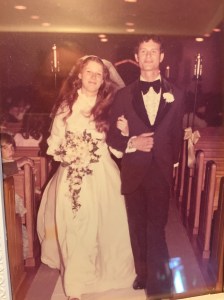

 September 11th, 2001, a day we will all remember here in America and around the world. I was sitting on a plane at the Baltimore/Washington airport waiting to fly to New England through New York air space when we were all asked to disembark the plane and to go home. That day, 2,996 people would lose their lives.

 Journalist and author Mignon McLaughlin once said, “A successful marriage requires falling in love many times, always with the same person.”

 So often marriage is like a mirror and we get to see our real self through the reflections of our life mate. After all, who knows you better than your spouse? Who better to reflect back to you the image you are projecting?


 Someone once shared with me these words, “I’ll respect him when he starts respecting me.” Still another said, “When she starts acting respectable, I’ll show her respect.” Really? Since when is respect conditional upon another respecting you?
 I love how author Gary Thomas weighs in on this very subject, “As our partners and their weaknesses become more familiar to us, respect often becomes harder to give. But this failure to show respect is more a sign of spiritual immaturity than it is an inevitable pathway of marriage.” He also notes, “When there is mutual respect in marriage, selflessness becomes contagious…. If you want to obsess about them [weaknesses], they’ll grow, but you won’t!”
 Marriage minefields are fields where we have buried or hidden devices (memories) just below the surface. We actually move forward in life by frequently looking backward. Most day-to-day life is not filled with new revelation but memory. Memory helps us to find our way home after work. Memory is used daily in order to live life. Life without the ability to recall even the slightest, most mundane details or important ones would be disastrous.
 Some of our memories contain lies or misbeliefs and still others are inaccurate. It was not uncommon for John and Elizabeth (not their real names) to experience knock-down, drag-out arguments. In sheer frustration late one evening, John looked at Elizabeth and said, “That’s it; I’m out of here!” Immediately, Elizabeth went silent and fell to the floor in a fetal position, where she sobbed uncontrollably. Even though John ran immediately to his wife, knelt beside her, and desperately tried to console her, it was as if he had left. Elizabeth didn’t or couldn’t hear his voice or acknowledge his presence. John later discovered that when his wife was six years old, she overheard her parents fighting. Her father’s words rang out as he screamed, “That’s it; I’m out of here!” Elizabeth never saw her father again
 Elizabeth was no longer fighting with John; she was wrestling with pain-filled memories planted in a minefield just below the surface. Was it the argument they needed to resolve, or was it Elizabeth’s past hurts that needed to be healed? From many stories like this one, I have come to believe that most relationship issues in the present have a connection to the past; therefore, what seem like marital issues are often individual issues. I am convinced that when Jesus heals our individual issues, sins, hurts, and disappointments, marriage relationship issues can also be healed. *
 Many years ago, a wiser, older, more mature couple taught us this phrase: praise in public; construct in private. By that phrase they meant to always provide a word of praise for your mate when with your family, at your work place, with your friends or in any social setting. They also encouraged us to never, ever put our mate down, shame them, humiliate them or correct them in a negative sense in public. We took this counsel to heart and have adapted it for our marriage relationship.

 Steve Prokopchak