
 Being a used car dealer on the side since 1996, I am familiar with the well-known Lemon Law in our country, the USA. Basically, if you have repeated issues noted by your new car dealer over a certain period of time you are able to claim Lemon Law status and turn the car back in to the dealer. It’s a bit more complicated, but you get the idea.
Category Archives: Marriage
Becoming a Mentor Couple
 We have come face-to-face with so many different life problems while involved in pre- and postmarital counseling with engaged couples. For example, a young woman’s sexual abuse as a child; a young man’s addiction to pornography; pregnancy; extreme debt; the recent loss of a parent and more. These couples found themselves facing huge life challenges before saying “I do.”
Every couple we have ever faced presented new issues, new challenges. Walking them through these life challenges was our privilege as premarital counselors. We were not serving them as professionals, but rather as a mentor couple, and spiritual parents. What an honor to walk with them, to pray with them and then to see answers to our prayers together. It was a learning experience for them and for my wife and me.
Life has its twists and turns, but when you are able to walk alongside someone else serving and supporting them through those times, you are actually helping them to make it, to be successful and to grow toward maturity. Our book, Called Together, is a resource to enable other  couples to do exactly this.
If you and your spouse have a heart to enter this type of ministry, we have a suggestion for you. You can take our free four-part training found on YouTube or you can attend our live training scheduled for February 22 at Westgate Church in Ephrata, PA. I will leave the live links on the bottom of this blog.
We have been involved in this ministry for many years and find great satisfaction and challenge in it. Walking couples through their histories, their likes and dislikes, their hurts and their joys, all the while, moving toward marriage is simply a satisfying venture. Helping to build a firm foundation for their future in the areas of communication, finances, sex and so much more brings with it a certain satisfaction. As well, we schedule several postmarital check-ups with them after they say “I do.” Follow-up is, as they say, where the rubber meets the road.
When We Should Just “Shut up” in Marriage
 Are there times in marriage when we simply should not be communicating or using more words? I want to propose that there are those times and we should use them wisely. The book of Ecclesiastes reveals, “…A time to be quiet and a time to speak.”
Consider these five times that silence just might be described as golden.
- When your partner desires some quiet time or some alone time.
- When a disagreement is getting out of hand, it most likely is a good time for a communication time out.
- When one partner is feeling a bit snarky, it’s best not to respond.

- When an ongoing issue keeps surfacing we may need to back off and give it some time, or agree to disagree.
- When it’s time to close our day and go to sleep.
Use your quiet times wisely because sometimes, “Even fools are thought wise if they keep silent, and discerning if they hold their tongues.” Proverbs 17:28
Are You Going to the Bedroom Together? 7 Highly Effective Benefits that will Help
 I do not mean for the title of this blog to be controversial or provocative, so, if you are married, do you go to bed together at the end of your day? We are finding more and more couples who do not. Why is this?
The Gottman Institute research has shown that couples tend to stop going to bed together within the first three-and-one half years into marriage and something like 75% of couples do not go to bed at the same time.
Many couples maintain differing schedules and are not shy about it. Some couples are opposite when it comes to being a late-night person versus an early morning person. Still others are working on needed household chores late into the evening and others are enjoying their down time after the kids are in bed. Then there are those couples who have no evening ritual of communication and ending their day together spiritually.
I would like to propose something different: Go to bed at the same time and end your evening in one another’s arms. Why? Well, I tend to think there are some extraordinary benefits. Here are seven.
- You can converse even as you spend time in the bathroom or bedroom preparing for sleep.
- You can deeply communicate about those things the children and others simply should not hear. Call it pillow talk.
- You’ll be together, touching one another emotionally which can lead to a greater opportunity for cuddling and sexual intimacy.
- It creates a level of connection which inspires happiness in the marriage.
- When you go to bed together, you tend to maintain a similar schedule together.
- If there are poor late-night choices (like pornography, internet surfing or social media) being made, going to bed together lends accountability to one another and to unplug.
- And the very best reason to go to bed together? You can top off your day by praying and reading God’s word cooperatively as one.

Try it for 30 days and see if you can establish a brand-new habit that brings life and connection to your marriage. Remove the TV from your bedroom if there is one. Turn off devices, say “I love you” every night and practice giving thanks for what you both brought to the marriage and family that day. You’ll never regret it!
The Most Important Words We Can Speak

How many words are there in the English language? I asked Google just that question one day. The answer? Three key numbers to remember. There are over one million English words of which approximately 170,000 are presently used. Any one of us as English speakers use around 20,000-30,000 words.
To be “fluent” in English you need to know around 10,000 words. The longest word in English is 45 letters in length, a medical diagnosis term. Approximately 5,400 new words are created annually. One introduced for 2018 was, wordie.” (Even now my spell check is telling me it’s an incorrect spelling.) And there are 3,000 common English words that you could get by with in order to communicate sufficiently. As well, thousands of words become obsolete each year. Here’s an obsolete word for example: “boreism.”
There are some words in each and every language that should never become obsolete; words that ought to be repeated over and over. There are in marriage words that we ought never stop repeating or ever tire of hearing. I can think of three of the most beautiful words spoken or heard, “I love you.”
Telling our spouse each and every day that we love them can never become old. Telling our children every morning and every night must be habitual. Saying those words to our parents is important because they are also words of honor. Telling God how much we love Him should reveal endless adoration of Him because He first loved us.
I am not sure anyone on this earth tires of hearing those words, “I love you.” There may be many around you today who do not hear those words or perhaps never heard them growing up. We can make a difference today in their lives too.
A Sickness Within Marriage – Apathy
 Author Gary Thomas wrote in his book, Sacred Marriage, “…the opposite of biblical love isn’t hate; it’s apathy.” Do you agree? When a partner within marriage becomes apathetic, it can become a destroyer of the relationship. An intimate relationship like marriage takes effort, planning, intentional closeness and investment. In other words, there is a very clear plan of building.
My wife and I just finished our annual evaluation and vision weekend. We go away for an overnight and we give God thanks for all He has done in our lives. Then we evaluate our year. We evaluate our family, our marriage, our sex lives, our finances, our jobs, our schedules, etc. We simply evaluate everything we can think of to evaluate. After this time, we turn a corner and we pray about the future, our vision for our marriage, our family, our ministries, our volunteer projects and anything else we need goals and vision for. Lastly, we update our marriage mission statement. It is an amazing time of prayer, reflection, deep communication and stated succinctly: intentional, side-by-side effort to hear God, honor one another and build on our continued bond of oneness.
Mary often tells me, “I feel like we are on the same page when we leave this time to return home.” A marriage on the same page today is an accomplishment. It takes vulnerability, openness, humility to hear hard things about yourself and the desire to change. Because, let’s face it, going into this time we project hearing how well we’re doing and how great our marriage is. When we hear something challenging or confrontive and we must interpret that as a need for us (me) to change, it all starts to hit home and we can become defensive.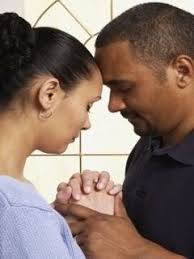
For this time, freedom is the goal. Honesty is the goal. Growing toward each other is the goal. That can only happen when we as a couple pursue interdependence and forsake independence. When we truly love each other and desire the very best for one another, we do not need to become defensive, but rather face the fact that I (we) am (are) not perfect. This time taken away to be ruthlessly honest with each other means we are willing to face the truth about ourselves in order to become the spouses that truly reflect the image of Christ to our family.
Do not let apathy into your heart. Fight it, pray against it and take steps to rid your life and marriage relationship of it. Consider an evaluation/vision weekend before the end of the year or early in the new year. We guarantee you will find it revitalizing, energizing and healthy, actually nourishing, to your marriage.
Until Death Do Us Part

Have you ever deeply considered the fact that we make quite a number of promises publicly to one another during our marriage ceremony? And then, also publicly, we promise to keep those promises by speaking vows to one other. Something inherent in the ceremony and those words is that whether any of us realized it or not, promises made would be tried, sometimes severely. Perhaps there is even a societal element of mistrust implied. I mean, to whom or to what other areas of life do we speak vows of commitment?
Whatever the case, marriage is built on multiple promises of remaining committed, having eyes for only one, loving and caring for my bride or my groom…” Until death do us part.” Vows (our spoken words) are important and here’s why.
Our commitment will be challenged through trials. Whether or not those trials are made by us or an outside factor doesn’t really matter. How we handle those trials and how we handle our relationship is what matters. Paul the apostle said we would encounter “light and momentary troubles” in this life and we have to determine what we will achieve, actually what will be produced through those troubles. Will they weaken us or will they strengthen us?

Maybe you and/or your spouse are facing a trial right now in your marriage or personal lives. You have the option to pursue your own comfort first if you desire to. Or, you have the option of facing that trial together, praying, practicing forgiveness and grace, attempting to grow in your relationship and deepening your commitment of love.
We have a friend whose husband was killed by Al-Qaida. She told us she could face that trial because of a very difficult, earlier trial which helped to prepare her for the loss of her husband. Trials can and will be used by God to strengthen us for the road ahead. Choose to grow in grace through each one.
Some Thoughts to Consider When Contemplating Divorce
 Often the phrase, “Well, I’ll just divorce him or her,” is glibly spoken. If you are truly considering this option, then also consider some of these very real consequences.
- You may be dissolving the marital relationship, but you are not dissolving the relationship. As long as this person is alive, they can potentially still be in your life, especially if you have children together. You will deal with many of the same issues outside of marriage that you dealt with in the marriage. And you will deal with them for a long time.
- You will definitely NOT be better off financially. You think finances were tough being married; you have not seen anything yet. It is not just minus one income; it is setting up a whole new household and everything that goes along with that new household.
- Single parenting is a tough gig and gets tougher. As children grow and find their voice, begin to deal with their anger over the breakup of their parents, you will be targeted.
- Experts say it takes 7-9 years for a marriage to settle. If you have not reached this stage, you will face many of the same issues in the next relationship or the next marriage.

- Speaking of next marriage: were you aware that second marriages have a higher divorce rate than first marriages?
- If you are unable to reconcile your differences in your marriage now and think divorce is the answer, what will you do when the very same inability surfaces in your second marriage?
- Even if there is a breaking of the marriage vows in your present marriage, it is more profitable to the marriage in the long run if a couple can heal the present brokenness and grow in their relationship to a more stable and secure level of forgiveness and commitment.
- You will normally spend years attempting to untangle who you have become in your present marriage to who you will become in your second marriage.That untangling takes time and healing.
- The patterns you developed in your present marriage will be a part of your next relationship/marriage. Consequently, if you developed a trigger from your first marriage, it can become larger, even more magnified in your second marriage.
- How long do you think it will take you to “unmarry” someone? That healing is different for each and every person.
There you have it, well some of it. I am sure I have missed many areas, but these are things in my short life that I have observed about the ending of one marriage and attempting to begin another. Can it be done successfully? Yes, it can. Is it as easy as you think it is? No, it is not. So please do not ask your friends who are not married or even those who are married for advice. I suggest you ask those friends who have been through this very challenging life circumstance. They will have a better handle on the truth and the reality rather than the feelings and the desired escape.
Seven Ways to Stop a Drifting Marriage
Drifting is natural, it happens sometimes without giving it much thought. Add to that our human propensity to get bored with the familiar rather quickly. Once the romance wanes in our relationships, we can be tempted to drift. We attempt to convince ourselves and our life mates that we’re not drifting, but we both know we are.
My daughter and I were out in a bay once when our boat lost its anchor. She went swimming after it. We barely noticed how far and how quickly that boat drifted away from us with the outgoing tide. It was just right there beside us a few minutes earlier.
What are the ingredients to a marriage that drifts? All too often we experience unmet expectations. Our disagreements become more intense and we seem to have conflict more often. Perhaps even old, destructive life patterns reemerge. Or, maybe we get behind financially and can’t seem to catch up. We’re working more hours, away from home more hours and unhappy for more hours. Now we’re feeling unfulfilled and it is so easy for marriage boredom to increase.
We didn’t mean for it to happen but life is full with our schedules, our children, yes, even our ministry. We’re missing one another, we’re not communicating as we should and we left certain disciplines that help to maintain a healthy marriage. Now we’re both feeling the sting of unmet needs and mumbling under our breath the negative things that bug us about our partner.
It can change; there is hope. We can reverse the effects of drifting. Here are seven steps we can take.
- Confess it to God and one other. Confession brings it into the light. It puts the subject on the table so to speak.
- Get back to dedicated times of communication about the personal and the nonpersonal. Get back to sharing everything in conversation with feelings and real-life intimacy.
- Pray while you communicate. Speak to God about your drifting from each other. Share your heart with your heavenly Father and ask Him for solutions to the drifting issue. Expect to hear those answers and then implement them.
- Get back to spending quality time together. There is no compromise; we need time together to relate, to have fun and to be friends again.
- Stop waiting on feelings. If you wait on feelings to return, you’ll never act. Act first because right actions bring about right feelings.

- Write out your mission statement. If you have one, find it and read over it once again. If you do not have a couple mission statement then you are missing out on writing down your reasons for marriage, your why. Get busy and put into writing your marriage mission statement.
- Dream again about where you desire your marriage to go and to grow. Vision is a focus for the future for the two of you. That focus runs adrift when we lose sight of us.
Rest assured, drifting can occur with each of us. But it is not our game plan to stay there. We must take steps to counteract the drifting that has taken place.
Taking Back Dinner Time With Your Family
 It’s time to reclaim dinner around our tables. This practice is becoming lost in the midst of family busyness, jobs, school schedules, friends and activates. We desperately need to recover this tradition within our families and here’s why.
When we’re sitting around the table eating, it’s a time to connect as a family. It’s a time to talk about our day. It’s a time to encourage, speak life-filled words, laugh and listen. Dads and moms can help provoke this time of communication and connectedness. Here’s how.
There is nothing worse than everyone sitting around complaining about the meal, their day, not talking or simply engaged in words like, “Pass the salt” or “Can you please close your mouth when you chew?” This opportunity for connection can begin with Dad sharing about his work day, Mom sharing about an important meeting she was engaged in and then the children following up with something that occurred in school, a paper due or a prayer need. If no one is talking, you can begin a wonderful conversation just by asking, “So, what’s the craziest thing that happened today?” or “Finish this sentence: Today was a challenge because…”
The food takes a backseat to the conversation. Before closing your mealtime, the conversation can turn to praying together as a family or asking if someone needs help with a certain task assigned after dinner. Mealtime is a time for togetherness and relationship building. Always include your children’s friends in the conversation and you just might start a new tradition in their home as well.
Do not lose the value of such an important daily connection and opportunity. Proverbs reminds us, “Better a dry crust with peace and quiet than a house full of feasting, with strife.”

