Challenge, Encouragement, Issues of the Day, Marriage, Men, Parents, Postmarital, Prayer, Premarital, Training, Women

Building Intimacy Through Couple Prayer

Too often Christian couples are not praying together outside of a prayer before their meal. Many leadership couples are not praying together consistently. Some couples tend to focus on the barriers of prayer rather than prayer itself. Barriers like, “We’re too busy; our children’s needs come first; we’re too tired; I am waiting on my spouse to initiate prayer,” etc.

Besides speaking to God, just what does prayer in our marriage accomplish?

  • A spiritual intimacy that is greater than sexual intimacy
  • Love
  • Faith
  • Thankfulness
  • Appreciation
  • Protection/covering
  • Honesty
  • Friendship
  • Communication
  • Unity
  • Agreement
  • Openness/vulnerability
  • Heart connections
  • Healing

To take it to an even deeper level, praying with our spouse can reduce:

  • Stress/tension
  • Frustration/anger
  • Disagreement as we agree in prayer
  • Personal judgements as we hear each other’s heart

Prayer with our marriage partner fulfills the scripture found in Matthew 18:19, “If any two will agree in prayer it will be done…” Couple prayer increases two walking together in agreement – “How shall two walk together unless they agree to do so.” (Amos 3:3)

What are some reasons that couples are not engaging in prayer together? Here are a few:

  • They do not know how to pray or how to pray together.
  • It’s just too intimate.
  • It’s too risky – putting our hearts out there or exposing our greatest needs.
  • Feeling inadequate or awkward in prayer.
  • Unwilling to take or make sufficient time.  
  • Trust/mistrust – what will my spouse do with the information I share in prayer?
  • Fear of exposure.

Honestly, how can we walk together without prayer in our lives? How can we grow in intimacy without engaging in spiritual intimacy first? Start by taking five minutes (once a day or once a week) to give God thanks and then laying your requests at His alter. It will change you and it will radically change your marriage!

Standard
Challenge, Children, Encouragement, Issues of the Day, Just for fun, Leadership, Marriage, Men, Parents, Postmarital, Premarital, Singles, Uncategorized

A Message to the Newly Married or the Soon to Be Married

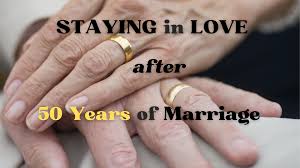
In another two months my wife and I will be married for 50 years. I hope that counts for something. 

When we look back, it’s easy to identify multiple mistakes that we made. It’s as well, easy to identify those decisions that worked. Taking responsibility for our decisions and their outcome is a major step toward maturity in a marriage relationship. Good decisions reap good outcomes and bad decisions reap a consequence that we both must own and then grow from. 

So, those thoughts lead me to pen some advice from an older married couple. Here goes:

  • Stay away from major discussions or decisions if you’re hungry or tired.
  • Treat your spouse the way you desire to be treated. (Luke 6:31)
  • Place your spouse ahead of yourself (Philippians 2:3-4).
  • Never leave or return home without finding each other and sharing a kiss and an “I love you.”
  • Make each other laugh. Have fun. (Proverbs 17:22)
  • Your most intimate connection is praying together (Matthew 18:19).
  • Do not look for 100% agreement in everything. Accept that you will always enjoy some personal differences. They’ll make you a better team.
  • Realize that agreement is greater than disagreement (Amos 3:3).
  • Conflict is inevitable and part of a close relationship. Conflict is not wrong, however; conflict without compromise and then finding a resolve is wrong.
  • Build a livable, agreeable budget and stick to it.  
  • Always have a short-term savings and a long-term savings.
  • Do your best to stay out of debt (Proverbs 22:7).
  • Never maintain a credit card balance (Psalms 37:21).
  • Give one another a monthly spending allowance.
  • Doing without lots of things can save your marriage.
  • Hold hands…a lot.
  • Write love notes and send cards in the mail to one another.
  • Bring home surprises for each another.
  • Date your spouse and when children arrive, date your children.
  • Check your pockets before putting your clothes in the wash.
  • Men, put the toilet seat down.
  • Divide cleaning responsibilities along with other household duties.
  • Take lots of time to talk and enjoy conversation.
  • Keep the TV and other devices out of or turned off in your bedroom.
  • Make your bedroom a special place where you end your day and then begin your day together.
  • No kids in your bedroom.
  • Remember that romance is not over once you’re married; it just began.
  • Always have at least one meal together every day, two if possible.
  • Keep complaining to a minimum; keep praise to a maximum.
  • Sit on the porch or deck together. No porch/deck? Build one.
  • Learn the skill of listening, not just talking.
  • Always construct in private.
  • When children arrive, remember they will be one of your most important contributions to your world; so treat them with love, respect, provide life-giving correction and don’t give them to someone else to raise.

There are more, but that’s for another time. 

Standard
Children, History, Issues of the Day, Just for fun, Parents

Cotton Candy, A Medical Marvel

Did you know that cotton candy was invented by a dentist from Tennessee in 1897? William James Morrison graduated from dental school and not long after became president of the Tennessee State Dental Association. While he had a number of inventions under his belt, the one that seemed a bit incongruent with his profession was cotton candy.

Morrison created an “electric candy machine” that would melt sugar and then use forced air through a mesh screen into a spinning chamber. What came out was a cloudlike substance back then known as Fairy Floss; today it’s known as cotton candy. 

While this is interesting history, it’s not what this blog is about. Scientists utilize cotton candy for a completely different use. Ironically, cotton candy might serve to save lives. How so?

Cotton candy’s delicate structure is used to create artificial human blood vessels. Researchers at Vanderbilt University spin the candy fibers, pour a gelatin mixture over the stands and after hardening they dissolve the sugar with an enzyme solution. 

What remains is a complex mold that’s very similar to the human capillary system. If successful, cotton candy can be a break-through creation to help make artificial tissue.

Psalm 139 declares that we are “fearfully and wonderfully made.” The care and complete attention to detail of our Creator is nothing short of amazing. Did you know that you have around 60,000 miles of blood vessels running throughout your body? That’s more than twice the distance around the earth.

The next time your child asks you for a cotton candy treat at the local fair, consider saying yes. Then take some time to explain the good side of this simple treat. By the way, it takes only one tablespoon of sugar to make that cloud-like swirl.

Standard
Challenge, Encouragement, Issues of the Day, Marriage, Men, Parents, Postmarital, Singles, Women

Is Marriage as God Planned it Taking a Backseat to Pleasure? (A truth-filled Valentine’s message.)

A study was done by two sociologists named Renerus and Uecker.  They found that three-fourths of 18–23-year-old woman are in dating relationships of some kind – and 94% of those are sexually active.  They also found that these girls who were sexually active with multiple sex partners were about 11 times more likely than virgins to experience elevated depression symptoms.  They found men are typically in control of when the dating relationship begins, but women are in control of when sex begins, and it often begins earlier than they want.

Women today are the losers, especially if they desire to remain as virgins until they marry.  They are put into a bind in their pursuit of a lifelong relationship and feel pressured to “take what they can get” as they watch the pool of available men shrink around them.  Men, however, are unlikely to marry in their 20’s apart from a belief that they are called to marriage and fatherhood.  Their decision to delay makes sense from a sexual perspective: they can access sex relatively easily outside of marriage and face few social pressures to be any different.  They can also choose the option of cohabitation.

The Destruction of God’s Institution Called Marriage

What is all of this doing in our culture?  It is little by little eating away at the sanctity of marriage as God created it.  It is little by little replacing God’s design with a careless and convenient counterfeit.  And it is little by little destroying the moral fabric of our society.   

But it’s different for Christian young people, right?  Unfortunately, not so much, as we continue to see a moral slide there as well.  Young people are compromising God’s standard every day.  I think the number one factor is they do not know God’s word; they are biblically illiterate. They are not reading His word and making His boundaries their boundaries. They are listening more to their flesh, their peers, viewing lots of sexual images through media and Hollywood than they are listening to their pastor or spiritual mentor.  Scripture is very clear when it comes to sexual behavior outside of marriage and yet the message today seems to be “relax…God is relaxed.”  

An expert in the law once asked Jesus the question, “What must I do to inherit eternal life?”  Jesus responded by asking him, “What is written in the Law?  How do you read it?”  The man said that one was to love God with all his heart and love one’s neighbor as oneself.  Jesus then told him, “You have answered correctly…do this and you will live” (Luke 10:25-28).  Was Jesus actually affirming the teaching of the law?  Yes, He was, not as a means of gaining God’s approval or love, but as a means of identifying our sinfulness.

The sins of the Old Testament are the sins in the New Testament: we are not to have or worship any other gods; we are not to worship any type of idol; we are not to use the Name of our God in any unholy way; we are to remember the Sabbath and keep it a holy day; we are to honor our parents, not murder, not commit adultery, not steal, not lie and not covet what others have.  While there were many Jewish traditions (dietary restrictions, for example), for our discussion, we are looking at the Ten Commandments rather than the intricacies of rituals, i.e., dress, food, ceremonial washings, etc.  Is murder still wrong?  Is stealing still wrong?  Is adultery still wrong?  We can still go to jail for most of these sins in our society.  We must identify and accept our sinfulness to be healed from it.

Our justification does not come through the law; it comes through Christ (Romans 5:1).  The law cannot save us; it is by faith and through grace that we are saved (Ephesians 2:5, 8).  However, what we must understand and what is rarely taught today is that “where there is no law there is no transgression” (Romans 4:15).

What Exactly Were Those Boundaries?

The scriptures forbid sex with close relatives, including your mother, your father’s wife, your sibling, your daughter- or son-in-law, your aunt, and your brother- or sister-in-law.  Scripture also forbids having sexual intercourse with your neighbor’s wife or animals.  Finally, the scriptures say that a man is not to have sex with another man “as one lies with a woman” (Leviticus 18:6-22).  God ends this chapter with a stern warning: “Everyone who does any of these detestable things – such persons must be cut off from their people.  Keep my requirements and do not follow any of the detestable customs that were practiced before you came and do not defile yourselves with them.  I am the Lord your God” (Leviticus 18:29-30).

Chapter 20 of Leviticus discusses the punishment for such sin and reinforces that we need to consecrate ourselves to be holy because God is holy.  Additionally in this chapter, God warns about committing adultery with your neighbor, sleeping with your daughter-in-law, sex with animals, sexual relations with your siblings, your aunt, your brother’s wife, and again, “If a man lies with a man as one lies with a woman, both of them have done what is detestable” (Leviticus 20:7-21). Under the Old Covenant law, the penalty for most of these sexual infractions was death. 

Jesus Takes It Further than the Law

The Law of Moses was certainly very strict.  However, in Matthew 5, Jesus also addresses several issues, taking them beyond the Old Testament law.  He reminded His listeners that the law said to not murder, but then He added, “Anyone who is angry with his brother will be subject to judgment” (verse 22).  He also affirmed that the law requires that no one commit adultery.  Jesus takes this law further by saying, “But I tell you that anyone who looks at a woman lustfully has already committed adultery with her in his heart” (verse 28).  Under the law, death was the requisite punishment for the act of adultery.  Under grace, Jesus speaks an even higher standard of purity by stating that we can commit adultery in our heart, and it is just as unlawful as the act itself.

A Better Way

God has a better plan.  He has our best interests in mind.  In the Old Testament, one of the priests’ areas of responsibility was to “teach [the] people the difference between the holy and the common and show them how to distinguish between the unclean and the clean” (Ezekiel 44:23).  It seems that ever since the fall of man recorded in Genesis 3, we think we have a better way than God and are out to prove Him wrong, except that we keep getting deeper and deeper into trouble.  We bend the rules further and further away from His moral code, and daily we suffer the consequences of those selfish choices.

Sexual brokenness is a worldwide epidemic, with human sex trafficking as the newest form of slavery to plague our world.  Our insatiable desire for “sexual freedom” has led us right back to slavery in order to feed our base desires.  How much more wicked can our world become than to take fellow human beings, sell them into the sex trade, and then discard them as though they were worthless?  The heart of God surely must be broken over such depravity.

If there is no line drawn for our culture, our nation and our lawmakers, then how do we make any activity illegal or abhorrent, a “crossing over the line,” if we do not uphold a standard that establishes that line to begin with?  That standard must come from outside of our personal desires and emotions, otherwise it becomes what is right for me and too bad for you.

Standard
Challenge, Marriage, Men, Parents, Women

Is Your Marriage Growing Closer or Distancing?

Marriage relationships are typically gaining ground or losing ground, becoming closer or creating distance. Let me share a few examples:

A silence after a disagreement = distance

Boredom sets into the relationship = distance

Tension due to differing goals or desires = distance

The loss of intimacy or sexual oneness = distance

Unforgiveness = distance

What are some examples of growing in closeness?

Agreement with our budget = closeness financially

Praying together = closeness to God and one another

Maintaining date nights = closeness in fun and communication

Maintaining our physical oneness = intimacy closeness

Taking daily time to hear one another’s heart = closeness shared openly and honestly

We’ve all been there. We’ve all experienced times of deep connection in our marriage and times of boredom or discontent with our marriage. Sometimes life becomes mundane and we take our marriages for granted or we simply become lazy with finding time for each other, communicating and going out on a date. We let our sexual lives lapse as we prioritize so many other things in life over our own intimacy connections. 

When we feel distance in our relationship let’s call it out, expose it, confess it and work at getting back on track. Honest feelings shared can bring honest solutions. Allowing distance to grow makes it more difficult to return to closeness. 

Take some time to share several ways in which you can grow and maintain your closeness as a couple.

Standard
Challenge, Just for fun, Marriage, Men, Parents, Women

Are You Play Deficient in Your Marriage?

You’re happily married. In fact, you’d do it all over again, right? But now there are so many intense responsibilities. Multiple others are depending upon you. Life is serious and you’re right in the middle of it with or without fun. 

Fun is now something you have to remind yourself of or, God forbid, actually plan. Play was so easy when we were merely engaged to be married. It came so naturally without much effort. Now it seems like we need to make it a goal for our marriage. 

The Bible tells us that laughter is like medicine. It’s true. Here are some of the medicinal effects laughter does for us: it’s a natural pain killer; it reduces blood pressure; it decreases depression and anxiety; it boosts the immune system; it’s just good for our mental, physical and spiritual health.

Let’s take it a step further. What is fun for you as a couple? What is energizing? What fun things replenish you? Discovering these things for us as individuals is great and necessary, but discovering them for our marriage is energizing for a play deficient marriage. 

Perhaps you’re in a stage of marriage where you are raising young children. Fun with them as parents is important, but taking time for the two of you is just as important. Or, maybe you’re at a stage where you’re spending a lot of time together. Be sure to plan fun activities so boredom does not set in. 

My wife and I had nonchalantly driven by a local Harley Davidson factory for many years and then we found out they offer free tours. Wow, what a fun morning that was. We live in a farming community. We discovered one of the large farming operations in our area offers daily tours. It was fun to see this operation up front and close. Museums, libraries, flea markets, yard sales, antique shops, an unplanned overnight, reading a joke book, funny YouTube videos, or coffee shops can all be inviting places of fun. 

Fun does not have to be expensive or days away. It needs to show up daily in your marriage. Study your spouse and find out what makes them laugh. Then go for it. It will build something refreshing in your marriage. 

Standard
Challenge, Children, Encouragement, Issues of the Day, Just for fun, Marriage, Men, Parents, Training, Women

Developing Family Rhythms

Professionals are telling us that family rhythms are missing in today’s households. What are family rhythms? Those things that your family does to build relationship, maintain consistent values and grow in family sharing and caring. 

Family rhythms cause us to connect with each member of the family. Everyone is important and everyone gets to be heard. Rhythms create space for valuing, teaching and training. Rhythms help create family culture, the ‘who’ we are as a family. 

What are family rhythms? Let me list a few:

  • Having a meal or two together every day
  • Taking a weekly family sabbath
  • Establishing a game night
  • Enjoying a BIG breakfast Saturday mornings
  • Dating your children and your spouse
  • Family worship
  • Reading a book together that all can enjoy
  • Quarterly get-aways for a day or overnight
  • Weekly small group connections or youth group
  • Family work time, e.g., cleaning the house or mowing the yard together
  • Annual family vacations
  • A monthly movie night with popcorn
  • Celebrating birthdays wholeheartedly

Before we’re called to save the world we need to save our families, the God-created foundation of our world. What do you desire your children to say about their upbringing one day? Plant those seeds now in their lives. Give them every reason in the world to love their family and to make their friends jealous. 

Speaking of their friends. Our children often invited their friends on our family vacations. We loved that! It told us our kids thought enough of our family time together to invite their friends so they too could enjoy that time together. And enjoy those times we did.

Standard
Challenge, Encouragement, Marriage, Men, Parents, Postmarital, Women

Some Important Questions to Consider for the New Year

Have you evaluated 2024 with your spouse as yet? I mean, have you gone back over your year and discussed what you loved, what you missed, what you added, what you gave, what you received, what you grew in, what you failed in? Evaluation is a great way to end your year together.

Have you taken the time to share words of thanks with one another and to God? What are you thankful for? What can you thank your spouse for? Thankfulness blesses others and keeps our hearts from personal judgments. 

After considering those ideas, consider some questions that will help you to look forward to a brand-new year. Questions like:

  • What vision do we have for our marriage and family in 2025?
  • What exercise do we want to participate in together?
  • What rhythms will we continue/discontinue?
  • How can I help my spouse grow in their relationship with God?
  • How can I be a reflection of God to my spouse?
  • What couples or persons in our lives can help us to grow in our marriage?
  • How can we better participate in a sabbath?
  • What can increase our affection toward each other?
  • How can we maintain our sexual intimacy?
  • How can we grow our prayer intimacy together?
  • What are some healthy marriage maintenance moves we can make in 2025?
  • What spiritual goals can we create?
  • What financial goals can we create?
  • How can we make regular deposits of love in each other’s life?
  • What marriage book can we read together?
  • What marriage conference can we participate in?
  • How can just the two of us vacate together?

Looking back, giving thanks and then looking ahead can be a tremendous value to your marriage relationship. It can give you focus, bring correction and provide unity in direction. Marriages that make it 40 or 50 years are marriages that take seriously personal and couple change to become more loving, more giving, more complimentary, more forgiving and more generous.

Standard
Challenge, Issues of the Day, Marriage, Men, Parents, Postmarital, Women

Love Your Marriage Enough to Evaluate It

As we head into the last month of the year 2024, it’s a good time to look back. A look back is a great way to assess where we’ve been. In last week’s blog, we considered looking ahead and writing goals for our marriage. See it here.

So many things in life are assessed; why not our marriages? I often ask my wife if I traveled too much? Did I support her around the house sufficiently? Did she feel my support with the children? Did we engage in ample date nights? Have we been in financial agreement? Did she feel cared for and honored?  And here’s a tough one: did she see God in me more than she saw my selfish desires?

If we’re not in a good place, evaluation or marriage assessment can get us back on track by revealing where we went off track. If we’re in a good place, evaluation is not painful, but rather reassuring that we’re on course for what’s ahead. Evaluation helps us get onto the same page. We’re not judging one another; we’re thanking God for what we learned, what we went through, where we failed and where we succeeded. We’re considering what worked and what didn’t. 

Several years ago, we were assessing our prior year finances because we had a financial decrease forthcoming in the new year. I’m not sure about you, but discussing a decrease in salary is not a discussion I joyfully anticipate. We assessed our year and then began to cross out line items for the next year’s budget. We did it! 

Evaluation helped us to go forward as a couple. We would face the year ahead with unity and agreement.

Standard
Challenge, Encouragement, Issues of the Day, Just for fun, Parents

Practicing Thankfulness

Thankfulness is encouraging, attractive, and it will spread to others when used regularly. 

It’s so easy to find yourself in a conversation of grumbling, judging or discontent. It’s easier to frown than smile. Physiologically it takes fewer muscles to frown, but spiritually, it takes more maturity to practice thankfulness.

Immaturity complains–a lot. For example, ever encountered an unhappy, not very thankful teenager? 

For a season in my life, I regularly visited someone who complained constantly. They were rarely thankful and viewed themselves as superior. When I left those visits, I felt like I needed a shower. I could even find myself becoming negative or unthankful. 

When visiting a thankful person, you leave uplifted, encouraged and full of hope for them and yourself. Thankfulness is a medicine for your spirit and for the spirit of others. Thankfulness will keep your hope alive and your faith intact. Thankfulness breeds thankfulness. 

A spirit of gratitude helps us to not focus on painful issues from our past. The American Heart Association says that practicing gratitude can, “…improve our sleep, mood and immunity, and can decrease depression, anxiety, chronic pain and disease.”

The University of Utah health research studied expressing gratitude and its effects on us. They found “it boosts dopamine and serotonin…improv[ing] your mood…giving you positive feelings of pleasure, happiness, and well-being.”

The Bible was right all along. Colossians 3:16 states, “Let the word of Christ dwell in you richly, teaching and admonishing one another in all wisdom, singing psalms and hymns and spiritual songs, with thankfulness in your hearts to God.”

I am thankful that you took the time to read this blog. Feel free to comment. Happiest Thankgiving ever to you and yours!

Standard