Challenge, Encouragement, Marriage, Men, Postmarital, Premarital, Women

Goals for Our Marriage

We have personal goals, work goals, financial goals and spiritual goals. What are the goals for your marriage? Where is your marriage going and how will you get there?

Sometimes in our marriage we are so today-focused that we do not take the time to think about tomorrow. Where do you desire your marriage to be in a year, five years, or ten years? 

Key: If you do not plant those seeds today, you will never reach your desired “harvest” or goal tomorrow. 

I know, I know, not everyone thinks in terms of goals, especially goals for your marriage, but this blog is written to every marriage out there. You never reach a goal without planning and taking steps toward the goal. 

Mary and I desired to retire our mortgage within ten years. We prayed. We placed extra money on the principle every month. We placed windfalls, tax returns, every extra dollar we could to reach that goal. Month after month and year after year we worked hard and in agreement toward the goal of paying off our home. Did we reach our goal in ten years? No, but that didn’t stop us or discourage us. We plugged away at it and not long thereafter reached our goal. 

For many years we loved taking our family vacations with our children. In time, our children were all married, but they still desired to do a family vacation. We made that happen as often as we could, but at the same time realized we had no personal vacation planned as a couple. 

Our goal became planning a year ahead for a week of vacation by ourselves. We have been doing so ever since. This goal helped us to have a loving, intimate and separate time together without caring, cooking and cleaning for others. 

When you create goals for your marriage, you’ll find yourself identifying areas that need strengthening. As a goal is communicated, prayed through and acted upon, your marriage will grow in connection. Goals for your marriage will keep you focused toward a future desire that will also build intimacy and commitment. 

Set aside some time at the local café and discuss a goal or two for your marriage. You will never regret it!

Standard
Challenge, Issues of the Day, Marriage, Men, Parents, Pornography, Postmarital, Premarital, Singles, Training, Women

The Five-Step Conditioning Process of Pornography

The stats are frightening as pornography use creeps down to eleven-year-old kids. Eighty five percent of teenage young men are viewing porn at an alarming rate. There are over 400 million pornographic pages available on over four million websites. Pornography use is said to increase marital infidelity by 300%! And those are only a few of the statistics available today exposing this horrific cancer in our society. 

How does it grow from curiosity to a full-blown addiction? What is the process that takes place? If we can identify that, we stand somewhat of a chance to avoid an addiction. 

Psychologists tell us there are five steps:

  • Introduction/ exposure – There is some form of exposure to porn, typically by a “friend.” This often takes place during the childhood years. 
  • Habit/compulsion – Those who continually and frequently expose themselves to porn find they have to continually return for more – another high. This begins the chemical process or wash over the brain causing sexual stimulation and the need for more. 
  • Intensification – The previous highs are not enough, so the user looks for more exotic forms of sexual behavior for stimulation. 
  • Desensitization – What is abnormal becomes normal sexually. Nothing is too shocking or aberrant. The concern of hurting others gets lost in the pursuit of the next sexual experience or high. 
  • Acting upon one’s fantasy/imagination – Eventually we will enact upon what we have seen and what we find pleasurable. These behaviors will be required from a spouse, a prostitute, a date or a minor. This often results in rape. 

The escalation of use occurs because we tell ourselves we’re simply being entertained with something that is harmless. After all, God created men, women and sex. But the more porn we feed our brain, the more extreme forms of it are necessary to become aroused. 

Have you ever noticed the number of erectile dysfunction (ED) drugs that are advertised on TV? Do you know why? Pornography. Younger and younger men with a porn addiction cannot function normally due to porn use. The addiction is stealing from them. Real life partners become bad porn. No woman or man can compete with the airbrushed perfect images displayed in pornography.

Pornography is killing marriages today. If you want to undermine or destroy your marriage, pornography use is a good way to do it. It will completely diminish any level of trust that you have built over your years of marriage. Pornography use opens doors that you do not want to open. 

Here’s the truth: pornography is fake! Every page, every site, every movie is fake. All of it is built on lies like, “It’s an innocent distraction; it’s harmless.” Meanwhile, it is literally destroying your life, your marriage and it has the potential to destroy your family. 

Is viewing pornography sin? Yes. We are engaging in sexual immorality and dishonoring God’s design for intimacy within the confines of marriage: one man with one woman. Pornography use will never take us where God ultimately desires to take us in our walk with Him. 

Stay tuned to part two of pornography when we look at some answers to help move away from this sin. 

Standard
Challenge, In the news, Issues of the Day, Marriage, Men, Parents, Postmarital, Premarital, Singles, Women

The Myths That Surround Marriage and Divorce These Days

How often have we heard that one in two marriages are ending in divorce? How frequently do we hear that marriage as an institution is on its way out? I am here to tell you just the opposite!

Shaunti Feldhahn, who is a Harvard trained Wall Street analyst and researcher has some very good news in her book, The Good News about Marriage

Shaunti reveals that the divorce rate in America has never been 50%. In fact, the divorce rates are actually declining. Seventy one percent of woman remained married to their first spouse and widowhood reduces the remaining 29%. Feldhahn states this brings us to a 25% divorce rate. 

Feldhahn also states that the rates of divorce among Christians are even less. Yes, those who share a like faith in their marriages were found to be at a 22% divorce rate according to a survey done by Family Life of 50 churches in 2013. 

From a Pew research: only one half of Americans are married today compared to 71% in 1960. Could this be connected to the pessimistic attitudes about God’s design for marriage? However, divorce rates have increased among those who live together, cohabitate, before marriage. They actually build a noncommitted attitude within their relationship and that spills over into their ensuing marriages, increasing their likelihood of divorce. 

Are marriages happy today? Yes! About 80% of marriages are happy and some rated their marriage “very happy.” In the book, those who decided to work through their differences will eventually find a greater level of happiness. Why? It was found that most couples know marriage takes work and they do not mind working toward that happiness. In one study, it was discovered that 93% of spouses would marry their same spouse all over again.

There you have it. Take courage; marriage as an institution is not failing. Divorce is not the biggest threat to marriages today. So, if you’re married, be encouraged, keep working, keep loving, keep praying and keep believing in your marriage. Your children will bless you for it. 

Standard
Challenge, Children, Encouragement, Marriage, Men, Postmarital, Premarital, Women

The Value of Kissing

Kissing. Who knew its scientific value? Who could imagine that this form of affection actually brought comfort, security, emotional satisfaction and even released feel good endorphins?

In a Psychology Today article from 2023, key lessons were explored when it came to kissing. There were obvious, predictable and emotionally boosting improvements discovered in the relationships that prioritize kissing. 

First, what does a kiss do? It is a sensual connection within marriage that communicates affection and even deepens the relationship. Kissing reduces stress, tension and anxiety. Kissing boosts our immune systems through the trading of saliva. Kissing releases dopamine to improve one’s mood and foster more contentment. It is a non-verbal form of communication that speaks volumes, especially on the romantic side of marriage. 

The article went on to share, “A skilled kisser is more likely to be in sync with their partner’s needs…and it promotes higher levels of relationship satisfaction and sexual satisfaction.” Why? Because kissing is not just a physical connection but it also connects us emotionally. It is being in the moment with your mate. When we kiss, we are continuing to build a healthy relationship, an emotional charge and a physiological enhancement to our marriage. 

These are all psychological benefits that improve our overall marriage satisfaction and should never be underestimated as a powerful tool for keeping the flame burning. Regardless of how long you are married, don’t lose the art, the connection and the value of a kiss.

Kiss when you leave the house.

Kiss when you return.

Kiss when praying together.

Kiss as you retire for the evening.

Kiss in front of the children and kiss for no reason at all.

Standard
Issues of the Day, Men, Premarital, Singles, Women

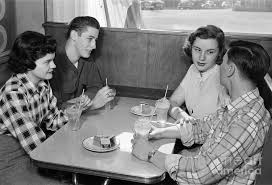
Dating in the 1950’s Vs. Dating Advice for Today

Dating is not a concept that has been around for centuries. It is more of a modern phenomenon. Many countries still do not engage in the modern notion of dating. But what did dating look like in the 1950’s? 

It was a postwar era and much was reflected in the perception of dating when it came to male and female relationships. Men were expected to lead and demonstrating chivalry was extremely important. Dating etiquette has changed drastically, but what follows are a few examples.

Women were expected to be more reserved than men, so much so that woman would defer to their male date to order at restaurants for them. A lot of dating was group dating as dances and movies were frequented the most. Never was there a discussion of who would pay, as the men were always expected to pay the bill. After all, men were seen as the “protectors and providers” and financial ability symbolized the male role. 

Dating was far more social in the 1950’s. It was not as much a private affair as it was a time to introduce your date to all your friends and your family. After all, family approval was a very important perception. 

The idea of “going steady” began in the 1950’s. It meant that the dating relationship had become exclusive as it took a step toward a “serious” relationship. Exclusivity had within it the exchange of high school rings or college jackets as a ritual symbolizing a more permanent move in the relationship. 

While we’re a long way from the 1950’s, there’s bit of purity in the nostalgia. Relationships were cherished and not thrown away in selfishness. As sexual “freedoms” became a thing in the 1960’s and 1970’s, the innocence of dating began to deteriorate. This deterioration began a downhill slide of disrespect toward one’s date as well as the parents. 

Scripturally, the word dating is not found in the Bible. But what might be some concepts to adhere to for today in order to maintain a godly or God-honored relationship?

  1. Treat your date like your bother or your sister. I Timothy 5:1-2 reveals that we are to treat older men as fathers and younger men as brothers. We are instructed to treat older woman as mothers and younger woman as sisters. Then these words are added to the verse, “…with absolute purity.” The scriptures admonish us that in a dating relationship we are to treat our date as a beloved brother or sister with absolute purity. Romans 12 and 13 have a lot of advice as well. “Do not conform any longer to the pattern of this world…” “Honor one another above yourself.” “Hate what is evil…” “Love does no harm…” “Put aside deeds of darkness…behave decently…not in sexual immorality.”
  2. In your dating, strive to be one another’s protection. Dating can quickly turn into a taking relationship vesus a giving one. When that happens, it becomes “me” centered. Dating has an unwritten concept within it today that goes like this, “I’ll try it to see if I like it and it meets my needs.” That concept promotes hurt and rejection rather than love and protection. When we date in a godly fashion we are thinking about what will bless this other person. We are thinking about what will bring them joy and what will promote spiritual and emotional growth for them. Think of it in these terms: if sexual immorality takes from the one I am dating then saving sex for marriage is protecting this person for their future spouse. Further, if dating becomes full of repentance and apologies from the last date, then we have not protected the spirituality or the emotions of the one we are dating.
  3. Live and date to please God; set boundaries for yourself and your relationship I Thessalonians four warns us to abstain from sexual immortality. You are warned to treat your body as holy and your date with honor. If our dating has become “acting married”, then we are defrauding one another. This foundation is a disaster for marriage. Why? Because, if one is sexual before marriage, why not be sexual outside your marriage? Think about it. If you are not setting boundaries for yourself in a dating relationship, what makes you think you’ll set boundaries within your marriage, let alone keep them? 

Do you desire to honor God in your dating? Then take a closer look at the three points above and pursue them for yourself. You will never regret following God’s truths while pursuing that special person He has for you.

Standard
Children, Encouragement, In the news, Issues of the Day, Marriage, Men, Parents, Premarital, Singles

DINK’S – Have you Heard About Them?

It’s our culture’s latest attempt at trying to minimize what has historically been the norm when it comes to marriage. With couples marrying older and having fewer children, DINK’S have now become a thing.

What is a D.I.N.K? It’s an acronym: Double Income No Children.

Yep, more and more couples are opting for “wealth” and “freedom” over bearing and raising children. Is it selfishly motivated? Maybe. 

(Note: This is not a blog for those who long for children and who have been unable to conceive or where there are physical complications. For you, we grieve.) 

It sounds nice, even inviting to have more financial resources to travel, to buy nice things, to have money left over at the end of the month and to max out that 401K. But, what are they missing?

DINKS are missing out on a monumental part of life – bearing and raising children. The joy of children; the parental self-maturing of raising children; the personal pain and emotional ups and downs of child raising. Perhaps in your 30’s you’ll never miss out on children, but when you’re in your 50’s, I guarantee you it will be a different story. 

How will you look back on your life without the legacy of raising kids to adults? Further, you’ll never know or experience grandparenting.

Finally, what happens when you come to the end of your life? Who will be there? Where will all of the “stuff” you’ve collected go? Who will care for you and visit you if you need to be in a retirement home, while all of your friends and extended family are themselves passing? 

“Children are a gift from the Lord; they are a reward from him.” (Psalm 127:3)

Standard
Challenge, Encouragement, Healing, Marriage, Men, Postmarital, Premarital, Women

Marriage Issues are “Our” Issues

Someone recently commented to my wife and I, “Wow, it encourages us to know that Steve and Mary had marriages issues too.” They were reading about our marriage in our book, Staying Together. We laughed as we confessed there is no perfect couple or perfect marriage.

In the book, we describe something traumatic that occurred to Mary, my wife. And in the book, we described how it affected our marriage for several years. 

An issue Mary was dealing with became a marriage issue because we are one. What affects Mary affects Steve; what affects Steve affects Mary. 

I could have gone on in life and lived in a manner that blamed her for the issue. I could have told her to get counseling for herself without me by her side. I could have distanced myself from the issues that were causing other issues and simply said, “It’s your problem; get it fixed.”

But is that the right approach in marriage? Is that showing marital commitment? Is that caring for another’s needs? Husbands and wives take this approach everyday saying, “It’s not my problem.” But if we’re married–if we’re one–then it is not his or her problem, it is our problem. When I make it my spouse’s problem, I am saying that I do not need to change, I do not need to support them and I do not need to be concerned. But, when I make it our problem, we are then walking and working together toward solutions and a better and a stronger outcome.

Marriage is a gift of oneness. There are three mentions of oneness in the scriptures: God the Father, Son and Spirit are one. Jesus and His church are one. A husband and a wife are one

As one, individual problems become our problems. So, get in there and fight for and alongside your spouse through each and every life issue. Find solutions together. Walk together and pray together. And to that end, find agreement together over any and all life issues.

Standard
Challenge, Encouragement, Healing, Marriage, Men, Postmarital, Premarital, Women

Conflict in our Marriages: Why We have Them

Conflict is easy; resolve is hard!

Most of us know how to do conflict, argue, disagree and/or fight, but few of us know how to resolve, come into agreement and heal conflict in our marriages. That’s what this blog is about. So, let’s start with a few facts:

  1. Even in conflict we need to maintain a right attitude toward one another. Conflict is not always detrimental in marriage, but it does test our faith, our patience and our personal level of grace. According to the scripture, it also develops character (Romans 5:3-5; James 1: 2-4). In marriage, we are often “using” one another to help smooth out our character. Our conflicts can be (will be?) deeper because our love is deeper.
  1. James said to let perseverance finish its work so we can mature. The natural response to conflict is more conflict, a desire to win or bailing out, quitting. But when we push through, pray through and persevere through the trial the outcome will be perseverance doing its work. The problem is too many couples quit, give up and believe it cannot be resolved or they want others to resolve it for them. The truth is the more we persevere, the more victory we will eventually have. Ask any couple who fought through financial differences, persevered, stuck to a budget until they saw the reward and you will find a couple who is extremely strong in the financial realm.
  2. Whatever we sow, we reap. Sowing and reaping is at work in our marriages. If we sow the negative, we will reap it. Typically, we sow discontentment and criticism because we’re not getting what we want. The seed of criticism cannot produce the fruit we’re looking for. In the midst of disagreement think about what good seeds you can sow.
  3. Don’t give the enemy a foothold by not coming to resolve (Ephesians 4:26-27). A marriage that holds bitterness, sows negative seeds and criticism, etc. is not doing what Peter said when he told us to be considerate of our wives and treat them with respect so our prayers are not hindered. In other words, prayer will be powerless in the home of disrespect, discontentment and the lack of peace.
  4. Be aware of what Paul called selfish ambition (Philippians 2:1-2). Most of our conflict is over selfish preferences rather than desiring the best for one another. 
  5. As conflicts are resolved, God uses those areas in our lives to help others. I know that sounds far off, but it’s true. We will have authority to speak into that which we have had to grow through and have experienced winning the battles. Believe God for win/wins.
  6. Lastly, we are to love deeply. I Peter 4:8 tells us “Above all, love each other deeply, because love covers over a multitude of sins.” Love often means overlooking, forgetting and not pointing out failures. It’s a “keeps no record of wrong” position. 

God wants you to be able to resolve conflict and I believe He gives us the tools to do so. Obviously, we both need to stick to the plan He gives us and press forward believing by faith for His outcome to our marriage as hard as it is at times. Conflicts are not the problem, we all have them, but not resolving them sure is.

Here’s a possible assignment: Write down the common triggers in your relationship that tend to cause conflict and discuss why and how. Ask God to bring healing to those areas in your lives. Remember, your spouse is not your enemy but rather your life mate who loves you and desires the best for you.

The more healed we become individually, the more healing our marriage will experience. 

Standard
Challenge, Encouragement, Issues of the Day, Marriage, Men, Postmarital, Premarital, Singles, Women

Couples Who Fight About Money

We were one of those couples! Simply stated, we had extremely differing financial values. Mary called me a “tightwad” and I unappreciatively called her a “spender.” Neither term is endearing and of course settles nothing in the financial realm of marriage. 

It’s a dilemma for sure. We often carry our financial values into marriage from our parents or our family money values. If your family never took a vacation you may not see the value in spending money for a week or two of vacation. If your family overspent and misused a credit card, you may not know how to save for emergencies. 

In our marriage, we came to the point where we needed a strategy to develop a mutual agreement of understanding. James chapter four tells us that we fight and argue because we do not ask God. So, we asked God. When doing so, we discovered that we actually had the best of both worlds.

Mary was not a spender; she was a giver. I wasn’t trying to be a tightwad as much as I was attempting to save for a future investment. Giving and saving for investment. Now that’s a winning combo. 

Here are some points to keep in mind when it comes to family finance:

  1. It’s all God’s. You are simply stewards.
  2. God is your provider. Take a break and let Him be your source.
  3. In Him we lack nothing. When Jesus’ disciples returned from a mission trip He asked them, “When I sent you without purse, bag, or sandals, did you lack anything?” (Luke 22:35) 
  4. Pray over your finances rather than fight or demand, i.e., ask God.
  5. Tithe or sow obediently into His kingdom first.
  6. Create a livable, life-giving budget.
  7. Allow for one another to have a reasonable spending allowance.
  8. Be generous with others.
  9. Pay all of your charges on your credit card monthly.
  10. Create an emergency savings account as soon as possible. (Start with $3,000.00 and then work your way up to three months of living expenses.)
Standard
History, Issues of the Day, Marriage, Men, Premarital, Women

Those Many Wedding Traditions and Why We Do Them

Weddings can be similar around the world, but why is it traditional to have wedding bands, to throw rice at the newly married couple or for the bride to wear something old and something new? These are a few of the wedding traditions we accept, but most likely have no idea of their origination. 

Here are eight of the most popular traditions with an explanation of why they exist.

  1. The couple stays apart the night before and the day of the wedding until the ceremony.

Marrying for love is a relatively new concept. Many marriages of yesteryear were prearranged by the families. Not seeing each other prior to stating their wedding vows was a precaution for one of the two getting “cold feet.”

2. Something old and something new.

In the mid-19th century, the objects shared from others were to bring the bride good luck and also served as a hope for early pregnancy. 

3. White wedding dresses.

It was Queen Victoria who wore a white gown at her wedding in 1840 when most gowns at that time were red. Soon white became the color for brides because white was considered virginal and pure and an emblem of innocence. 

4. Groomsmen and bridesmaids in a wedding party.

It has become a way to honor your friends and family members. But in Roman culture, these persons became the couple’s witnesses, bodyguards, and preventing intruders from intervening in the wedding ceremony

5. “Speak up now or forever hold your peace.”

Have you ever wondered where this phrase originated from? It was a standard question at one time in order to prevent bigamy. Some churches even required the forthcoming wedding plans to be announced three times to be sure that neither bride or groom to be were already married.

6. Sharing wedding rings.

Historically, most couples did not exchange rings so this practice is fairly new. It was more of a custom for the woman to have an engagement ring so that all would know she is “under contract” or betrothed. Jewelers began to popularize men’s rings and by the 1940’s it became socially acceptable that men would wear a wedding band.

7. Tossing rice or birdseed at the newlywed couple. 

The Romans thought it best to toss wheat at the couple as a sign of fertility. In Europe it was thought that rice was that sign. Other cultures use oats, peas and other grains. But contrary to popular belief, throwing rice which is eventually picked up by the birds will not injure the bird. 

And one more…wedding cake.

8. Saving the top layer of your wedding cake.

It wasn’t about celebrating on your first anniversary; it was more about the birth of your first child. Happy couples who were able to be successful at starting a family were to celebrate by using the remaining wedding cake for their first child’s christening. 

There you have it: eight traditions that can be found at most modern weddings and the why of those traditions. So the next time you’re at a wedding, you can share your knowledge around the reception table with people you don’t know!

Standard