Challenge, Children, Encouragement, Marriage, Men, Postmarital, Premarital, Women

The Value of Kissing

Kissing. Who knew its scientific value? Who could imagine that this form of affection actually brought comfort, security, emotional satisfaction and even released feel good endorphins?

In a Psychology Today article from 2023, key lessons were explored when it came to kissing. There were obvious, predictable and emotionally boosting improvements discovered in the relationships that prioritize kissing. 

First, what does a kiss do? It is a sensual connection within marriage that communicates affection and even deepens the relationship. Kissing reduces stress, tension and anxiety. Kissing boosts our immune systems through the trading of saliva. Kissing releases dopamine to improve one’s mood and foster more contentment. It is a non-verbal form of communication that speaks volumes, especially on the romantic side of marriage. 

The article went on to share, “A skilled kisser is more likely to be in sync with their partner’s needs…and it promotes higher levels of relationship satisfaction and sexual satisfaction.” Why? Because kissing is not just a physical connection but it also connects us emotionally. It is being in the moment with your mate. When we kiss, we are continuing to build a healthy relationship, an emotional charge and a physiological enhancement to our marriage. 

These are all psychological benefits that improve our overall marriage satisfaction and should never be underestimated as a powerful tool for keeping the flame burning. Regardless of how long you are married, don’t lose the art, the connection and the value of a kiss.

Kiss when you leave the house.

Kiss when you return.

Kiss when praying together.

Kiss as you retire for the evening.

Kiss in front of the children and kiss for no reason at all.

Standard
Challenge, Issues of the Day, Marriage, Men, Postmarital, Small Groups, Training, Women

A Marriage Mentoring Group is Born

Multiple younger couples were either coming to us or we were having them over to our home for a meal. It seemed apparent they were looking for marriage mentors, a spiritual mom and dad to walk with them and share some helpful marriage principles. 

And so, it began. Ten groups and ten years later we are still excited about marriage mentoring. We grab four couples, hand picking them to invite to our group. They should not be on the verge of divorce or in desperate need of counseling. This is not a counseling group. This is a group that receives care, concern and input, but also gives it to the other couples. It is their group, not ours. My wife and I are the facilitators. 

We use our book Staying Together, Marriage: A Lifelong Affair and go through it chapter by chapter. We begin in February and end the following January on a weekend retreat together. We meet once per month on a Tuesday evening with dinner together; everyone helps with the meal. 

That first hour around the table is full of reporting about the last month, prayer requests, jokes and laughter, fun and fellowship. The following two hours are in our living room sharing our experiences and questions in marriage provoked by the reading assignment. We laugh, we cry and we pray. We talk, we get passionate and we get real about our lives as married couples. 

Mary, my wife says, “This is my very favorite group all month. We love these ‘kids’ and we love their authentic, truth-filled responses.” If you are a happily married, seasoned couple with a heart for marriage, you can duplicate this very group. Young couples are just waiting to be asked. They are a hungry generation looking for help to succeed in their marriages. They long for parents who will encourage them, tell them they’re wrong at times and provide loving examples to them. The book will help you and guide you with plenty of questions, but it will take a back seat to the relationships that are built. 

Do you want the divorce statistics to decrease? Then take my challenge and start your own marriage mentoring group. Meet consistently once a month for one year and you will change lives and build memories for a lifetime. 

Standard
Challenge, Encouragement, Healing, Issues of the Day, Marriage, Men, Postmarital, Women

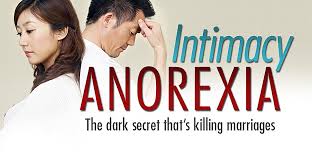
Intimacy Anorexia

It’s not my term. Author and speaker Dr. Doug Weiss coined the term and states it’s why some people “actively withhold emotional, spiritual, and sexual intimacy” from their partner. He writes that some of those issues can be identified as:

  • Keeping themselves busy with child care, household tasks, technology or work. Too busy for you, but not others.
  • Blaming you [or others] for the loss of intimacy rather than exploring potential patterns in their own behavior.
  • Withholding love, especially in the way you desire to receive it.
  • They stop complementing you.
  • Have little to no interest in sex.
  • Show little interest in connecting on a spiritual level.
  • Avoid talking about their feelings and not connecting on an emotional level.
  • Treat you more like a roommate and not a romantic partner.
  • Have money control issues or desire to control the money.
  • Have anger outbursts, ignore you or give you the silent treatment.

Wiess states it doesn’t take all these issues, maybe just five of them to experience sexual anorexia. He believes many persons who survive some form of sexual abuse will respond in this way to their marriage partners. 

Further, these relationships can be full of frequent criticism, including criticism of things one cannot change. 

Persons who exhibit these types of behaviors have more than likely experienced something traumatic in their growing up years. In their adult world, however, they are attempting to avoid the pain of their misguided view by avoiding intimacy. 

Intimacy requires trust in a relationship. It requires vulnerability. It requires safety and, of course, that all important ingredient: love.

Sexual intimacy within the boundary of marriage brings glory to God.

Sexual intimacy within the boundary of marriage draws marriages closer to God and one another.

Sexual intimacy within the boundary of marriage is always centered on your spouse.

Sexual intimacy within the boundary of marriage promotes deeper love, commitment and pleasure.

If you find yourself battling with any of the above descriptions of intimacy anorexia, please see a counselor who is familiar with the subject.  

Standard