
 Recently while in the nation of New Zealand, a friend pointed to a fellow teacher and said, “See that older gentleman?” I assured him that I did. He went on to explain, “I am younger than him and I am retired from teaching.” I asked why he chooses not to retire figuring the conversation was leading that way. My friend replied, “He tells me he wants to continue teaching because it is far better than going home and living with his critical wife.”
Men long for respect. Paul, the Apostle, admonished wives to respect their husbands. (Ephesians 5:33) A man can handle not being loved, but he cannot handle not being respected. I think God knew that about a man. If a man does not feel respected by his wife and family, he will stay at work longer, he will hang out at the bar after work or he’ll go to the fire company and loiter with the guys. Men don’t care if their friends do not express love, but if men feel disrespect it will be the demise of the relationship. Men do not need their supervisors to express any form of love, but they long to hear words of affirmation on a job well done – respect.
I read a recent study that indicated 74% of men would choose the preference of feeling unloved in the world around them rather than feeling disrespect. These men indicated they would choose to live with a wife who respected them, but did not love them. Do men need love? Of course, but the need for respect has a higher personal value. Consider this: Even while a sports team is performing poorly, they will still resonate with the female cheerleaders on the sideline pushing them forward with their optimistic, upbeat and affirming cheers.
Be a cheerleader in the life of your husband, your son, your brother or your Dad today.
 In God’s word, Ephesians chapter five is where we often find ourselves concerning the husband and wife relationship. We tend to quote those parts that we like in these verses, but often fail to remember the parts that require effort from us. For example, what man doesn’t like the fact that God requires a woman to respect her husband? And, what woman doesn’t like the part that asks a husband to love his wife?
 We hear far too many reports about marriages that are not lasting. When marriage is full of selfishness, insecurity and immaturity, marriage becomes an attempt to receive healing from our spouse, i.e., if they’re the problem, they’re the solution as well. When our spouse deals with the same inadequacies, they are unable to give what we’re looking for. Over a period of time, the thought of having married the wrong person is often generated.
 issues in your life. Too often we blame our spouse for our worst and then think they’re the problem, believing the lie that all would be better if they would make all the changes.
 Occasionally it’s good to evaluate our marriage progression. Today I want to share five ways in which we can identify marriage growth and maturity. Don’t be discouraged if you feel overdue in any of these areas; just realize maturity does take time and personal revelation for change.
 I recently returned from serving a local church in Chicago, IL and was reminded in so many different ways of why we each need a local church in our lives and the lives of our family. To me it is imperative to be in close relationship with those persons who care about you and your family. It is essential to have that connection for not just receiving, but giving as well.

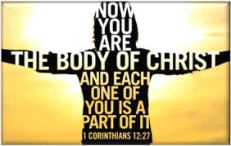
 I have experienced all of these and more in many local churches and I appreciate the body of Christ so much. God is not angry at His church as so many speak today, but rather, He loves His church, He died for His church and longs for His church to be with Him one day. Until then, be a vital part of a growing, Bible believing and faith-filled local church body. You and your family will grow and help to grow others.
 We are settled. We do not have to always agree, but rarely do we disagree. Steve is Mary and Mary is Steve and we desire the very best and the highest goodwill for each other. We are not competing with one another and we are not jealous of each other. We will not settle for mediocre in our relationship and we will not allow a spirit of discontentment to show its ugly head. We both know that through the grace of God and His goodness to us, we gained something…or someone in marriage. When we said “yes” to one another, we said “no” to every other possible partner out there. We have no regrets.
 You’ll find those six words, maybe nine, in chapter thirteen, the final chapter of
  Before you were married, did anyone advise you that your marriage would need room for failure, forgiveness, loss, brokenness, disagreement, or even sin? If not, a full and honest disclosure was missed, and you may have entered into marriage a bit naïve or ill-advised. Marriages fail because we fail God, each other, and ourselves. We fail to love, we fail to honor, we fail to forgive, and we fail in keeping at bay our own personal struggles with selfishness. And that’s where prayer can come in.
 In
In  We seemed to have reached a desperate part of our meeting with a middle-aged couple pastoring a small church in New York. In tears, the wife declared, “We’re not intimate!” We asked what she meant by that statement. She said without hesitancy, “We don’t do fun things together; we don’t hold hands; we don’t sit close any longer; we rarely have sex; and our conversations have become predictable, boring, and too infrequent. It’s like we’ve taken a break from closeness, from our friendship…from intimacy.”
 How does a couple stay sexually active when there are jobs, a family, household responsibilities, and civic commitments, along with children’s sports and school, and then local church involvement? All of these good things can rob us of intimacy as married couples and can even become priority over our sexual thoughts and desires. Sometimes life gets a hold of us, and all too often we’re too exhausted to take a hold of one other.
 On your wedding day, you spoke something called vows that probably sounded something like this: For better or for worse; for richer or for poorer; in sickness and in health; ’til death do us part. Rarely do we imagine having to face such issues. But truth be told, we will face some of these things and, perhaps, already have. If you think about it, these vows prepare us for reality long before reality sets in; they help prepare us for inevitable disappointments in marriage.
 Infidelity can affect all of our marriages because we can all be tempted. We are all potential vow-breakers. If we think it can’t happen to us, we can become sloppy and less guarded, not alert to the enemy’s schemes. In
  We sat down to interview Jon and Amy (names have been changed), a couple we have encountered who have a pain-filled story. With their permission, we are about to share with you their loss, brokenness, hope, and redemption.
