 This will most likely be my one and only blog on the upcoming election. It is not written to change anyone’s mind, but rather to calm our minds and spirits.
I love this nation and I love how God has used this nation and continues to use this nation to care for others around the world. I love our freedoms and I love our Christian heritage. I love the many cultures found in America and I love the church in this nation. I love the fact that we have been given the freedom to vote and elect candidates for office and I love that everyone can freely voice their opinion.
I do not love the disunity I see and feel in our nation today. I dislike the factions over important issues like national debt, cultural values, immigration, abortion, taxes, jobs and so many others. I have prayed for and hoped that the present administration would help bring unity and focus to this great county. I dislike how opposing views have become even more venomous and further apart. I dislike and have been discouraged by the lack of leadership displayed in our nation that has allowed this and has participated in it. The selfishness and immaturity among our leaders is astounding.
The list of why Donald Trump is unfit and his multiple sins exposed is getting longer, as the same list continues to grow with Hilary Clinton. There are so many things wrong with both candidates that many people are saying they cannot vote for either one. Still others find one candidate more evil than the other and are not voting for a candidate but rather against a candidate. Like them or not, these are the choices. It truly speaks to the division in this nation and it speaks to how truly shallow American values have become. As I heard someone say recently, there is so much di-vision because there is so little vision, so little leadership. How true. Was it John Maxwell who said that everything rises and falls on leadership?
I wish it was over and we could all go home. But it’s not over. In fact, November 8th is just the beginning. It will continue for four years, likely eight. And that is my point. We need to look down the road, beyond the election and all the faults in both candidates. We need to ask ourselves which party stands for our personal biblical values because that party will either stay the same and continue on with its agenda or that party will change and work toward its agenda.
For the godly, arguing with your neighbor or posting on-line why your candidate is better by putting the other candidate down, in my opinion, is simply operating in the same spirit that these two candidates operate. You see it in each debate, i.e., the anger, the hate, the division, the immaturity and the lack of integrity, character and leadership. Don’t fall prey to it; rise above it and pray against the spirit that is attempting to separate and divide.
So many today who claim Christ remind me of the disciples, who when they discovered that the Lord was not welcome in a certain Samaritan village asked Jesus, “Lord, do you want us to call fire down from heaven to destroy them?” (Luke 9:54) In other words, burn those to ashes who do not welcome you or receive you. Jesus calmly rebuked them and they simply moved on to a village that would receive them.
 As I consider that second Tuesday of November, I find myself required to look beyond these two candidates and instead looking to the party that best represents my beliefs and my values. Daniel did it in his day and Joseph did it in his. Jesus certainly did it best as He represented His Father’s kingdom here on earth. I suppose it is these words of Christ that help me the most when it comes to this election and its candidates, “The teachers of religious law and the Pharisees are the official interpreters of the law of Moses. So practice and obey whatever they tell you, but don’t follow their example. For they don’t practice what they teach. They crush people with unbearable religious demands and never lift a finger to ease the burden. Everything they do is for show.” (Matthew 23: 1-5) Certainly seems that Jesus understood it, while giving practical advice at how to walk it out.
The sign in your yard will most likely not change anyone’s mind, but it just might inhibit your ability to share about a kingdom that is not part of this world system with your neighbors. Eventually we need to ask ourselves, do we want to be right or do we want to be in relationship? Do we only want to share our political “truth” or do we long to share THE Truth? Your neighbor’s need or fear defines your obligation of serving them; it is the love of God. No political party can save them. Remember, Jesus washed the feet of Judas who hours later betrayed Him. Do you think that Jesus assaulted Judas verbally or was especially rough on his feet during that moment?
II Chronicles 7:14 is still the best advice from God’s word for a hurting nation, “Then if my people who are called by my name will humble themselves and pray and seek my face and turn from their wicked ways, I will hear from heaven and will forgive their sins and restore their land.”
Father, please come and restore this land called the USA with Your love, Your heart and Your unity. Please forgive us of our disunity in direct disobedience to the prayer of Your Son recorded in John 17, “May they experience such perfect unity that the world will know that you sent me and that you love them as much as you love me.” Give us such a heart for this nation that we will pray for and love whichever candidate wins this election, because ultimately our trust, our hope and our life is in You and Your hands.
Please make your voice heard by voting and in the meantime represent the kingdom of God well.
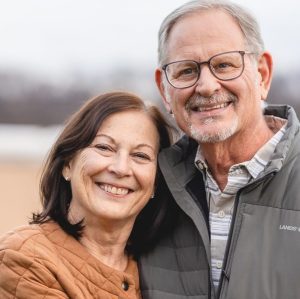
 You most likely know about the railings of the Pont des Arts pedestrian bridge in Paris, France. For years couples have been placing pad locks on this railing and then throwing the key into the River Seine as a romantic ritual of their love. Eventually the city had to intervene. It seems that according to those who know such things that the added weight of thousands of locks affected the integrity of the bridge and needed to be removed.
 one another and “locked” together in love. In 1975 I said “I do” to my bride, Mary, while at the same time saying “I don’t” to every other woman. We never put a padlock on the bridge in Paris, but we have remained committed in our love to God and then to each other. I guess when God’s word says that His love endures forever (Ps 106:1), He provided a picture to us that love can, at the least, endure a life-time.
 My assignment was clear: completely renovate our outdated bathroom during my Christmas vacation. Its décor was left over from the 1990’s. The flooring had yellowed. The walls needed fresh paint. Nails had popped through the drywall and in general it was looking old and tired. It was time to, “Forget the former….” (Isaiah 43:18) The materials were purchased and the work began. The floor would be covered with a new material, the walls would receive a wainscoting and the paint would be an updated color. “See, I am doing a new thing!” (Isaiah 43:19) The change was incredible and when finished my wife exclaimed, “It’s a complete transformation!”
 Weariness. This morning Mary and I prayed together about “a spirit of weariness.” We felt it at different times throughout the year of 2016. There were multiple illnesses we were battling. There were major concerns in our family with aging parents. There were emotional and spiritual attacks that seemed to come out of nowhere. Of course the elections were within themselves a whole new level of campaign weariness and continually planting seeds that did not appear to take root. It’s a bit hard to describe or put our finger on any one thing, but all together they spelled: W E A R I N E S S.
 Press on. 2017 is a whole new opportunity. No matter what is at the root of your weariness, do not give up!
 I had spent the last two summers living at the beach in Delaware and found a girlfriend from New Jersey. Somewhere in our second summer together I discovered that she was not just another girl, but in my mind, THE girl. There was this one big, glaring issue however: she kept trying to “witness” to me and according to her I needed to “be saved.” I had no idea how to answer her questions about the second coming of Christ or exactly what salvation even meant. “Being saved” was something most of us teenage guys just weren’t looking for. My tactic became asking her her thoughts of those impossible questions and then simply agreeing. It worked in part.
 Jesus was the Perfect Christmas gift that December of 1971. I did bow my knee. I prayed that prayer at the end of the little tract and Christmas with Christ took on a whole new meaning. Has Christmas come into your heart?
 Those of us who fly tens of thousands of miles a year barely endure the whole experience. We’ve lost our youthful vigor when it comes to flying. It has become something we tolerate rather than embrace with excitement.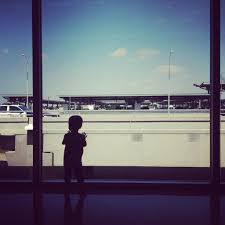
 can see everything…it’s getting smaller down there…I love flying!”
 Breakthrough . . . after twenty-five years of praying.

 A CEO was once asked what made him so successful. He replied, “Good decisions.” “How, then, do you make good decisions?” was the follow-up question. His reply was given in one word, “Experience.” “And how do you get experience?” was the final question. The CEO provided a two-word response, “Bad decisions.”
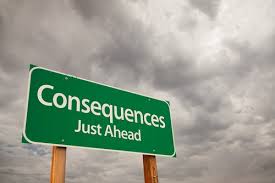 I read once that bad decisions are often the result of insufficient knowledge. How about you, what are you learning from your bad decisions?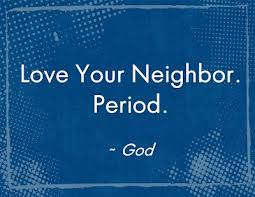
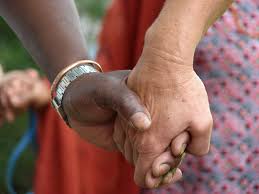 Let’s use what has happened in our nation to mature, to pursue loving others and to ask God for His change to take place in every one of our lives. Jesus is the reconciler, it’s what He does and He uses us to help bring reconciliation. Remember who paid the highest price, and proclaim His love to this nation. Reach out to the hurting all around you and share about the One who longs to heal their hurts, disappointments and fears.
 Pain has a way of receiving our attention. It is an indicator that something is wrong somewhere. Have you ever considered pain to be a gift in your life?
 Mary’s appendix was ruptured and poison filled her abdominal area. She needed emergency surgery that night and IV antibiotics for 24 hours. How about you, do you need emergency surgery to bring healing to an emotional hurt? There is a Surgeon with the most skillful and heavenly hands just waiting for your go ahead. Ask Him, He is our healer. He heals the brokenhearted and binds up their wounds. (Psalms 147:3)
 Steve Prokopchak